Introduction
Attention‑deficit/hyperactivity disorder (ADHD) affects roughly 9‑10 % of children in the United States, making it one of the most common neurodevelopmental conditions. Early identification and a multimodal treatment plan—combining behavioral therapy, parent training, school accommodations, and, when needed, medication—are essential for improving academic performance, social relationships, and long‑term mental health. In Federal Way, Washington, families can access comprehensive pediatric services that integrate developmental‑behavioral health, cardiology, and primary care under one roof. Clinics such as Federal Way Pediatrics and Families First Pediatrics offer same‑day evaluations, coordinated care with schools, and telehealth options for medication management and behavioral counseling. Appointment scheduling is flexible, with extended hours and online portals for easy booking, while insurance plans including Medicaid and Medicare Advantage are accepted. This coordinated, family‑centered approach ensures that children with ADHD receive the full spectrum of evidence‑based care close to home.
Seattle Children’s Cardiology in Federal Way
 Seattle Children’s Hospital extends its nationally‑recognized pediatric cardiology program to the Federal Way community through the South Clinic, located at 34920 Enchanted Pkwy. S, Federal Way, WA 98003. Families can call 253‑838‑5878 to schedule an appointment or 206‑987‑2226 for directions. The clinic’s cardiologists are the same physicians who staff the Seattle Children’s main campus, guaranteeing seamless continuity of care from initial evaluation through follow‑up, whether the child needs routine echo monitoring or treatment for complex congenital heart disease.
Clinic hours include weekday appointments with urgent‑care cardiology services available after 4 p.m. on weekdays and on weekends, allowing families to access timely evaluation without long delays. Parking is free and conveniently located adjacent to the building, and the site is easily reachable via I‑5 (Exit 142B) and local transit routes.
By offering comprehensive cardiac assessments, coordinated multidisciplinary care with developmental and behavioral specialists, and flexible scheduling, Seattle Children’s Federal Way cardiology clinic supports the whole child’s health while simplifying logistics for busy parents and caregivers.
Federal Way Pediatrics C&C Medical Associates
 Federal Way Pediatrics, C & C Medical Associates is a full‑service pediatric practice located at 710 S 348th St, STE B, Federal Way, WA, adjacent to St. Francis Hospital and Seattle Children’s South Specialty Clinics. The clinic provides comprehensive primary‑care services—including well‑child visits, immunizations, and chronic disease management—while also offering walk‑in sick visits for acute illnesses. Board‑certified pediatricians and mid‑level providers are available 24/7 on‑call, ensuring families can reach a clinician at any hour. Telehealth appointments support routine care, specialty referrals, and mental‑health consultations, and virtual access to pediatric specialists such as cardiology, endocrinology, and orthopedics is readily available. To schedule an appointment, call (206) 395‑6049 or (425) 243‑2293, or use the MyChart patient portal. This integrated, family‑centered model helps parents manage ADHD, cardiac concerns, and other health needs with timely, coordinated care.
Federal Way Pediatric Associates (Pediatrician Specialty Practices)
 Federal Way Pediatric Associates, now operating as Pediatrician Specialty Practices, is a private pediatric practice serving families in Federal Way and Puyallup, Washington. Led by Dr. Nauman Ahmad, MD, FAAP, the clinic offers comprehensive care for infants, children, and adolescents, with a special emphasis on pediatric cardiology and chest‑pain evaluation, including echocardiograms and cardiac risk screening. The team provides preventive services such as well‑child visits, immunizations, and chronic disease management, as well as acute‑illness care and walk‑in appointments for common pediatric conditions. Telehealth options expand access to general pediatric consultations and specialty care, including mental‑health, nutrition, and cardiology follow‑up, allowing families to connect from home. A family‑friendly, compassionate environment is reinforced by clear communication, child‑centered exam rooms, and support resources like parent‑training programs and local ADHD groups. The practice’s mission is to improve both physical and emotional health, ensuring coordinated, high‑quality care across all stages of a child’s development.
Pediatrics Northwest – Federal Way
 Pediatrics Northwest – Federal Way is a full‑service pediatric practice located at 505 S 336th St, Suite 210, Federal Way, WA 98003. The clinic provides comprehensive primary‑care for infants, children and adolescents, including well‑child examinations, same‑day sick‑visit appointments, and routine developmental screenings that help identify conditions such as ADHD early. Chronic‑illness programs cover asthma, allergy, and sleep‑medicine management, offering individualized treatment plans that may involve behavioral strategies, medication, and environmental modifications. Care is delivered by a team of board‑certified pediatricians and advanced practice providers—Dr. Erin McCune, Dr. Chaitri Desai, Dr. Maria Aleman, and DNP/ARNP Jennifer Feutz—who emphasize family‑centered, evidence‑based care. Families can schedule visits, view test results, and message providers through the MyChart portal, ensuring convenient, coordinated communication. The office is open Monday‑Friday, 8:00 a.m. 5:00 p.m., with additional weekend services at the nearby Baker Center location, making it easy for busy families to access consistent, high‑quality pediatric health services.
Federal Way Pediatric Dentistry
 Federal Way Pediatric Dentistry is a board‑certified pediatric dental practice located at 1035 S 320th St., Unit B in Federal Way, WA. Led by Dr. Soo Jun, who trained at Tufts, Harvard, and St. Barnabas Hospital, the office offers a full range of services—including preventive cleanings, fluoride treatments, restorative work such as fillings and crowns, orthodontic evaluations, and sedation options (nitrous oxide and general anesthesia) to ensure a fear‑free experience for infants, children, and adolescents. The practice emphasizes a family‑centered, compassionate environment that promotes lifelong oral‑health habits. The office is equipped with digital 3D X‑ray and laser dentistry technology for precise, low‑dose imaging and minimally invasive procedures. Most major dental insurance plans are accepted, and appointments can be scheduled by calling 1‑253‑262‑6589 or emailing office@federalwaypediatricdentistry.com.
Comprehensive ADHD Management & Children’s Hospital Federal Way
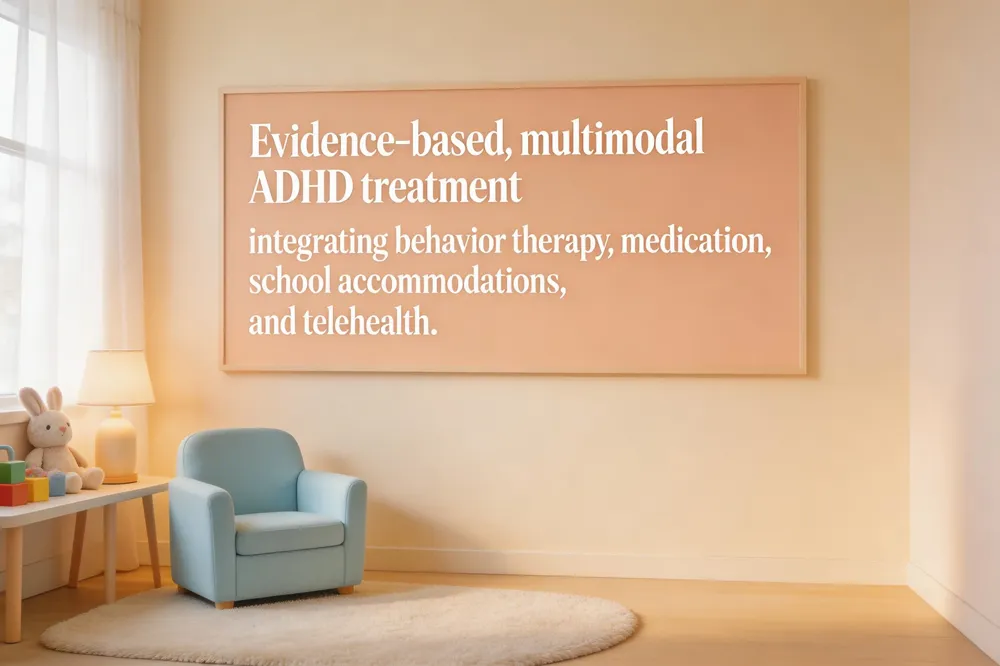 Evidence‑Based ADHD Treatment Steps
- Obtain a professional diagnosis using validated rating scales (Vanderbilt, Conners). 2. Begin behavior therapy—parent training for children < 6 y. 3. For school‑age children, combine stimulant or non‑stimulant medication with behavioral therapy. 4. Choose the appropriate medication (stimulants first‑line; non‑stimulants if intolerant). 5. Monitor response, side‑effects, growth, and vitals at follow‑up every 3‑6 months. 6. Implement classroom interventions and organizational tools. 7. Establish predictable daily routines. 8. Use positive reinforcement with clear, achievable goals. 9. Encourage regular physical activity, balanced nutrition, and 9‑11 h of sleep. 10. Provide ongoing education, support groups, and resources.
Behavioral Interventions & Self‑Regulation Skills Teach deep‑breathing, mindfulness, yoga, and brief movement breaks. Use visual schedules, color‑coded binders, and check‑lists to compensate for working‑memory deficits.
Medication Selection, Monitoring & Side‑Effect Management Start stimulants at the lowest effective dose; titrate weekly. If appetite suppression, sleep disturbance, or cardiovascular concerns arise, consider non‑stimulants (atomoxetine, guanfacine). Baseline ECG and blood pressure are essential for children with cardiac histories.
School Accommodations & Multidisciplinary Collaboration Develop IEPs or 504 plans for extended test time, preferential seating, and scheduled breaks. Maintain regular communication between parents, teachers, and providers.
Local Specialty Centers Seattle Children’s South Clinic (34920 Enchanted Pkwy S, Federal Way, WA 98003) offers urgent‑care and pediatric specialties with extended evening hours; call 206‑987‑2211. Mary Bridge Children’s Outpatient Center (505 South 336th St Suite 200 & 330) provides cardiology, developmental‑behavioral health, PT/OT/SLP; call 253‑792‑6630. Both serve south King, Pierce, and Thurston counties.
Family Support Resources & Telehealth CHADD, AAP Bright Futures, and local support groups give education and peer support. Telehealth visits at Federal Way Pediatrics improve access to medication management and behavioral counseling.
Q&A Children's hospital Federal Way: Seattle Children’s South Clinic and Mary Bridge Children’s Outpatient Center provide comprehensive pediatric and specialty care locally, with flexible scheduling and telehealth options. Key steps for managing common pediatric conditions like ADHD: Follow the 10‑step multimodal approach above, emphasizing diagnosis, behavioral therapy, medication when needed, routine, lifestyle, school accommodations, and continuous family education.
Conclusion
Effective management of ADHD—and any pediatric condition—begins with a clear diagnosis, evidence‑based behavioral strategies, and, when needed, medication such as stimulants or non‑stimulants. Establish daily routines, use visual organizers, encourage regular physical activity, adequate sleep, and a balanced diet to reinforce treatment gains. Consistent monitoring through follow‑up visits every 3‑6 months ensures medication doses remain optimal and side effects are caught early. Because ADHD often co‑exists with learning,, anxiety, or cardiac concerns, coordinated, multidisciplinary care is essential. Parents, teachers, pediatricians, mental‑health specialists, and, when appropriate, pediatric cardiologists should share information via IEPs, 504 plans, and communication logs so that interventions are seamless across home and school. Federal Way offers integrated clinics that combine developmental‑behavioral health, cardiology, and primary care under one roof, along with telehealth options and local support groups such as CHADD. Families are encouraged to schedule a comprehensive evaluation, explore these resources, and partner with the care team to foster their child’s health and success.