Understanding Board Certification
Board certification is a rigorous, voluntary process that confirms a physician has completed accredited training, passed a comprehensive specialty exam, and meets ongoing education standards. For pediatricians and pediatric cardiologists, it means they have finished a pediatric residency (and, for cardiologists, an additional fellowship) and hold a credential from the American Board of Pediatrics. This matters because board‑certified doctors consistently follow evidence‑based guidelines, have lower rates of complications, and stay current with advances such as new imaging techniques and treatment protocols. Ongoing Maintenance of Certification requires regular CME, self‑assessment, and quality‑improvement activities, ensuring that the care you receive is safe, up‑to‑date, and aligned with the highest professional standards. Choosing a board‑certified pediatrician or cardiologist gives confidence in safe, coordinated care.
Expert Training and Ongoing Education
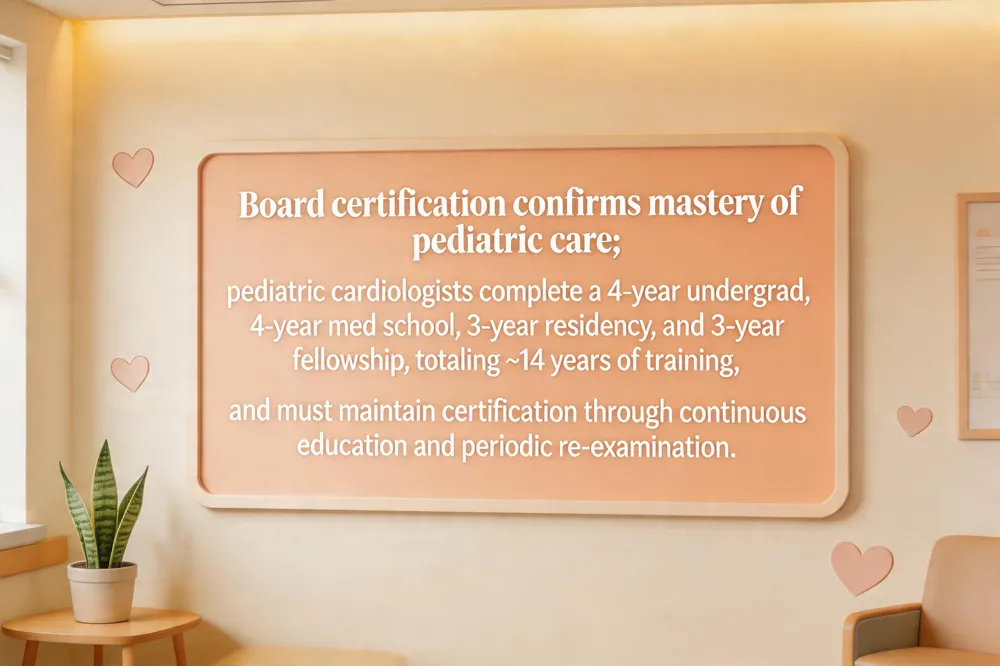 Board certification is a voluntary, peer‑reviewed process that confirms a physician has met nationally recognized standards of knowledge and skill. To become board‑certified, a pediatrician completes an accredited three‑year pediatric residency and passes the American Board of Pediatrics (ABP) initial examination. After earning diplomate status, the doctor must participate in the ABP’s Maintenance of Certification (MOC) program, which includes continuous medical education, self‑assessment, and periodic re‑examination to stay current with evolving child‑health guidelines.
What does it mean to be a board‑certified pediatrician? It signifies that the physician has demonstrated mastery of pediatric care, adheres to rigorous ethical and competency standards, and commits to lifelong learning through ongoing MOC activities.
How to become a pediatric cardiologist? After a bachelor’s degree and medical school, a doctor completes a three‑year pediatric residency, obtains board certification in pediatrics, then undertakes a three‑year ACGME‑approved pediatric cardiology fellowship. Successful completion of the subspecialty board exam grants board certification in pediatric cardiology.
How many years to become a pediatric cardiologist? The typical pathway totals about 14 years after high school: 4 years undergraduate, 4 years medical school, 3 years residency, and 3 years fellowship.
Higher Quality Care and Better Outcomes
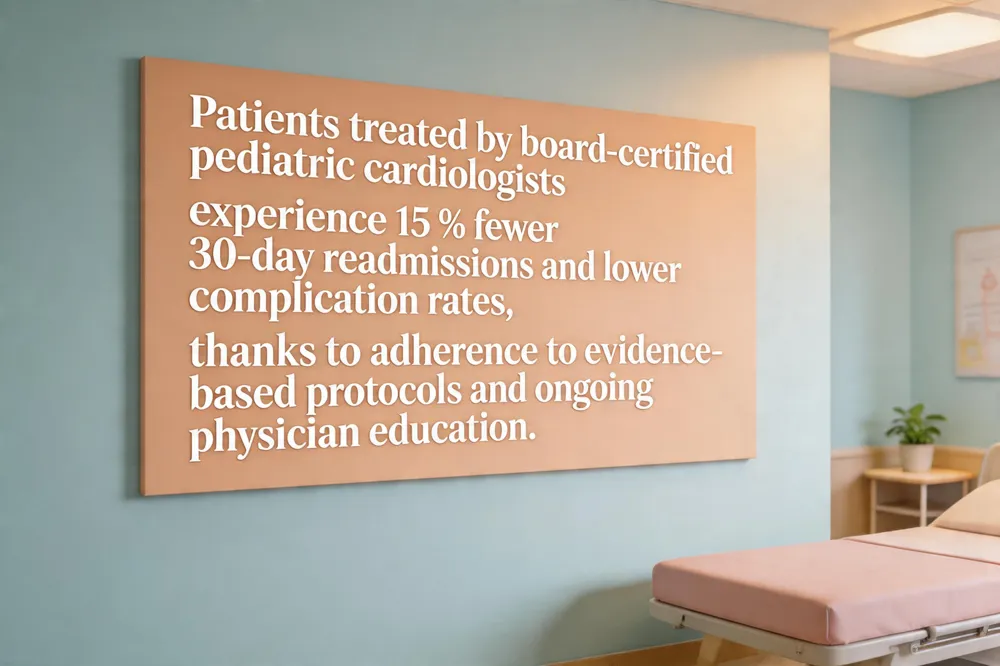 Research consistently shows that patients treated by board‑certified physicians experience lower complication rates and fewer preventable errors. Studies of congenital heart disease care reveal a 15 % reduction in 30‑day readmissions and better long‑term survival when board‑certified pediatric cardiologists manage the case. The adherence to evidence‑based protocols also leads to more accurate diagnoses, timely interventions, and reduced hospital stays.
What is the advantage of being board certified as a doctor? Being board certified signals that a physician has met rigorous, peer‑developed standards of knowledge, skills, and professionalism that go beyond state licensure. Ongoing assessments ensure the doctor stays current with medical advances, providing families in Federal Way with confidence that their child receives care from a clinician dedicated to lifelong learning and high‑quality outcomes.
Why is pediatric cardiology interesting? Pediatric cardiology is compelling because each child’s heart is a dynamic, developing organ. Detecting subtle murmurs, interpreting fetal echocardiograms, and applying minimally invasive interventions require specialized expertise and continuous innovation. Advances in imaging, genetics, and catheter‑based therapies allow early, precise treatment of congenital defects, dramatically improving long‑term health and offering families profound relief.
Specialized Cardiac Care for Children
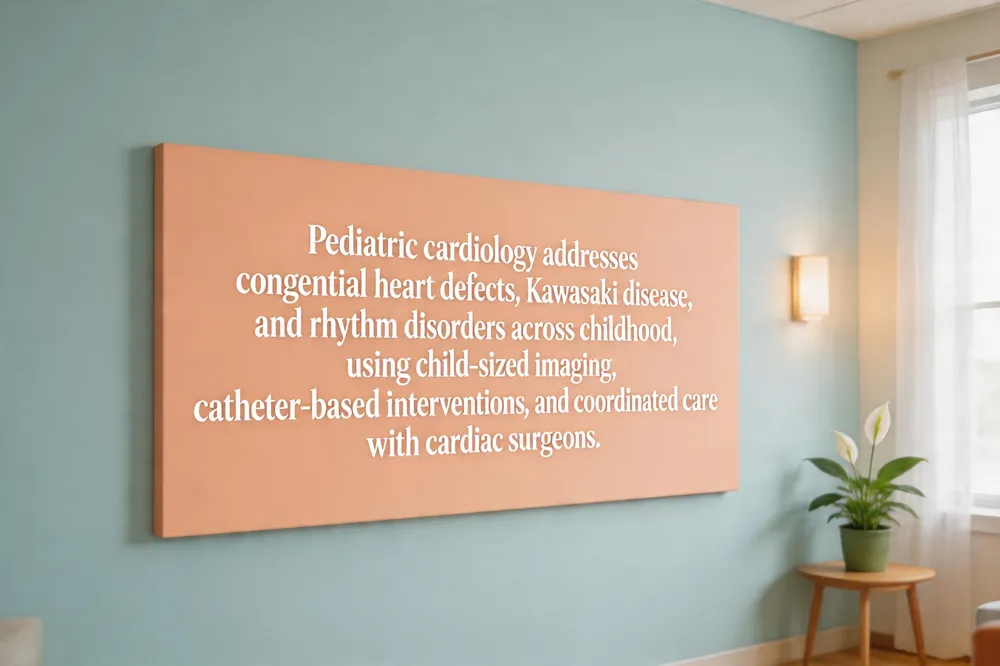 Pediatric cardiology is distinct from adult cardiology because it deals with heart problems that begin at birth and evolve through adolescence—congenital defects, Kawasaki disease, and rhythm disturbances that change as a child grows. Adult cardiology focuses on age‑related conditions such as hypertension, coronary artery disease, and heart‑. Pediatric cardiologists are trained to assess hearts of varying sizes and developmental stages, using imaging and interventions tailored for children, while adult cardiologists manage acquired disease in mature hearts.
Pediatric cardiologists are physicians who diagnose, medically manage, and coordinate care for heart conditions in infants, children, and adolescents. They evaluate symptoms, order echocardiograms, electrocardiograms, cardiac MRI, and fetal echocardiography, and develop treatment plans that may include medication, lifestyle guidance, or minimally invasive catheter‑based procedures. They do not perform open‑heart surgery; instead, they work closely with pediatric cardiac surgeons who handle structural repairs, transplants, and major operations. When surgery is needed, the cardiologist guides the team and ensures post‑operative follow‑up.
Procedural expertise in pediatric cardiology includes catheterizations, device implants, and advanced imaging that are scaled for a child's anatomy. These specialized tools and the board‑certified training of physicians such as Dr. Nauman Ahmad ensure accurate diagnosis, lower complication rates, and continuity of care for families in Federal Way, Washington.
Local Access in Federal Way
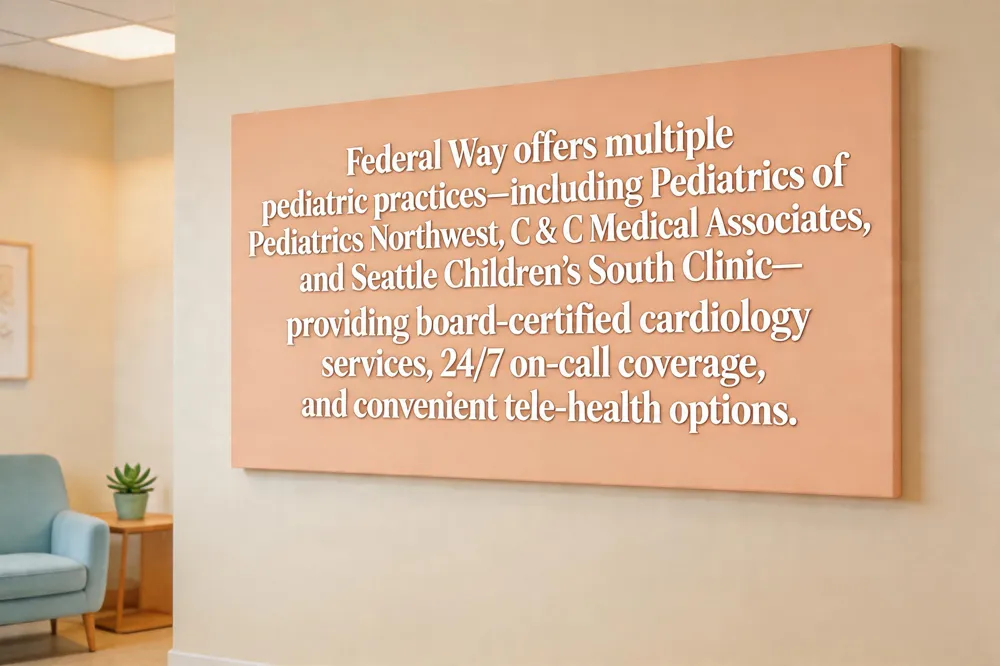 Pediatrics in Federal Way – Federal Way Office of Pediatrics Northwest (505 S 336th St Suite 210) and C & C Medical Associates (710 S 348th St Suite B) sit near St. Francis Hospital and Seattle Children’s South Clinics. They offer visits, immunizations, chronic‑disease management, sick visits, and specialties like pediatric cardiology, allergy/immunology, and pulmonology. Doctors—including Dr. Erin McCune, Dr. Chaitri Desai, and Dr. Maria Aleman—are available 8 am‑5 pm with 24/7 on‑call support. MyChart or (206) 395‑6049 adds convenience.
Federal Way Pediatric Associates – At 32124 1st Ave S Suite #100 the practice provides care and tele‑health. Dr. Nauman Ahmad, MD, a cardiologist, offers cardiac evaluation with St. Francis Hospital and Seattle Children’s South Clinic. Call (206) 395‑6049, (425) 243‑2293, or use MyChart.
Seattle Children’s Cardiology in Federal Way – The South Clinic at 34920 Enchanted Pkwy S delivers pediatric cardiac services—echocardiograms, ECGs, rhythm monitoring, and assessment. Cardiologists provide 24/7 on‑call coverage; new‑patient referrals are scheduled within 1–2 weeks. Call 253‑838‑5878 for appointments.
Career and Compensation Insights
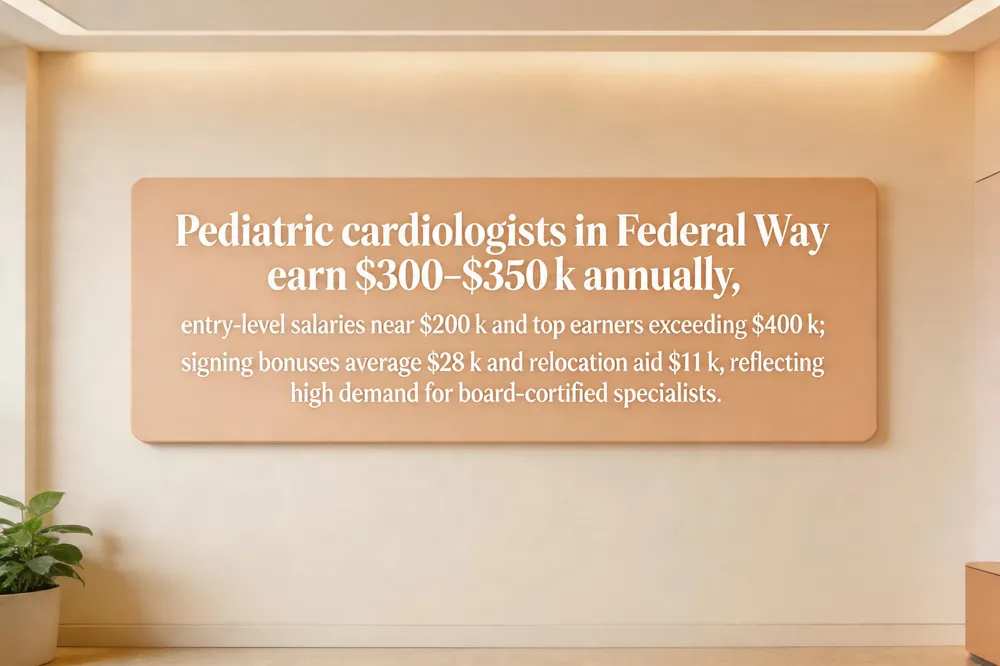 Pediatric cardiologists in the United States typically earn $200,000‑$420,000 annually, with a national average near $327,500–$335,000; entry‑level salaries sit at the low end, while experienced physicians in high‑demand markets exceed $400,000, and signing bonuses average $28,000 with relocation aid around $11,000. In Washington state, Federal Way pediatric specialistsologists fall within the $300,000‑$350,000 range. Compared with adult cardiologists—who often earn $300,000‑$500,000 or more—pediatric cardiology salaries are modestly lower due to a narrower patient population and emphasis on work‑life balance, though top earners in high‑cost regions can match adult counterparts. Board certification signals that a physician has met rigorous, peer‑reviewed standards, engages in continuous education, and adheres to evidence‑based practice, providing families confidence in high‑quality, safe pediatric cardiac care.
Choosing Board‑Certified Care for Peace of Mind
Board‑certified pediatricians and cardiologists have completed accredited residencies, passed rigorous national exams, and maintain competence through ongoing education. This guarantees knowledge of growth milestones, developmental screenings, and the evidence‑based treatments for heart defects, arrhythmias and hypertension. Studies show lower complication rates, fewer diagnostic errors and better adherence to guidelines when care is provided by board‑certified physicians, and insurers often give reimbursement and smoother referrals. For families, start by verifying the provider’s status on the ABMS or state medical board website, then schedule a visit or cardiac consultation. Ask about on‑site imaging, after‑hours urgent care and insurance acceptance to ensure care.