Understanding Early Development Through Pediatric Care
Regular well‑child visits are the cornerstone of early childhood health. At each appointment—typically at 2 weeks, 2 months, 4 months, 6 months, 9 months, 12 months, 15 months, 18 months, 24 months, and annually thereafter—pediatricians measure weight, length, and head circumference, review medical history, and observe behavior. Using standardized tools such as the Ages and Stages Questionnaires and the CDC’s "Learn the Signs. Act Early." checklists, they screen for milestones in motor, language, social‑emotional, and cognitive domains at 9, 18, and 30 months and for autism at 18 and 24 months. Early identification of delays enables prompt referral to speech‑language therapists, occupational therapists, physical therapy, or state early‑intervention programs, improving long‑term outcomes. Pediatricians also provide anticipatory guidance—nutrition counseling, safe‑sleep practices, tummy‑time tips, and play‑based activity ideas—tailored to each family’s needs. By fostering warm, responsive relationships, coordinating with specialists (including pediatric cardiology when needed), and connecting families to community resources, pediatric practices deliver family‑centered care that supports a child’s complete developmental health.
Pediatricians' Role in Monitoring Developmental Milestones
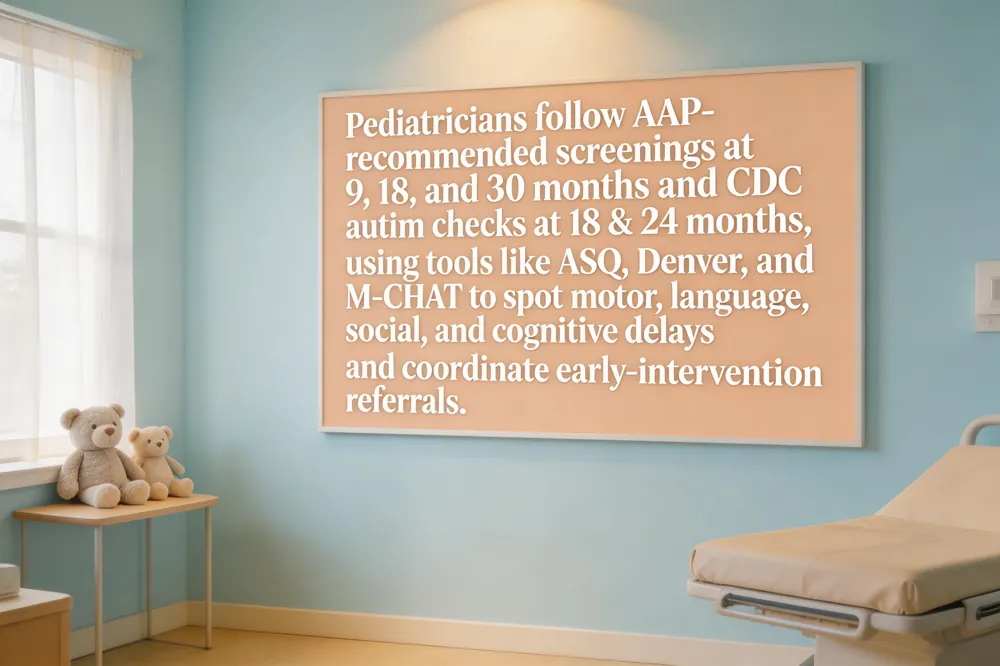 Pediatricians follow a structured developmental assessment schedule—screenings at 9, 18, and 30 months (AAP) and additional autism‑specific checks at 18 and 24 months (CDC). Tools such as the Ages and Stages Questionnaires, Denver Developmental Screening Test, and the M‑CHAT enable early identification of delays in motor, language, social and and cognitive domains. When a concern emerges, pediatricians initiate referral pathways that may include early‑intervention services, speech‑language therapy, occupational or physical therapy, and specialty evaluation (e.g., pediatric cardiology for children cardiac issues).
Child development stages by age – Infants (0‑12 months) progress from head‑control to crawling and babbling; toddlers (1‑3 years) master walking, simple words, and self‑feeding; preschoolers (3‑5 years) refine fine‑motor skills, use complex sentences, and engage in cooperative play.
What age is early childhood in psychology? – Generally 3‑6 years, a period of rapid language growth, self‑concept emergence, and heightened brain plasticity.
Early childhood 3 to 5 years old – By age 3 children climb stairs, ride a tricycle, and use forks; by age 5 they hop on one foot, catch a ball, sort objects, count, and tell simple stories while forming friendships and labeling emotions.
Key Milestones from Infancy Through Toddlerhood
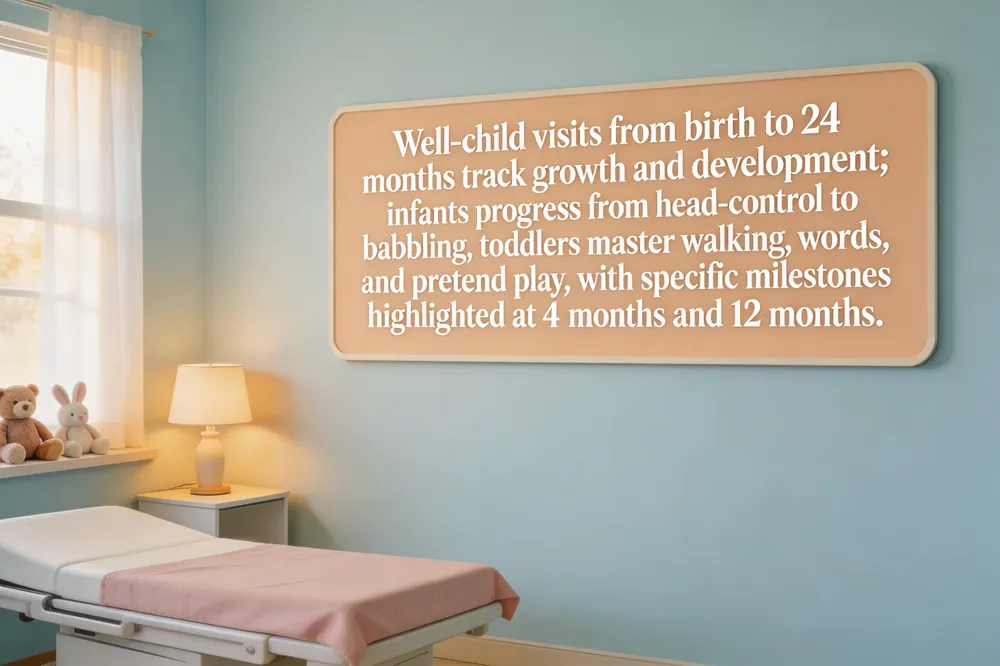 Pediatricians follow a structured schedule of well‑child visits—at birth, 2 weeks, 1, 2, 4, 6, 9, 12, 15, 18, and 24 months—to track growth, nutrition, and developmental progress. Using CDC’s “Learn the Signs. Act Early” tools and AAP‑recommended screenings at 9, 18, and 30 months they identify delays early and coordinate referrals to speech, occupational, or physical therapy.
Baby development stages 1‑2 years – In the first year infants locate sounds, respond to their name, wave goodbye, and say simple words such as “mama” or “dada.” By 15 months they stand, take a few steps, feed themselves with fingers, clap, point, and use one‑to‑two new words. At 18 months they walk independently, use three‑plus words, follow simple directions, scribble, and show affection. By age two children run, kick a ball, climb stairs with minimal help, combine two words into short phrases, point to body parts in a book, and engage in pretend play with multiple toys.
4‑month baby milestones – Most four‑month‑olds hold their head steady without support, lift it to 90°, roll front‑to‑back, bring hands to mouth, and grasp toys. Socially they smile spontaneously, chuckle at play, coo, and turn toward familiar voices. Vision allows focus on bright objects and tracking moving items. Sleep consolidates to 9‑10 hours at night with two daytime naps.
1‑year‑old baby development activities – Engage a one‑year‑old with pat‑a‑cake, waving “bye‑bye,” and peek‑a‑boo to build social‑emotional and cognitive skills. Name objects while reading board books, sing songs, and encourage pointing. Offer fine‑motor practice with stacking blocks and placing items into containers. Promote physical confidence by allowing the baby to pull up, cruise furniture, and take supported steps. Add sensory play—water tables, textured fabrics, music‑and‑movement—to support sensory integration and strengthen the parent‑child bond.
Promoting Independence and Positive Parenting
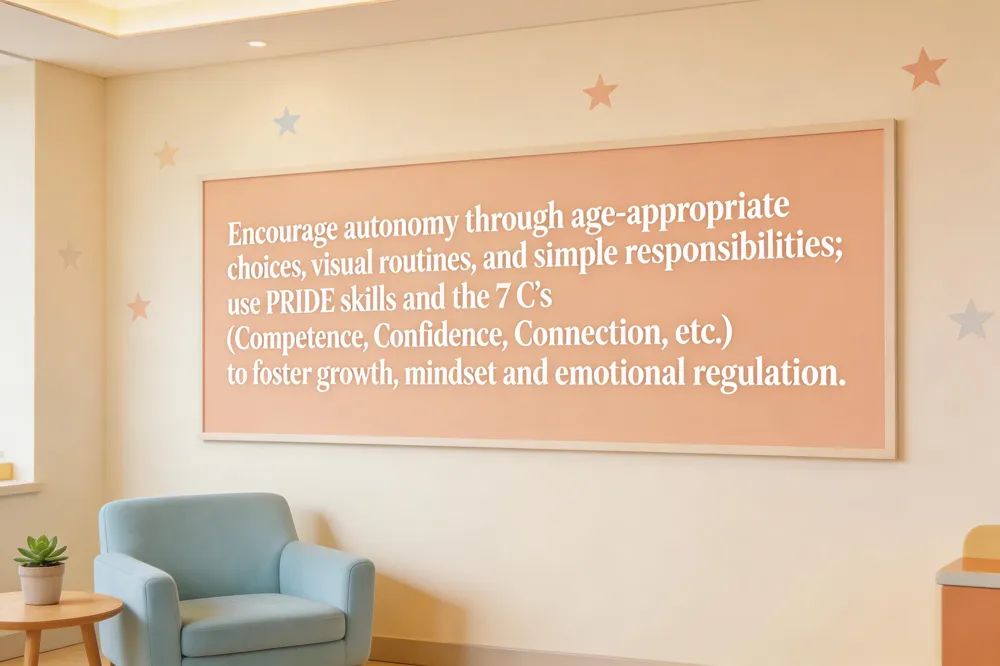 Pediatricians at 315 S Highland Dr, Many, LA, support families with evidence‑based guidance on nurturing autonomy and healthy behavior in preschoolers.
How to encourage independence in preschoolers – Offer age‑appropriate choices (e.g., snack selection, shirt to wear) to foster a sense of control. Use consistent daily routines and visual checklists that outline steps for tasks such as putting on shoes or tidying up. Assign simple responsibilities—setting the table, feeding a pet—and let natural consequences teach learning without over‑protecting. Model problem‑solving by thinking aloud, then invite the child to brainstorm solutions. Celebrate effort with clear, supportive language to build confidence and a growth mindset.
Positive parenting tips for healthy child development – Show love, warmth, and respect while setting clear expectations. Apply the PRIDE skills (Praise, Reflection, Imitation, Description, Enjoyment) to reinforce sharing, listening, and calm behavior. Model emotional regulation; children copy how you handle stress. Provide regular, unstructured play and age‑appropriate challenges that spark creativity and problem‑solving. Keep communication open and empathetic, affirming the child’s value and feelings.
What are the 7 C’s in child development? – Competence (skill development), Confidence (trust in abilities), Connection (secure relationships), Character (values and integrity), Contribution (feeling useful), Coping (stress‑management tools), and Control (awareness of influence over choices). These pillars guide pediatric counseling and parental practice for resilient, thriving children.
Early Intervention and Support Resources
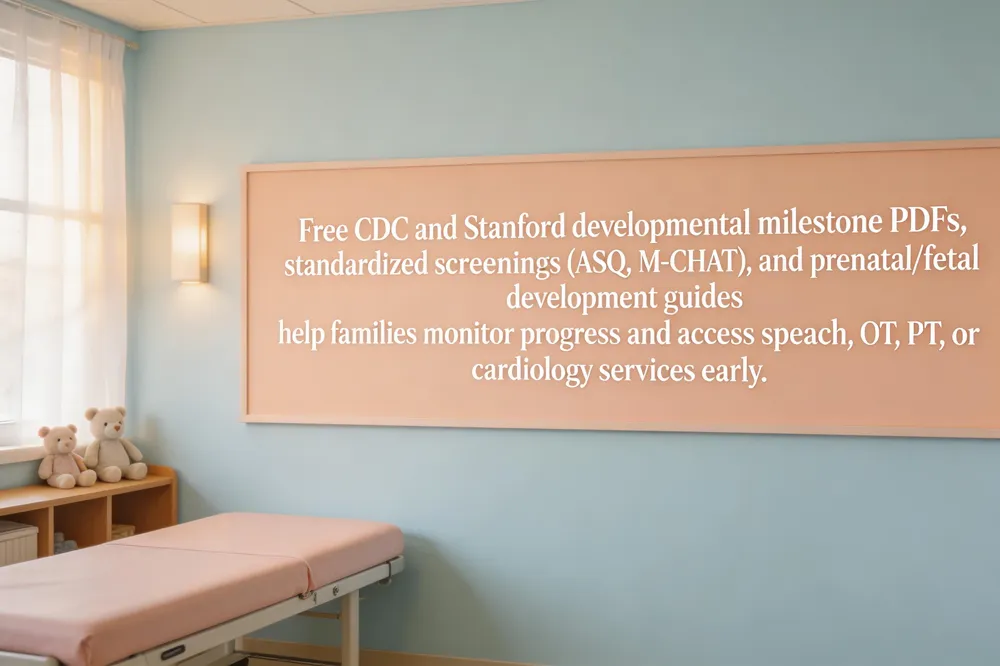 Free Developmental Milestone PDFs – Parents can download printable, age‑by‑age checklists directly from the CDC’s “Learn the Signs. Act Early.” website. Just click the "Print the milestone checklists" link to obtain a PDF covering birth through five years, available in several languages. Another no‑cost resource is Stanford University’s Developmental Milestones booklet (https://med.stanford.edu/content/dam/sm/pediatricsclerkship/documents/5-Developmental-Milestones-MedU.pdf). Both tools help families track progress during well‑child visits.nPrenatal and Fetal Development* – Fetal growth occurs in three stages:
- Germinal (conception‑≈1 week) – fertilization, blastocyst formation, implantation.
- Embryonic (weeks 3‑8) – organogenesis; heart begins beating by week 5‑6.
- Fetal (week 9‑birth) – rapid size increase, refinement of organ function, development of sex characteristics, and observable movements by week 20. These milestones guide pediatric counseling on maternal health and newborn expectations.nStandardized Screening Tools* – The American Academy of Pediatrics recommends developmental screenings at 9, 18, and 30 months using validated instruments such as the Ages & Stages Questionnaires (ASQ) and the Modified Checklist for Autism in Toddlers (M‑CHAT). Autism‑specific screening is also performed at 18‑ and 24‑months. Early identification enables prompt referrals to speech‑language, occupational, or physical therapy, improving long‑term outcomes.nHow to Access Resources* – Visit the CDC site for the milestone PDF, explore Stanford’s booklet, and ask your pediatrician at 315 S Highland Dr, Many, LA 71449 for guidance on using these tools during routine well‑child visits.
Integrating Pediatric Cardiology and Holistic Care
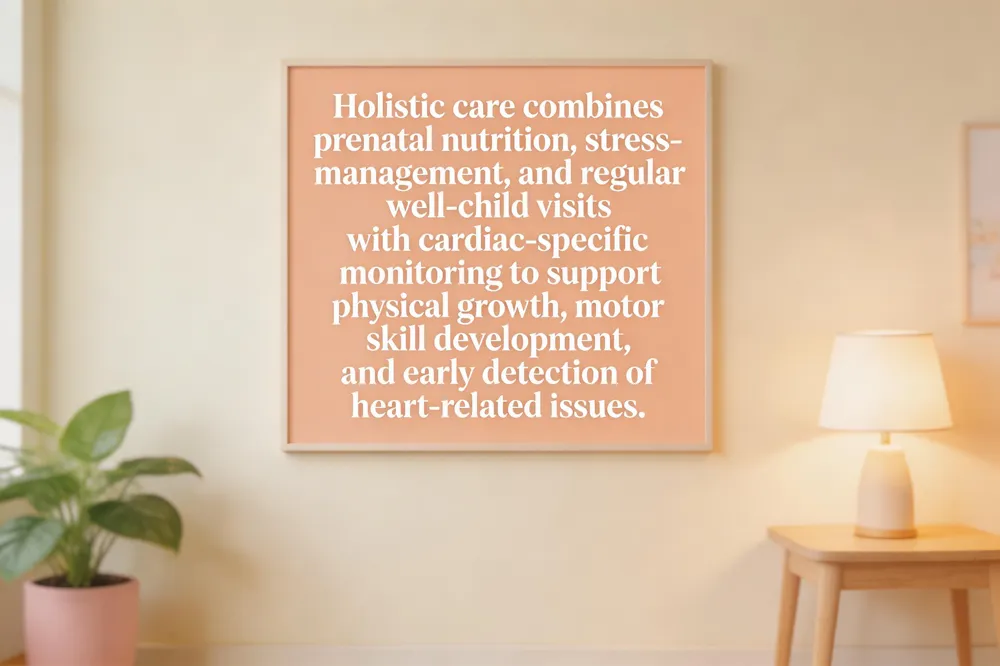 How to encourage baby development during pregnancy
Take a prenatal vitamin with at least 400 µg folic acid, eat a diet rich in leafy greens, fortified grains, lean protein, calcium‑rich dairy or alternatives, and vitamin‑D sources such as fatty fish. Avoid alcohol, tobacco, and drugs; stay hydrated, do exercise like walking or prenatal yoga, and keep all prenatal appointments. Manage stress with relaxation, adequate sleep, and a support network. Discuss any supplements with your pediatric‑cardiology‑trained provider.
Early childhood physical development
From ages 2 to 6 children gain about 3 inches in height and 4–5 pounds each year. Gross‑motor skills move from walking to running, jumping, and climbing; fine‑motor abilities grow through stacking blocks, drawing, and buttoning. Synaptic pruning and myelination improve coordination and body awareness. Adequate nutrition, regular sleep, and routine well‑child visits support growth and help detect delays, especially for children with cardiac concerns.
Early childhood stages of development
Infancy (birth‑12 months) includes rolling, sitting, crawling, first words and cooing. Toddlerhood (1‑3 years) adds independent walking, self‑feeding, expanding vocabulary and simple social play. Preschool (3‑5 years) brings fine‑motor skills, imaginative play, rapid language growth, self‑regulation and problem‑solving. Monitoring these milestones lets pediatricians and families identify normal patterns and refer to early‑intervention or cardiology services when needed.
Putting It All Together for a Strong Start
Pediatricians serve as the hub for a child's health, conducting routine well‑child visits, growth measurements, and developmental screenings at 9, 18, and 30 months as recommended by the AAP and CDC. They identify early signs of motor, language, social‑emotional or cognitive delays, screen for autism, and coordinate referrals to speech‑language, occupational, physical therapy, or intervention programs. By offering anticipatory guidance on nutrition, sleep, safe play and responsive caregiving, they empower families to create nurturing environments that promote brain growth.
A strong family‑pediatric partnership hinges on open communication, shared decision‑making, and consistent follow‑up. Parents are encouraged to bring concerns, use milestone checklists from the CDC’s “Learn the Signs. Act Early.” program, and participate in counseling on routines, play, and emotional regulation.
Next steps include scheduling well‑child visits, completing screenings, and accessing resources such as HealthySteps, intervention services, and pediatric cardiology follow‑up when needed. Ongoing collaboration ensures each child reaches their developmental potential.