Why This Comparison Matters
Pediatricians specialize in the health of patients from birth through adolescence, focusing on growth, development, immunizations, and childhood‑specific illnesses. Family physicians train to care for ages, newborns to seniors, offering a less deep experience. Both types of doctors must graduate from medical school, complete a three‑year residency, and obtain a license. Board certification—by the American Board of Pediatrics for pediatricians and by the American Board of Family Medicine for family doctors—demonstrates that a physician has met rigorous standards, passed a specialty exam, and commits to education. This credential ensures care and can affect insurance coverage and referral pathways for children.
Training Pathways and Board Certification
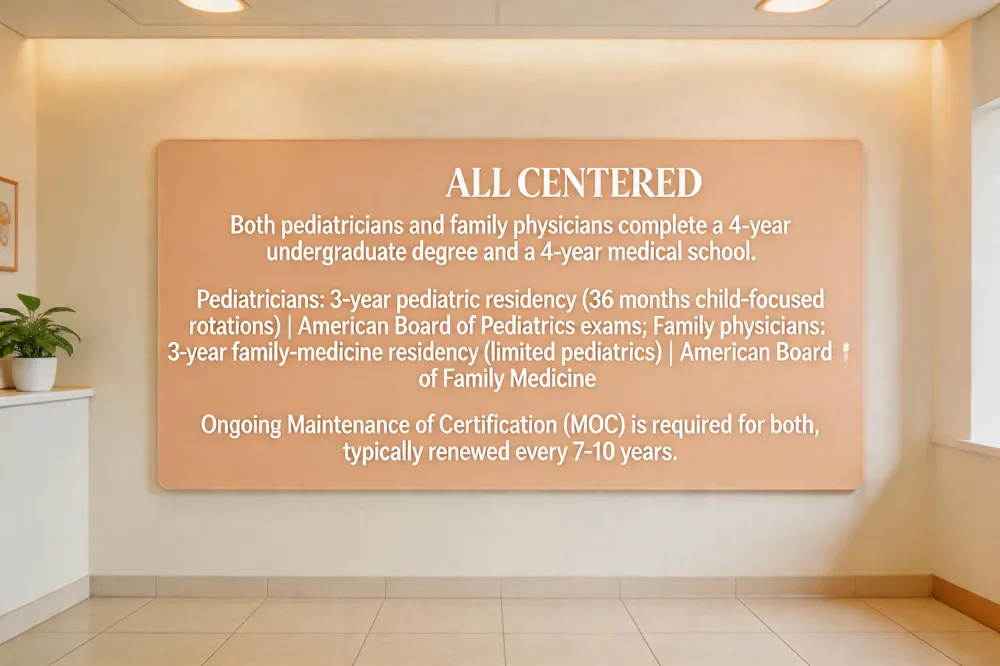 Pediatricians and family physicians both start with a four‑year undergraduate degree and a four‑year medical school program, earning an MD or DO. After medical school, pediatricians enter a three‑year residency devoted exclusively to infant, child, and adolescent health, completing a minimum of 36 months of pediatric‑specific clinical rotations, including intensive experience in neonatal intensive care and pediatric cardiology, and other subspecialties. Family physicians complete a family‑medicine residency that blends adult internal medicine, obstetrics‑gynecology, and a limited pediatric component, preparing them to care for patients of all ages.
Board certification follows residency. Pediatricians must pass the American Board of Pediatrics (ABP) written and oral examinations; family physicians are certified by the American Board of Family Medicine (ABFM). Both specialties require ongoing Maintenance of Certification (MOC) that includes pediatric‑focused continuing medical education for pediatricians and a broader CME portfolio for family physicians, typically renewed every seven to ten years.
What is the difference between a pediatrician and a general practitioner? Pediatricians specialize in child health, diagnosing growth, developmental, and congenital issues, while general practitioners (family doctors) provide care for the entire age spectrum but with less depth in pediatric subspecialties.
Are board certified doctors better? Board certification demonstrates that a physician has met rigorous national standards and engages in continual learning, which correlates with higher quality care and better patient outcomes.
Does a pediatrician need to be board certified? Legal practice requires only a medical license, but board certification is the gold standard for pediatric expertise and ongoing competence.
Is pediatrician a physician? Yes. Pediatricians complete medical school, a pediatric residency, and are licensed MDs or DOs.
How are pediatricians different from doctors? All pediatricians are physicians, but they receive additional focused training in child‑specific diseases, development, and preventive care.
Is pediatrics primary care or specialist? General pediatrics is a primary‑care specialty; subspecialists such as pediatric cardiologists are specialists who receive referrals from primary pediatricians.
Scope of Practice and Specialized Care
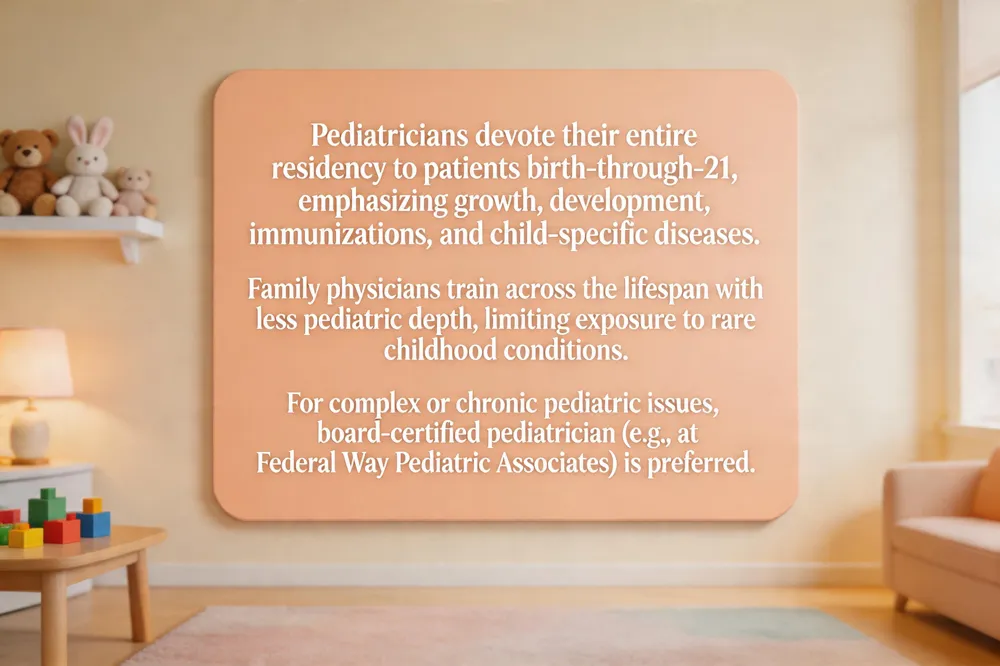 Pediatricians and Family physicians both complete four years of medical school and a three‑year residency, but their training diverges after that point. A pediatrician’s residency is devoted entirely to patients from birth through age 21, emphasizing growth, development, immunizations and child‑specific diseases. Family physicians train across the lifespan, allocating only a portion of their clinical time to pediatrics, which can limit exposure to rare childhood conditions.
Can I use a family doctor as a pediatrician?
Yes. Family doctors are licensed to treat children and can manage routine well‑child visits, vaccinations and minor illnesses. However, board‑certified pediatricians—such as those at Federal Way Pediatric Associates—have deeper expertise in developmental screening, congenital disorders and subspecialties like pediatric cardiology. For complex or chronic conditions, a pediatrician is generally preferred.
What age to switch from pediatrician to family doctor?
Most practices transition patients around age 18‑21, often coinciding with high‑school graduation or college enrollment. Teens with chronic or special‑needs conditions may begin a transition plan earlier (13‑14) to ensure continuity of care.
Pediatrician vs family doctor for newborn
Pediatricians receive intensive training in newborn health, feeding, early milestones and vaccine schedules, making them the ideal first‑line providers for infants, especially those with special needs. Family doctors can provide basic newborn care but may lack the depth of infant‑specific experience.
Seattle Children’s Cardiology Federal Way
Seattle Children’s South Clinic in Federal Way offers comprehensive pediatric cardiology services—including fetal echocardiograms, rhythm management and congenital heart‑defect care—staffed by board‑certified pediatric cardiologists.
Federal Way Pediatric Associates
Located at 32124 1st Ave S, Suite 100, this practice delivers full‑service primary pediatric care and a dedicated cardiac program led by Dr. Nauman Ahmad, MD, a board‑certified pediatric cardiologist. Telehealth, same‑day sick‑visit appointments and 24/7 on‑call support make it a convenient, child‑focused option for families in the Federal Way area.
Continuity of Care and Transition Strategies
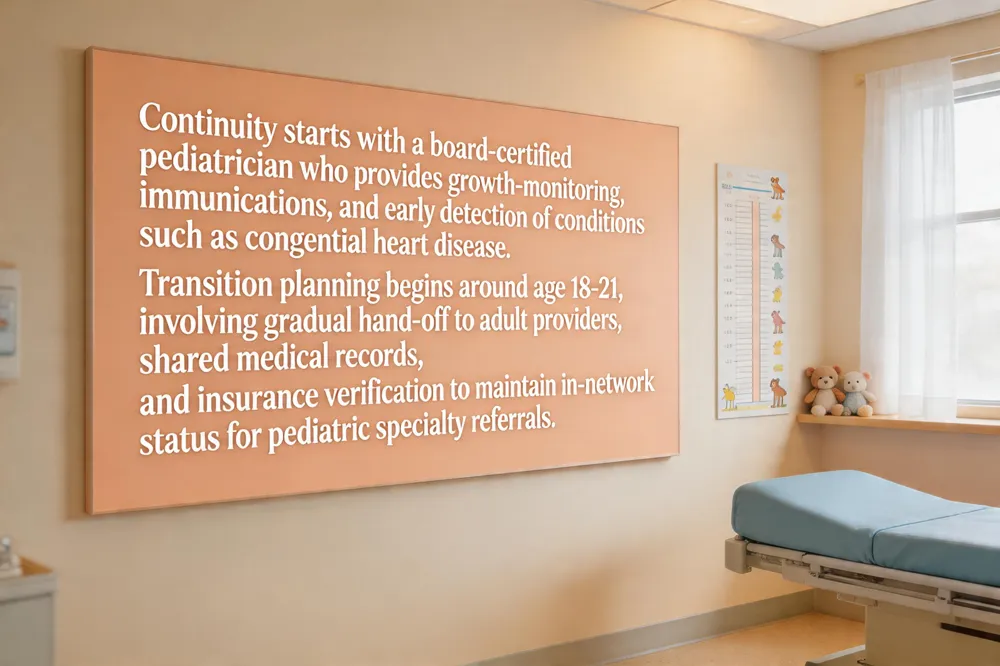 Continuity of care begins with a reliable, board‑certified pediatrician who has completed a three‑year pediatric residency, passed the American Board of Pediatrics exam, and maintains certification through regular Maintenance of Certification. This focused training gives pediatricians deep expertise in growth‑development milestones, immunization schedules, and child‑specific conditions such as congenital heart disease, ensuring early detection and coordinated referrals to subspecialists like pediatric cardiologists in Federal Way.
Transition planning is essential as children approach the upper age limit of pediatric care (usually 18‑21 years). A pediatrician will guide families through a gradual hand‑off to an adult‑focused provider, sharing comprehensive medical records, growth charts, and any ongoing specialty care plans.
Insurance considerations: Many Medicaid and private plans list board‑certified pediatricians as primary providers for child‑specific services, affecting reimbursement rates for well‑child visits, vaccines, and specialist referrals. Verify that the chosen pediatric practice is in‑network and understand any prior‑authorization requirements for pediatric cardiology or other subspecialty services.
FAQs
- Do you need a pediatrician before leaving the hospital? No, but selecting one beforehand streamlines post‑discharge follow‑up, ensures timely immunizations, and reduces paperwork.
- Is it better to have a family doctor or pediatrician? Pediatricians offer child‑focused expertise, especially for complex conditions, while family doctors provide convenience for whole‑family care. For children with special health needs, a pediatrician is generally preferred.
- Pediatrics Federal Way – Trusted clinics such as Pediatrics Northwest (505 S 336th St Suite 210) and Federal Way Pediatrics (710 S 348th St Ste B) provide comprehensive primary care, same‑day sick visits, and access to pediatric cardiology, with office hours 8 am‑5 pm and 24/7 on‑call coverage. Appointments can be scheduled by phone or via MyChart telehealth.
Quality Indicators and Outcomes
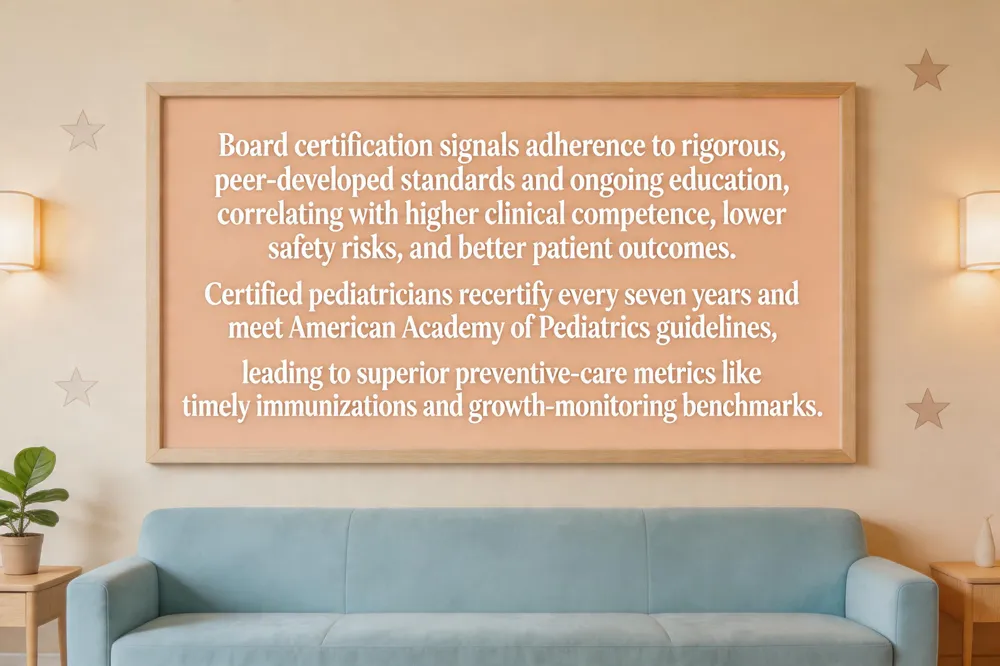 Choosing a board‑certified pediatrician matters because board certification signals that a physician has met rigorous, peer‑developed standards that exceed basic licensure. Certified pediatricians must pass the American Board of Pediatrics examination, recertify every seven years, and complete pediatric‑focused continuing education. This ongoing learning translates into higher clinical competence, lower safety risks, and better patient outcomes, as shown in multiple studies and insurance policies that favor board‑certified providers.
All pediatricians are physicians, but their training is uniquely child‑centered. After four years of medical school they complete a three‑year pediatric residency, gaining deep expertise in growth, development, vaccination schedules, and childhood diseases—knowledge that most general doctors lack. This specialized focus enables early detection of developmental delays, congenital heart defects, and other child‑specific conditions.
While a medical license alone permits a doctor to treat children, board certification is the gold standard for pediatric care. It assures families that the pediatrician adheres to the latest evidence‑based guidelines from the American Academy of Pediatrics, maintains competence through the Maintenance of Certification program, and is more likely to achieve optimal preventive‑care metrics such as timely immunizations and growth‑monitoring benchmarks. In short, board‑certified pediatricians deliver higher‑quality, child‑specific care that supports better health outcomes for infants, children, and adolescents.
Local Resources and Access to Specialized Care in Federal Way
 Federal Way offers a robust network of pediatric resources designed to meet the full spectrum of children’s health needs.
Pediatric clinics – Federal Way Pediatric Associates, located at 32124 1st Ave S Suite 100, provides comprehensive primary‑care services, including well‑child visits, immunizations, chronic‑disease management, and acute‑illness walk‑ins. The practice also offers 24/7 on‑call pediatricians and telehealth options for convenient follow‑up. Appointments can be scheduled by calling (206) 395‑6049 or (425) 243‑2293, or through the MyChart portal.
Cardiology services – Seattle Children’s South Clinic in Federal Way (34920 Enchanted Pkwy S) delivers full‑service pediatric cardiology program, from prenatal cardiac consultations and fetal echocardiograms to rhythm management and long‑term care of congenital heart defects. Staffed by Seattle Children’s Heart Center cardiologists, the clinic offers same‑day or next‑day visits, free parking, and extended weekday hours (7:30 a.m.–5 p.m.). Coordination with local primary providers and Seattle Children’s Hospital ensures seamless referral pathways.
Telehealth and convenience – Both Federal Way Pediatric Associates and Seattle Children’s South Clinic provide virtual visit capabilities, allowing families to discuss symptoms, review test results, and receive prescribing guidance without leaving home. This telehealth integration reduces travel time, supports timely care, and aligns with the child‑centered, family‑focused approach that Federal Way values.
For families searching “pediatrician near me,” Federal Way Pediatrics stands out with board‑certified physicians, a dedicated pediatric cardiology program, flexible scheduling, and broad insurance acceptance, making high‑quality child health care readily accessible.
Key Takeaways for Families
Board‑certified pediatricians complete a three‑year pediatric residency and focus exclusively on patients from birth through age 21, mastering growth, development, immunizations and child‑specific diseases. Family physicians finish a three‑year family‑medicine residency that spans the entire lifespan, allocating only a small portion of time to pediatric care. When selecting a provider, consider a child’s health complexity, the need for specialized services such as pediatric cardiology, and the desire for continuity across generations. Start by confirming board certification, insurance network participation, and office hours that suit your family’s schedule. Schedule an initial visit to discuss preventive care, developmental screening, and any referrals needed.