Why Comprehensive Testing Matters
Comprehensive pediatric care means coordinating every diagnostic piece—blood work, imaging, and specialty panels—into a single, child‑focused plan. A routine CMP, CBC, and targeted panels screen metabolism, anemia, and endocrine health, while ultrasound, echocardiography, MRI, or low‑dose CT reveal structural or functional issues without unnecessary radiation. By merging these results, clinicians can pinpoint the root cause of symptoms early, tailor treatment, and monitor progress across developmental stages. For infants, this catches congenital heart defects or metabolic disorders; for school‑age children it guides growth‑related interventions; for adolescents it identifies emerging risks such as diabetes or dyslipidemia, supporting lifelong wellness for the whole family.
Understanding Comprehensive Pediatrics
 Comprehensive pediatrics is a patient‑centered, whole‑person model that monitors the physical, emotional, developmental, and mental‑health needs of infants, children, and adolescents from birth through teenage years. The approach emphasizes early detection of growth, developmental, and behavioral concerns through regular well‑child visits, routine screenings, and timely immunizations. When a concern arises—such as delayed milestones, excessive weight gain, or a family history of heart disease—the primary pediatrician coordinates with specialists, including pediatric cardiologists, endocrinologists, and mental‑health providers, to arrange targeted testing (e.g., CMP, lipid panel, thyroid studies) and imaging (ultrasound, echocardiogram, MRI as recommended by the American Academy of Pediatrics.
Why don’t pediatricians do blood work for every visit? Guidelines advise laboratory testing only when a clear clinical indication exists. Routine labs on healthy children often yield normal results, add cost, and may be denied by insurers. Pediatricians therefore focus on a thorough physical exam and symptom‑based screening, ordering blood work—such as a comprehensive metabolic panel, iron studies, or lipid profile—only when it will influence management or uncover a preventable condition. This selective strategy protects families from unnecessary procedures while ensuring that any abnormal finding is promptly investigated and treated.
Blood Work Essentials: CMP, CBC, and Beyond
 What is a comprehensive metabolic panel for kids? A comprehensive metabolic panel (CMP) is a blood test that evaluates a child’s overall metabolic health. It measures glucose, calcium, key electrolytes (sodium, potassium, chloride, carbon dioxide), kidney‑filtering waste products (blood urea nitrogen and creatinine), and liver function markers (albumin, total protein, alkaline phosphatase, ALT, AST, and bilirubin). The results help doctors assess fluid balance, mineral status, and how well the kidneys and liver are working—essential for diagnosing or monitoring diabetes, kidney disease, liver disorders, or electrolyte imbalances.
What tests are included in a comprehensive panel? The CMP includes fourteen components: glucose, calcium, sodium, potassium, chloride, carbon dioxide (bicarbonate), blood urea nitrogen, creatinine, albumin, total protein, alkaline phosphatase, ALT, AST, and bilirubin. Together they provide a broad picture of metabolic health, organ function, and electrolyte balance.
What is a CBC blood test for kids? A complete blood count (CBC) measures red blood cells, white blood cells, and platelets. It detects anemia, infection, inflammation, and other hematologic disorders, guiding treatment for a wide range of pediatric conditions.
What is considered pediatric labs? Routine pediatric labs typically include CBC, CMP, lipid profile, thyroid panel, iron studies, and disease‑specific panels such as allergy testing or infectious disease serologies.
How do they draw blood from a 7‑year‑old? A trained phlebotomist uses a small “butterfly” needle after ensuring the child is well‑hydrated and comfortably dressed. A parent stays close for reassurance while the technologist distracts the child with conversation or a toy. The needle is placed quickly, only the minimum volume needed is taken, and a bandage is applied. Praise or a small reward follows to make the experience positive.
Imaging in Children: Modalities, Safety, and Decision‑Making
 Definition and goals of pediatric imaging
Pediatric imaging is a subspecialty of diagnostic radiology dedicated to visualizing the bodies of infants, children, and adolescents. It uses child‑specific protocols and a family‑friendly environment—often with Child Life specialists, interactive games, and comfort items—to obtain high‑quality images while minimizing discomfort and anxiety. The primary goal is accurate diagnosis and treatment planning with the lowest possible risk to a growing child.
Seven primary imaging modalities
The seven core modalities are X‑ray (quick 2‑D bone and soft‑tissue view), computed tomography (CT – cross‑sectional images from multiple X‑ray angles), magnetic resonance imaging (MRI – detailed soft‑tissue images without radiation), ultrasound (real‑time sound‑wave imaging), nuclear medicine/PET (functional imaging with tracers), fluoroscopy (continuous X‑ray for dynamic studies), and DEXA bone‑density testing (mineral content assessment).
Why MRI is generally preferred over CT
MRI is the favored choice for most pediatric studies because it uses magnetic fields and radio waves, eliminating ionising radiation and the associated long‑term cancer risk. It excels at evaluating brain, spinal cord, joints, and soft‑organ pathology. However, MRI requires longer scan times and often sedation for young children who cannot stay still, whereas CT is faster and may be easier for infants or toddlers in emergency settings.
Radiation concerns with CT in children
Children are far more sensitive to ionising radiation than adults, and a single CT can deliver a dose proportionally higher for a small body. Cumulative exposure raises the risk of leukemia and brain tumors, and because there is no safe threshold, physicians reserve CT for cases where the diagnostic benefit clearly outweighs these risks. Safer alternatives such as ultrasound or MRI are preferred whenever possible.
Is CT or MRI better for kids?
MRI is generally preferred for its radiation‑free nature, especially for non‑urgent, detailed soft‑tissue evaluation. CT is valuable for rapid imaging in acute trauma, suspected fractures, or when a quick chest/abdomen assessment is needed. The decision hinges on the clinical question, the child’s ability to stay still, and the balance of benefit versus risk.
Why don't they do CT scans on kids?
Because CT uses ionising radiation, and children have a longer lifetime for potential radiation‑induced damage to manifest, physicians limit CT to situations where the diagnostic advantage is essential, opting instead for ultrasound or MRI whenever feasible.
What are the 7 types of imaging?
The seven primary modalities are X‑ray, CT, MRI, ultrasound, nuclear medicine/PET, fluoroscopy, and DEXA bone‑density testing.
What is pediatric imaging?
Pediatric imaging is a dedicated field that visualizes children’s bodies using age‑appropriate techniques, child‑friendly environments, and strict radiation‑safety guidelines to ensure accurate diagnosis while protecting young patients from unnecessary exposure.
Specialty Panels and Integrated Testing
 In pediatric care, specialty panels dive deeper than routine labs to uncover hidden causes of illness. Genetic and metabolic panels screen for inherited metabolic disorders, chromosomal abnormalities, and single‑gene mutations that can affect growth, heart development, or neurologic function. In pediatric cardiology, cardiac biomarker panels—such as troponin, B‑type natriuretic peptide (BNP), and high‑sensitivity C‑reactive protein—help detect myocardial injury, heart failure, or inflammation, guiding treatment decisions after echocardiography or MRI. Allergy and immunology panels (specific IgE, eosinophil counts, immunoglobulin subsets) identify food, environmental, or drug sensitivities that may exacerbate respiratory or dermatologic symptoms, while endocrine panels (TSH, free T4, cortisol, growth hormone) evaluate thyroid disease, adrenal disorders, and growth‑related issues. These targeted panels are ordered alongside the comprehensive metabolic panel, CBC, and imaging studies (ultrasound, echocardiography, MRI to create a holistic picture of a child’s health, allowing clinicians to tailor interventions and reduce the need for repeat testing.
Recognizing Danger Signs and When to Seek Care
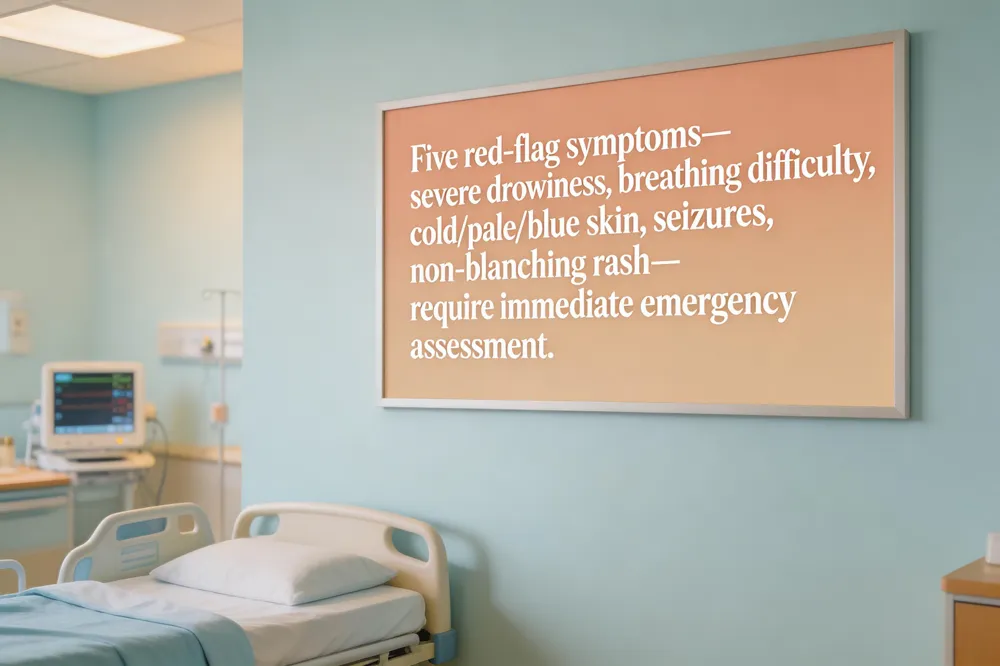 Parents and caregivers should be alert for five general danger signs that signal a child needs urgent medical attention: (1) severe drowsiness or unresponsiveness, (2) difficulty breathing or abnormal breathing patterns, (3) cold hands or feet, or pale, blotchy, or blue‑tinged skin, (4) seizures, and (5) a rash that does not blanch when pressed. If any of these signs appear, act quickly—call 911 or your local emergency services, and do not wait for a routine appointment. While waiting for help, keep the child safe and comfortable: lay them on their side if they are vomiting, ensure an airway is clear, and note the time of onset and any medications taken. Prompt recognition and rapid response can be lifesaving, especially for children with underlying heart or metabolic conditions. For non‑emergent concerns, schedule a same‑day evaluation with your pediatric cardiology team to discuss next steps.
Putting It All Together for Your Child’s Health
Coordinated lab tests, imaging, and specialty panels give a complete picture of a child’s health. Blood work such as a metabolic panel (CMP) and CBC reveals organ function, nutrition, and infection; ultrasound, echocardiography, MRI or low‑dose CT pinpoint structural or functional problems without excess radiation; targeted panels (genetic, cardiac biomarkers, thyroid, lipid) answer questions. In Federal Way, pediatric clinics partner with Quest Diagnostics, local radiology centers, and cardiologists to schedule tests on visit or through a portal, reducing travel anxiety. Parents are encouraged to ask about screenings, keep fasting instructions, and view monitoring as a partnership that protects child’s wellbeing.