A New Era for Children’s Health in Federal Way
Federal Way’s pediatric community is rapidly expanding both genetic screening and imaging capabilities to catch disease earlier and tailor treatment. State‑wide newborn screening now includes DNA‑based panels for metabolic, cardiac and immune disorders, and Florida’s Sunshine Genetics Act pilot will soon sequence 100,000 infants for over 750 treatable conditions—showing the national move toward actionable, genome‑wide testing. At the same time, advances such as low‑dose CT, motion‑corrected MRI, 3‑D echocardiography and AI‑assisted cardiac MRI provide radiation‑free, high‑resolution views of congenital heart disease and other anomalies. Local providers—including Seattle Children’s South Clinic, Dr. Nauman Ahmad’s Federal Way Pediatric Associates, and the pediatric cardiology team at St. Joseph Medical Center—combine next‑generation sequencing panels (over 200 CHD genes) with these imaging tools in multidisciplinary clinics. Families can schedule same‑day genetic counseling, obtain rapid test results (often within 24‑48 hours), and receive coordinated imaging follow‑up, ensuring a seamless, family‑centered pathway from screen to treatment.
Genomic Screening Expansion and What It Means for Families
Key Points
| Aspect | Details |
|---|---|
| Pilot Scope | 5‑year pilot, up to 100,000 Florida newborns |
| Conditions Screened | >750 treatable genetic conditions (up from ~60) |
| Selection Criteria | Actionability – approved therapy or clear clinical intervention |
| Example Gene | TK2D (thymidine‑kinase‑2 deficiency) – FDA‑approved therapy |
| Benefits | Early diagnosis, rapid intervention (diet, vitamins, drugs), reduced organ damage |
| Family Impact | Faster referrals to pediatric cardiology/metabolic specialists, better insurance coverage, trial access |
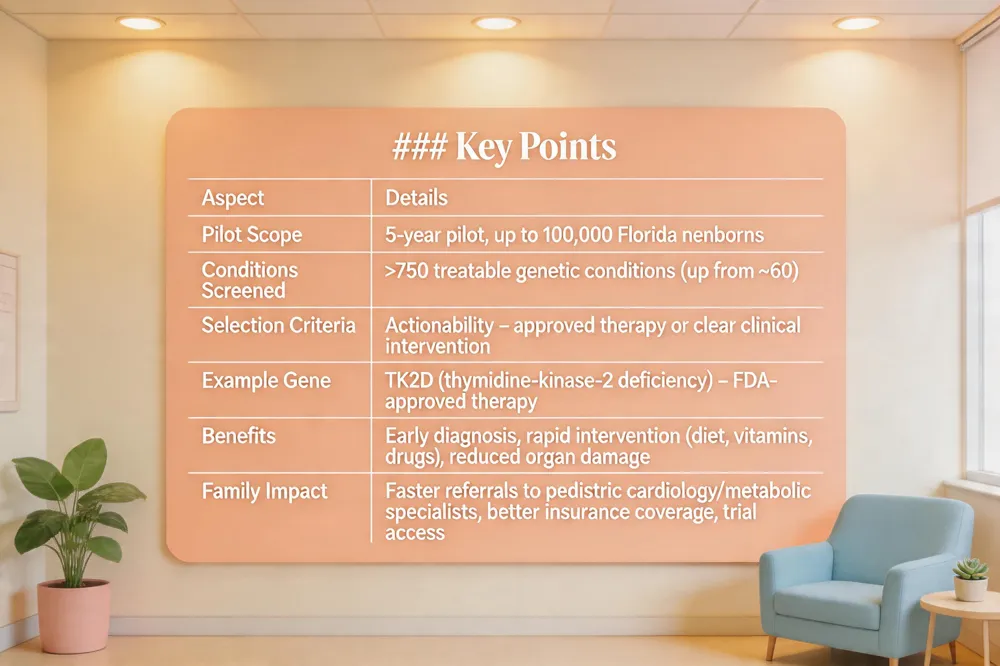 The Sunshine Genetics Act launches a five‑year pilot to sequence up to 100,000 newborns in Florida, expanding the standard panel from ~60 to >750 treatable conditions. Selection of genes is driven by actionability—an approved therapy or clear clinical intervention must exist, as illustrated by the recent FDA‑approved therapy for thymidine‑kinase‑2 deficiency (TK2d). Early genomic screening enables rapid interventions such as dietary changes, vitamin supplementation, or disease‑specific drugs, preventing irreversible organ damage.
What does pediatric genetic testing do? It analyzes a child’s DNA to identify mutations or chromosomal changes that explain developmental delays, congenital heart defects, seizures, or metabolic disorders. Results guide targeted therapies, surveillance, and family counseling.
What does genetic testing test for in children? Panels look for mutations, deletions, duplications, or extra chromosome pieces linked to conditions ranging from cystic fibrosis and SMA to cardiomyopathies and neurodevelopmental disorders.
Why would a child need genetic testing? When symptoms suggest an inherited disorder, when a family history is present, or when newborn screening reveals a treatable mutation, testing confirms diagnosis and informs personalized care.
Pre‑conception and prenatal carrier testing identifies hidden parental mutations (e.g., CF, SMA, X‑linked disorders) so couples can plan reproductive options, including IVF with pre‑implantation genetic testing.
Diagnostic yields for neurodevelopmental disorders are 30‑40 % with whole‑exome sequencing, shortening the diagnostic odyssey and opening access to clinical trials.
Ethical considerations require testing to be medically necessary for the child’s current health, deferring predictive adult‑onset tests until the child can consent, and protecting family privacy per AAP guidelines.
These advances mean families in Federal Way(https://www.radiologic.theclinics.com/article/S0033-8389(25)00022-3/fulltext) and beyond can expect earlier, more precise diagnoses, faster access to life‑saving therapies, and coordinated care that integrates genetics with cutting‑edge cardiac imaging.
Federal Way’s Pediatric Care Hub: Cardiology, Dentistry, and More
Services Overview
| Clinic | Location | Services | Contact |
|---|---|---|---|
| Seattle Children’s South Clinic | 34920 Enchanted Pkwy S | Pediatric cardiology (echo, ECG, rhythm monitoring, prenatal consults) | 253‑838‑5878 |
| Mary Bridge Children’s Outpatient Center | 505 S 336th St, Suite 200 & 330 | 25+ subspecialties, therapy, 7‑day urgent care | — |
| Federal Way Office of Pediatrics Northwest | 505 S 336th St, Suite 210 | Well‑child visits, immunizations, chronic disease mgmt, telehealth, 24/7 on‑call | — |
| C & C Medical Associates – Federal Way Pediatrics | 710 S 348th St, STE B | Same as above | — |
| Federal Way Pediatric Dentistry | 1035 S 320th St., Unit B | Preventive, restorative, sedation for special‑needs | 1‑253‑262‑6589 |
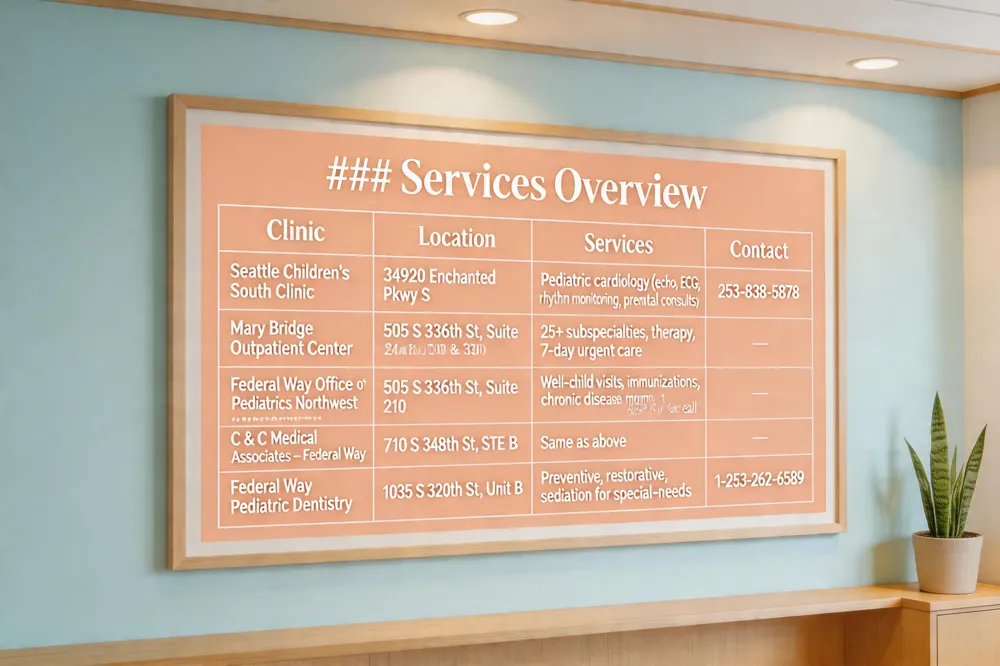 Seattle Children’s South Clinic in Federal Way brings the expertise of Seattle Children’s Hospital to the south‑King County community. Located at 34920 Enchanted Pkwy S, the clinic offers a full pediatric cardiology program—echocardiograms, ECGs, rhythm monitoring, and prenatal cardiac consultations—through the Seattle Children’s Heart Center. Call 253‑838‑5878 to schedule an appointment; new patients are typically seen within one to two weeks after referral, and urgent‑care cardiology hours extend into the evening on weekdays.
For families seeking broader specialty care, Mary Bridge Children’s Outpatient Center (505 S 336th St, Suite 200 & 330) provides more than 25 pediatric subspecialties and therapy services, with weekend urgent‑care available 7 days a week. Primary‑care options include Federal Way Office of Pediatrics Northwest (505 S 336th St, Suite 210) and C & C Medical Associates’ Federal Way Pediatrics (710 S 348th St, STE B), both offering well‑child visits, immunizations, chronic‑disease management, telehealth, and 24/7 on‑call coverage.
Dental health is covered by Federal Way Pediatric Dentistry (1035 S 320th St., Unit B), where Dr. Soo Jun and her team provide preventive cleanings, fluoride treatments, restorative work, and sedation options for special‑needs children. Appointments can be made at 1‑253‑262‑6589.
Together, these clinics create a convenient, compassionate network of pediatric and dental services that keeps families in Federal Way close to high‑quality, family‑centered care.
Imaging in Pediatric Trauma and Emergency Care
Imaging Decision Flow
| Modality | Indication | Key Features |
|---|---|---|
| PECARN/clinical decision rules | Head & cervical‑spine trauma | Limits CT to high‑risk cases |
| Point‑of‑care ultrasound (eFAST) | Rapid bedside assessment of chest/abdomen/pericardium | No radiation, detects fluid, pneumothorax |
| Low‑dose CT | Detailed bony or complex injury when necessary | Age‑adjusted settings, iterative reconstruction |
| Fast‑sequence MRI | Soft‑tissue evaluation, when radiation avoidance critical | May require sedation, high contrast |
| Shared decision‑making | All imaging | Involves families, balances risk/benefit |
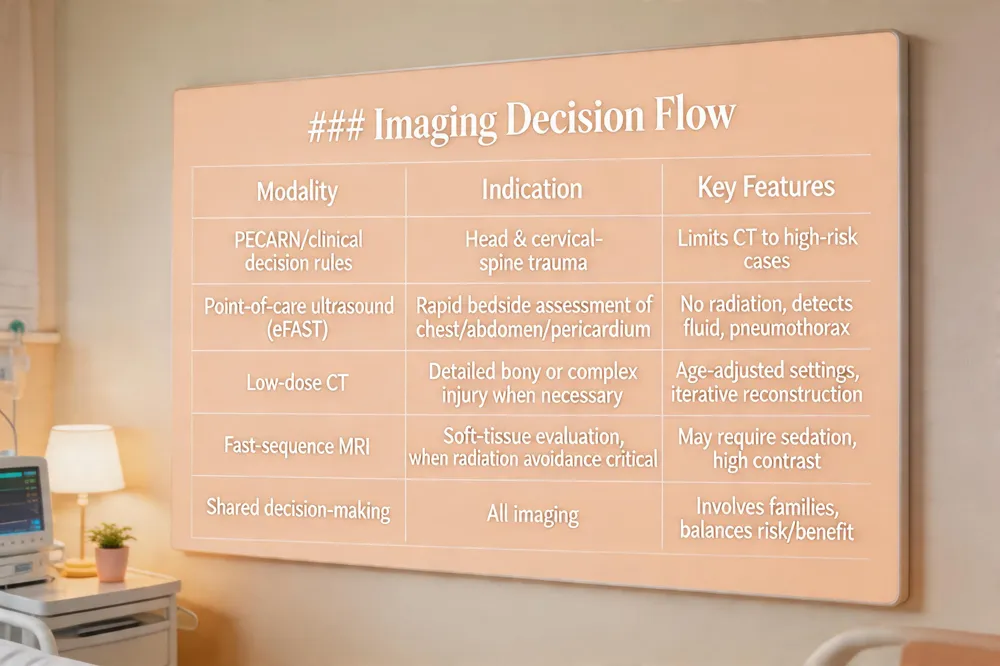 When a child arrives in the emergency department after an injury, clinicians follow evidence‑based clinical decision rules—such as the PECARN head‑trauma and cervical‑spine algorithms—to decide which imaging studies are truly needed. These rules reserve CT for high‑risk features (e.g., Glasgow Coma Scale < 15, worsening neurologic signs, or concerning mechanism) and favor plain radiographs or ultrasound first.
Point‑of‑care ultrasound, especially the extended FAST (eFAST) protocol, allows rapid bedside evaluation of the chest, abdomen, and pericardium for free fluid, pneumothorax, or hemothorax without radiation. High‑frequency portable transducers improve detection of even small fluid collections, helping clinicians triage unstable children quickly.
When cross‑sectional imaging is required, low‑dose CT protocols with age‑adjusted settings and fast‑sequence MRI are used to minimize radiation while providing detailed anatomic information. MRI offers excellent soft‑tissue contrast without ionizing radiation but may need sedation; thus it is reserved for selected cases.
Balancing radiation risk with rapid diagnosis involves shared decision‑making with families, adherence to pediatric‑specific dosing, and early consultation with trauma specialists to avoid unnecessary scans and to ensure timely, accurate care.
Cutting‑Edge Imaging Technologies and Their Integration with Genetics
Technology & Genetic Integration
| Technology | Clinical Use | Genetic Correlation |
|---|---|---|
| Motion‑corrected cardiac MRI (5‑10 min) | Infant cardiac anatomy, function | Links structural findings to genetic cardiomyopathies |
| Low‑dose CT with weight‑based dosing | Congenital heart imaging | Enables safe serial imaging for genotype‑guided monitoring |
| AI‑assisted image interpretation | Automated segmentation, volume quantification | Rapid phenotype‑genotype mapping, 3‑D printing for surgery |
| Contrast‑enhanced POCT ultrasound (Optison, DEFINITY) | Bedside cardiac & vascular assessment | Immediate functional data to complement genetic risk profiles |
| Low‑field MRI & selective contrast | Radiation‑sparing strategy | Facilitates longitudinal studies in genetically diagnosed patients |
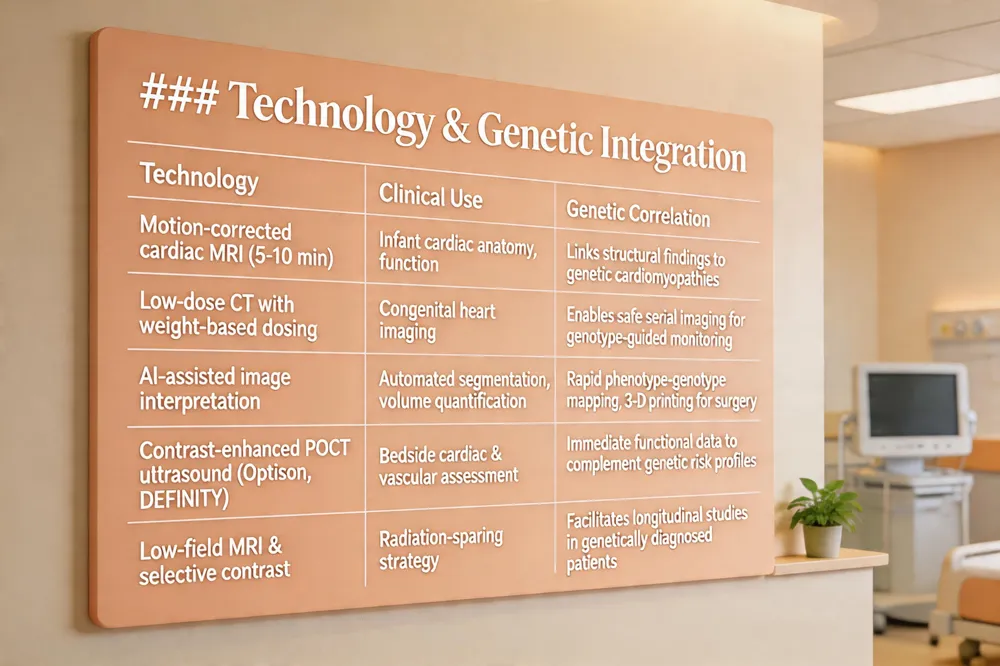 Fast‑sequence and motion‑corrected cardiac MRI now allows infants and young children to complete high‑quality scans in 5–10 minutes without sedation, preserving diagnostic detail while minimizing discomfort. Low‑dose CT protocols employ iterative reconstruction and weight‑based dosing, delivering sub‑millimeter resolution for complex congenital heart anatomy with radiation exposure below that of a few months of natural background. AI‑assisted image interpretation automates segmentation and quantifies ventricular volumes with <5 % error, accelerating reporting and enabling 3‑D printing of patient‑specific heart models for surgical planning. Point‑of‑care ultrasound devices, enhanced by FDA‑approved contrast agents such as GE’s Optison and Lantheus DEFINITY, provide bedside cardiac assessments with real‑time Doppler and tissue characterization, supporting rapid decision‑making in NICU and outpatient settings. Across all modalities, radiation‑sparing strategies—age‑appropriate protocols, low‑field MRI, and selective use of contrast—are embedded in Federal Way pediatric cardiology practices, ensuring that genetic findings can be correlated with precise, safe imaging to guide personalized care.
Pioneering Newborn Genomic Screening: The Sunshine Genetics Act
Sunshine Genetics Act Summary
| Feature | Description |
|---|---|
| Launch | 5‑year pilot, up to 100,000 newborns in Florida |
| Panel Expansion | From ~60 to >750 treatable conditions |
| Gene Inclusion | Actionability (approved therapy/clinical intervention) |
| Notable Addition | TK2D – FDA‑approved therapy for thymidine kinase‑2 deficiency |
| Clinical Impact | Early detection of metabolic & cardiac disorders, timely referrals |
| Systemic Goals | Improve insurance coverage, expand trial access, reduce financial barriers |
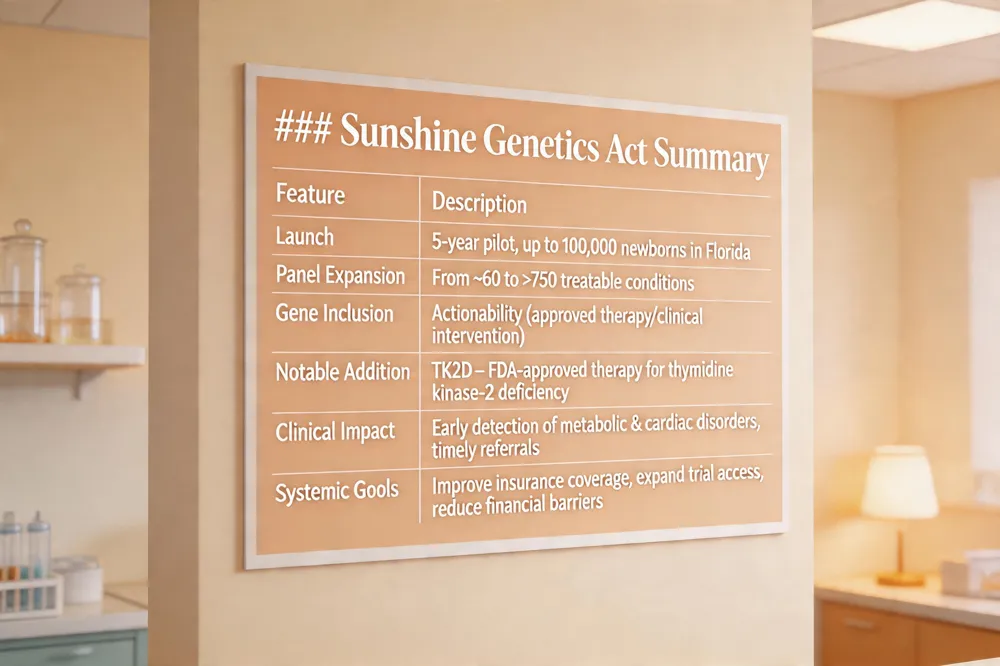 The Sunshine Genetics Act launches a five‑year pilot to sequence genomes of up to 100,000 Florida newborns, signed by Governor Ron DeSantis, launches a five‑year pilot that will sequence the genomes of up to 100,000 newborns in Florida. Instead of the current 60‑condition panel, the Pilot screens for >750 treatable genetic conditions, expanding beyond current 60‑condition panel. Using the Actionability (approved therapy or clear intervention) is primary criterion for gene inclusion, the program selects genes. For recent FDA-approved therapy for thymidine kinase 2 deficiency added to screening list; illustrates this approach; the new therapy will be added to the list, allowing early dietary or medication‑based treatment that can prevent irreversible neurologic damage. For families, the expanded genetic data promises earlier detection of metabolic diseases and congenital heart defects, paving the way for timely referrals to pediatric cardiology and metabolic specialists. The program also seeks to Program aims to improve insurance coverage for expensive therapies and access to clinical trials, reducing financial barriers and improving access to cutting‑edge care.
Looking Ahead: A Future of Personalized, Safer Pediatric Care
The next decade will see genetic testing and advanced imaging working hand‑in‑hand to create truly personalized pediatric care. Rapid next‑generation sequencing panels can identify pathogenic variants in hundreds of genes within days, while low‑dose cardiac MRI, 3‑D echocardiography, and AI‑assisted ultrasound provide detailed anatomic and functional data without ionizing radiation. Together, these tools enable clinicians to match a child’s genotype with the exact cardiac phenotype, guiding early interventions such as dietary therapy, targeted medication, or timely surgery. Meanwhile, newborn screening panels are expanding beyond the traditional 60‑plus conditions to include over 750 treatable disorders, as demonstrated by Florida’s Sunshine Genetics Act pilot. Federal Way providers—including pediatric cardiologists at Seattle Children’s South Clinic, Dr. Nauman Ahmad’s team, and the multidisciplinary bridges program—are already integrating rapid genomic testing, point‑of‑care imaging, and tele‑health counseling. Their commitment ensures families receive faster diagnoses, clearer treatment pathways, and coordinated follow‑up, paving the way for safer, more effective pediatric health outcomes.