Why Early Detection Matters
Congenital heart defects affect roughly 1 in every 100 newborns in the United States, making them the most common birth defect. All U.S. hospitals now perform a pulse‑oximetry screen within the first 24 hours of life to catch critical defects early, even before a murmur is heard. In Federal Way, Washington, Children’s Cardiology operates more than 20 pediatric cardiology sites, offering a coordinated team of cardiologists, surgeons, nurses and child‑life specialists who can confirm a diagnosis with echocardiography, ECG or cardiac MRI and outline a personalized care plan. Detecting a heart problem promptly allows timely medication, catheter‑based repair or surgery, which dramatically improves growth, exercise tolerance and long‑term survival. Parents should schedule the newborn screen, request a referral if any sign (bluish lips, poor feeding, rapid breathing) appears, and arrange a follow‑up appointment with a Federal Way pediatric cardiologist within the first weeks of life.
Understanding Pediatric Heart Signs: From Newborns to Teens
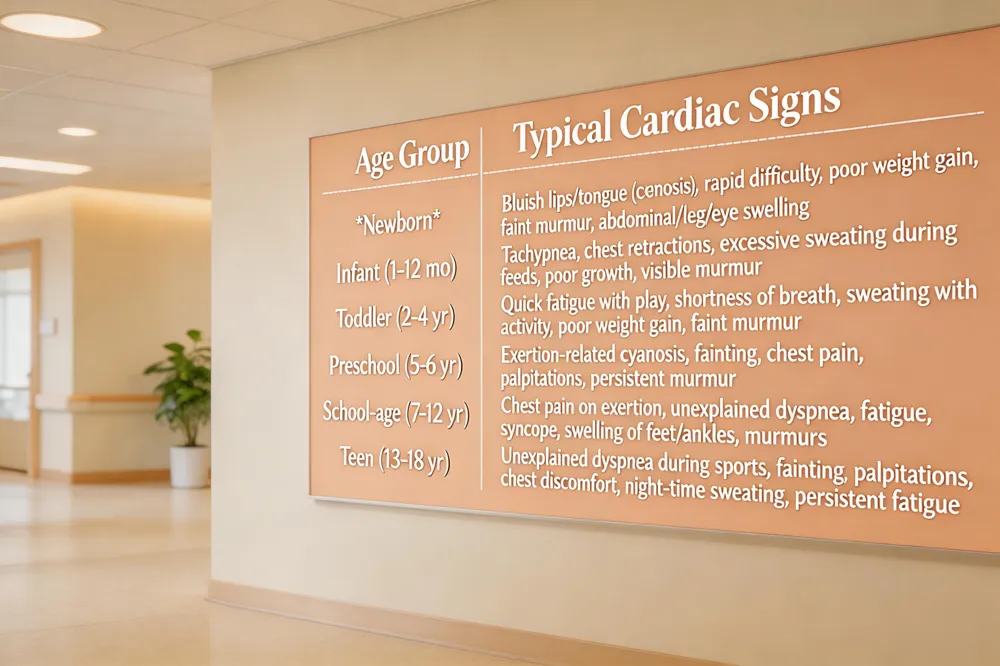
| Age Group | Typical Cardiac Signs |
|---|---|
| Newborn | Bluish lips/tongue (cyanosis), rapid breathing, feeding difficulty, poor weight gain, faint murmur, abdominal/leg/eye swelling |
| Infant (1‑12 mo) | Tachypnea, chest retractions, excessive sweating during feeds, poor growth, visible murmur |
| Toddler (2‑4 yr) | Quick fatigue with play, shortness of breath, sweating with activity, poor weight gain, faint murmur |
| Preschool (5‑6 yr) | Exertion‑related cyanosis, fainting, chest pain, palpitations, persistent murmur |
| School‑age (7‑12 yr) | Chest pain on exertion, unexplained dyspnea, fatigue, syncope, swelling of feet/ankles, murmurs |
| Teen (13‑18 yr) | Unexplained dyspnea during sports, fainting, palpitations, chest discomfort, night‑time sweating, persistent fatigue |
 Newborn baby heart problem symptoms can be subtle but serious. Babies may appear bluish around the lips, tongue, fingertips, or nail beds (cyanosis) because low oxygen levels. They often breathe rapidly, work hard to inhale with flaring nostrils, chest retractions, or shortness of breath—especially during feeds. Feeding becomes difficult; infants tire quickly, sweat on the head, and gain weight poorly. A rapid heart rate, faint or abnormal heartbeat, and a heart murmur may be heard on routine auscultation, and fluid buildup can cause swelling of the abdomen, legs, or eyes.
Symptoms of heart problems in children expand beyond infancy. Young children may tire easily, become short‑of‑breath, or sweat excessively with activity that peers handle without difficulty. Poor weight gain or failure to thrive, frequent respiratory infections, and a persistent murmur are red flags. Older children may experience chest pain, palpitations, dizziness, or fainting—particularly during exertion—along with swelling of the hands, ankles, or feet.
Teenagers often present with unexplained shortness of breath during sports, fainting episodes, and palpitations that feel like a fast, irregular, or “skipping” heartbeat. Chest discomfort that worsens with activity, persistent fatigue, and excessive night‑time sweating also warrant evaluation.
In general, pediatric cardiovascular disorders present with inadequate systemic perfusion: poor feeding, failure to thrive, fatigue, and respiratory distress. Left‑to‑right shunts (e.g., VSD, ASD, PDA) produce murmurs, tachypnea, and peripheral edema, while cyanotic lesions (e.g., tetralogy of Fallot) cause central cyanosis and clubbing. Congestive heart failure adds dyspnea, orthopnea, rales, diaphoresis, and edema. Any concerning signs should prompt a referral to a pediatric cardiologist—such as the over of20 locations in the Children’s Cardiology network—where a comprehensive exam, echo, ECG, and, if needed, cardiac catheterization can be arranged swiftly to protect your child’s health.
Age‑Specific Red‑Flag Symptoms
| Age | Red‑Flag Symptoms |
|---|---|
| 2 yr | Quick tiring during play, rapid breathing, heavy sweating while feeding, cyanosis, poor weight gain, faint murmur |
| 4 yr | Shortness of breath with simple activities, excessive sweating, cyanosis on exertion, fainting, dizziness, chest pain, palpitations |
| 5 yr | Windedness, sweating, cyanosis while playing/eating, fainting spells after running, chest pain, racing/irregular heartbeat |
| 6 yr | Easy fatigue, excess sweat, bluish lips/tongue during activity, palpitations, fainting, dizziness, chest discomfort |
| 8 yr | Exertion‑related chest pain, unexplained dyspnea, rapid fatigue, persistent fainting, resting palpitations, foot/ankle swelling, murmur |
| 9 yr | Faster tiring, cyanosis, chest pain, fainting, racing heartbeat during play/school, dizziness on standing or after exercise |
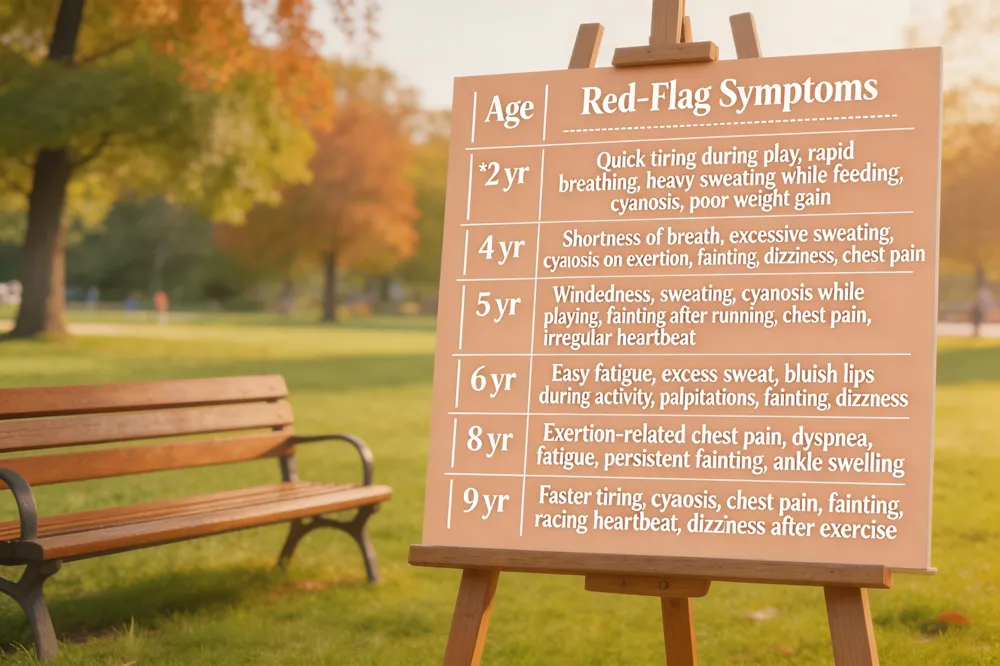 2‑Year‑Old – A toddler who tires quickly during play, breathes rapidly, or sweats heavily while feeding may have a hidden heart problem. Look for bluish lips, tongue or skin (cyanosis), poor weight gain, or a faint murmur heard by the pediatrician. Any of these signs should prompt a referral to a pediatric cardiologist for an echocardiogram and possibly an ECG.
4‑Year‑Old – At preschool age, difficulty keeping up with peers, shortness of breath during simple activities, excessive sweating, or cyanosis during exertion are red flags. Episodes of fainting, dizziness, chest pain, or unexplained palpitations also warrant immediate cardiac evaluation.
5‑Year‑Old – A kindergartener who becomes winded, sweats, or shows cyanosis while playing or eating should be assessed. Fainting spells after running, chest pain, or a racing/irregular heartbeat are warning signs that require prompt pediatric cardiology consultation.
6‑Year‑Old – Early elementary children may tire easily, sweat excessively, or develop bluish discoloration of lips/tongue during activity. Palpitations, fainting, dizziness, or chest discomfort are concerning and should trigger a specialist referral.
8‑Year‑Old – School‑age children may experience exertion‑related chest pain, unexplained shortness of breath, or quick fatigue. Persistent fainting, palpitations at rest, swelling of feet/ankles, or a murmur heard on exam suggest a cardiac issue that needs further testing.
9‑Year‑Old – Pre‑teens who tire faster than peers, develop cyanosis, chest pain, fainting, or feel a racing/irregular heartbeat during play or school activities should be evaluated. Dizziness on standing or after exercise also signals a possible heart problem.
Parents in Federal Way can schedule an appointment at any of the 20+ Children’s Cardiology locations for comprehensive evaluation, including echocardiography, ECG, and specialist counseling.
Warning Signs and Unusual Indicators
| Category | Specific Signs |
|---|---|
| Classic Warning Signs | 1. Chest pain/tightness/pressure 2. Breathlessness (especially on exertion or lying flat) 3. Unexplained fatigue, dizziness, or syncope 4. Swelling, numbness, weakness, cold limbs 5. Central cyanosis (bluish lips/tongue/nail beds) |
| Atypical Peripheral Clues | Swelling of feet/legs, bruising/purple discoloration, livedo reticularis (lace‑like veins), xanthomas (yellow‑orange waxy plaques), xanthoma striatum (small waxy bumps), petechiae, scaly patches, leg hair loss, nail clubbing, darkened fingertips (cyanosis), unexplained weight loss, fatigue |
| Emergency Indicator | Chest pressure radiating to jaw/neck/shoulder/back/arm with dyspnea, nausea, cold sweat – call 911 immediately |
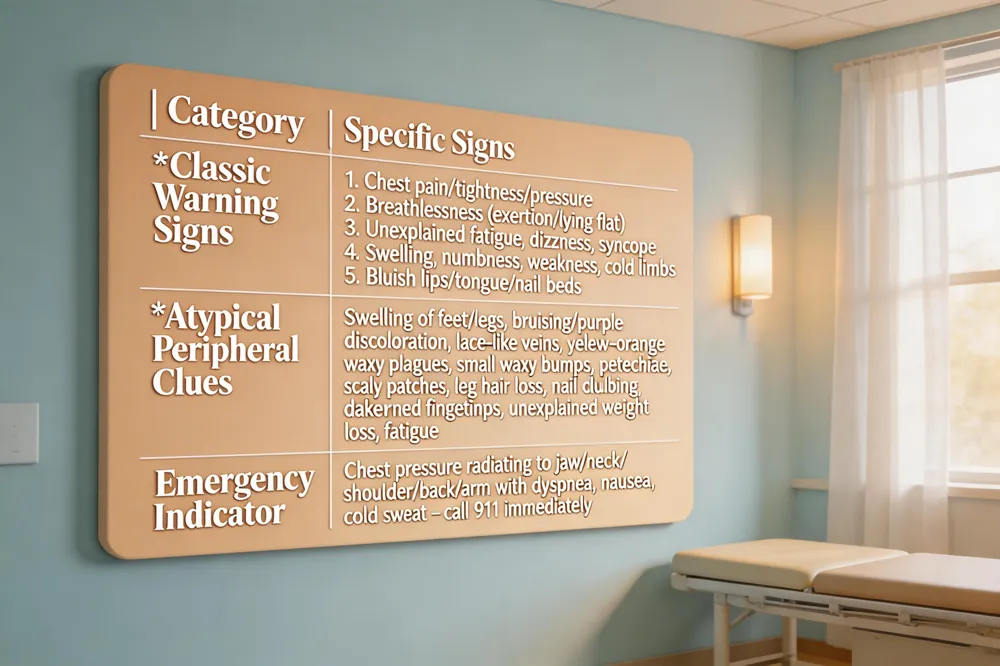 Parents should stay alert for both classic and subtle clues that a child’s heart may be struggling. The five classic warning signs of pediatric heart disease are 1) chest pain, tightness, pressure or discomfort (described as angina); 2) breathlessness, especially during activity or when lying flat; 3) unexplained fatigue, dizziness or fainting (syncope); 4) swelling, numbness, weakness or a cold feeling in the limbs, suggesting poor circulation; and 5) a bluish tint to lips, tongue or nail beds (cyanosis).
Beyond these, twelve atypical skin‑peripheral clues can point to cardiac trouble: swelling of feet/legs, bruising or purple discoloration, lace‑like veins (livedo reticularis), yellow‑orange waxy plaques (xanthomas), small waxy bumps (xanthoma striatum), red or purple spots (petechiae), scaly patches, loss of hair on legs, nail clubbing, darkened fingertips (cyanosis), unexplained weight loss, and fatigue.
A heart attack in a 16‑year‑old, though rare, shows chest pressure that may radiate to jaw, neck, shoulder, back or arm, plus breathlessness, nausea, cold sweat, sudden fatigue or light‑headedness. Call 911 immediately.
Teen girls may notice fainting or light‑headedness during sport, unexplained shortness of breath, chest discomfort at rest, palpitations, excessive sweating with activity, or swelling of ankles/abdomen—of which merit prompt evaluation.
If any of these signs appear, schedule an appointment with a pediatric cardiologist at Children’s Cardiology in Federal Way, where echo, ECG, MRI and multidisciplinary support are available to diagnose and manage heart abnormalities early.
Diagnostic Pathways for Hidden Heart Issues
| Diagnostic Step | When Used | What It Shows |
|---|---|---|
| Pulse‑oximetry (newborn screen) | First 24 h of life | Oxygen saturation; low values → immediate imaging referral |
| Fetal echocardiogram | Prenatal suspicion (18‑24 wk gestation) | Detailed anatomy of chambers, valves, vessels |
| Transthoracic echocardiogram | First‑line post‑natal test | Structural defects, shunts, valve function, ventricular size |
| Electrocardiogram (ECG) | Rhythm assessment, chamber enlargement | Arrhythmias, conduction delays, hypertrophy signs |
| Cardiac MRI | Complex anatomy or unclear flow | High‑resolution 3D anatomy, functional data |
| Cardiac catheterization | Unclear hemodynamics, therapeutic closure | Direct pressure measurements, vessel imaging, device interventions |
| Cardiac‑risk‑marker panel (older children) | Acquired disease assessment | Apo A1, Apo B, Apo B/A1 ratio, hs‑CRP, lipid profile (inflammation & lipid status) |
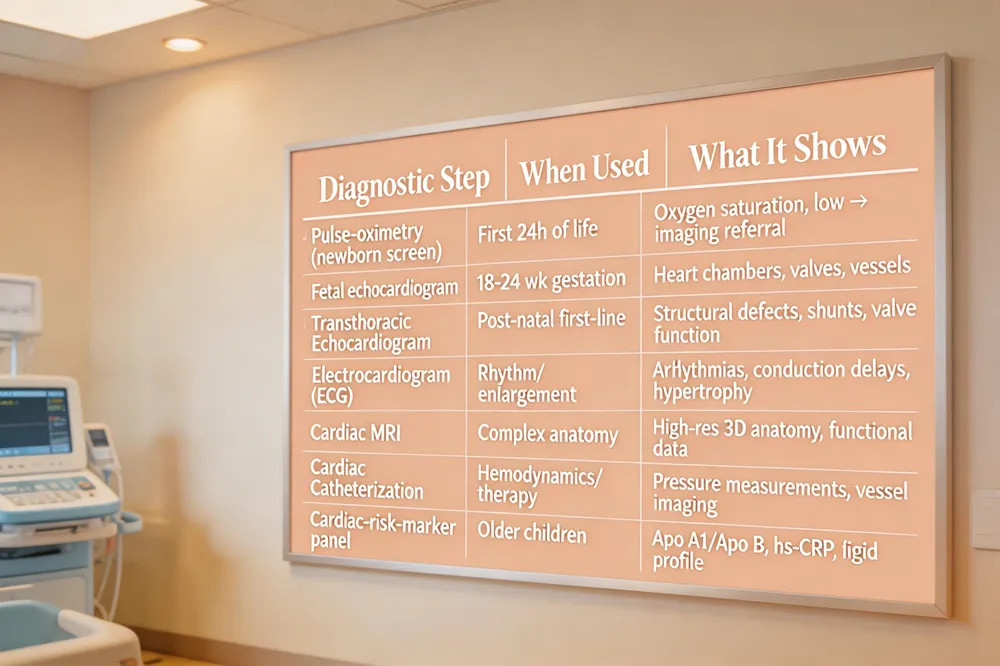 Newborns in the United States are routinely screened for serious congenital heart disease with pulse‑oximetry within the first 24 hours of life. A sensor placed on the right hand and foot measures oxygen saturation; low readings prompt immediate referral for imaging. When a prenatal ultrasound raises suspicion, a fetal echocardiogram performed between 18 and 24 weeks visualizes the heart’s chambers, valves, and vessels, allowing families and the pediatric cardiology team to plan delivery and early care.
After birth, a pediatric cardiologist may order a transthoracic echocardiogram as the primary non‑invasive test supplemented by an electrocardiogram (ECG) to assess rhythm and chamber enlargement. For complex anatomy or unclear blood flow, cardiac magnetic resonance imaging (MRI) or cardiac catheterization provides high‑resolution detail and can even deliver therapeutic interventions such as device closure of septal defects.
In addition to imaging, a cardiac‑risk‑marker panel can be useful for older children with acquired disease. The five‑test panel includes Apolipoprotein A1, Apolipoprotein B, the calculated Apo B/A1 ratio, high‑sensitivity C‑reactive protein (hs‑CRP), and a standard lipid profile (total cholesterol, LDL‑C, HDL‑C, triglycerides). This panel helps identify inflammation and lipid imbalances that may affect long‑term heart health.
Diagnosis of congenital heart disease in babies – Congenital heart disease in babies is often first suspected during a routine prenatal ultrasound, and a detailed fetal echocardiogram is then performed to visualize the heart’s structure before birth. After delivery, the pediatrician conducts a thorough physical exam looking for signs such as a heart murmur, cyanosis, rapid breathing, poor feeding, or abnormal skin color. Pulse‑oximetry screening and a bedside echocardiogram are the next steps to confirm the diagnosis and assess the severity of the defect. If needed, additional studies such as an electrocardiogram, chest X‑ray, cardiac MRI, or cardiac catheterization are ordered to evaluate blood flow and heart function. Early detection allows the pediatric cardiology team to plan timely treatment, ranging from monitoring small defects to surgical or catheter‑based interventions for more complex lesions.
What are the 5 tests in cardiac risk markers? – The cardiac‑risk‑marker panel includes an Apolipoprotein A1 (Apo A1) test, which measures the protective protein on HDL particles. It also measures Apolipoprotein B (Apo B), the atherogenic protein on LDL particles. A calculated Apo B/A1 ratio is reported to assess the balance between harmful and protective lipoproteins. High‑sensitivity C‑reactive protein (hs‑CRP) is added to detect low‑grade inflammation linked to cardiovascular disease. Finally, a standard lipid profile (total cholesterol, LDL‑C, HDL‑C and triglycerides) completes the five‑test cardiac‑risk evaluation.
Management and Treatment Options
| Treatment Modality | Typical Indications | Example Interventions |
|---|---|---|
| Observation | Small, asymptomatic lesions | Routine follow‑up, growth monitoring |
| Medication | Heart failure, arrhythmias, hypertension | ACE inhibitors, beta‑blockers, diuretics, anti‑arrhythmics |
| Catheter‑based interventions | Isolated septal defects, narrowed vessels | Device closure of ASD/VSD, balloon angioplasty, stenting |
| Surgical repair | Complex structural defects (e.g., tetralogy of Fallot) | Open‑heart surgery, valve repair/replacement |
| Heart transplantation | Unreconstructable severe CHD or end‑stage failure | Full organ transplant with lifelong follow‑up |
| Supportive care | Post‑operative or chronic management | Physical therapy, nutrition support, psychosocial counseling |
| Financial counseling | High cost of surgery/long‑term care | Assistance programs, insurance navigation, cost‑estimate counseling |
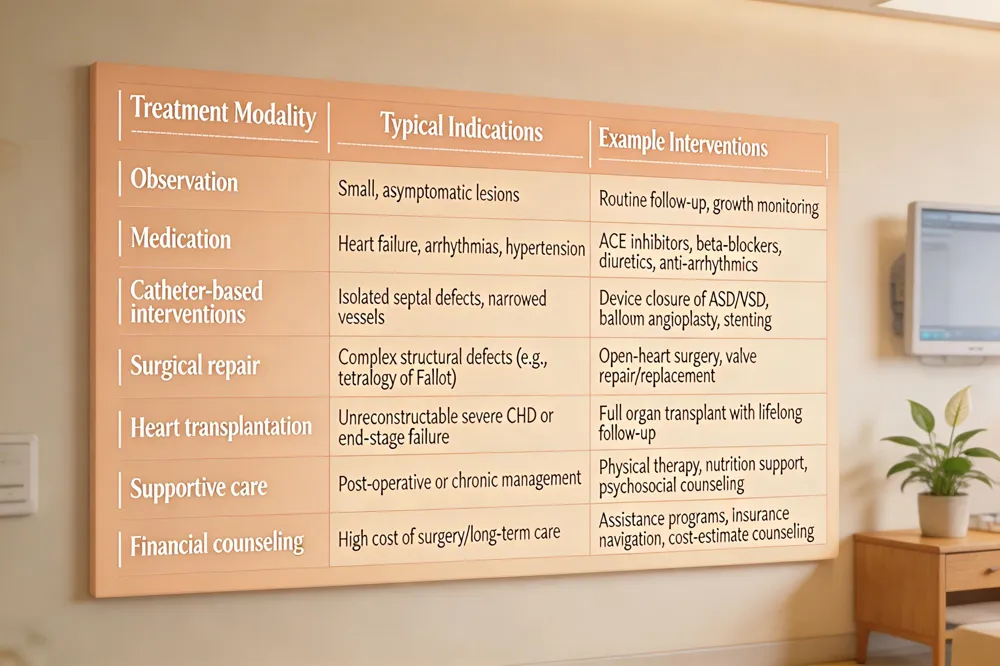 Pediatric cardiologists tailor therapy to the specific congenital heart defect (CHD). Small lesions often require only observation and occasional medication such as ACE inhibitors, beta‑blockers, diuretics, or anti‑arrhythmics. More complex defects are treated with catheter‑based interventions that close holes (e.g., ASD, VSD) or widen narrowed vessels, followed by open‑heart surgery when structural repair is needed. In rare, unreconstructable cases, heart transplantation may be the definitive option, with lifelong follow‑up essential for all children.
Treatment of congenital heart disease in a child – Management depends on defect type and severity; mild holes may be monitored, while serious defects require catheter closure, surgery, or transplant. Ongoing pediatric cardiology care ensures growth, therapy adjustments, and active living.
Congenital heart surgery cost – Total expenses range $100,000‑$250,000 per child, with average lifetime cost to age 10 about $136,000. Insurance coverage varies; families should seek financial counseling and assistance programs early.
Can a 10‑year‑old have heart failure? – Yes. Heart failure in school‑age children often stems from CHD, infections, arrhythmias, or valve disease. Signs include rapid breathing, fatigue, poor growth, swelling, and cough. Diagnosis uses exams, chest X‑ray, echocardiogram, ECG, and labs; treatment may involve medication, assist devices, surgery, or transplant. Early pediatric cardiology evaluation improves outcomes.
Parental Education and Resources
| Resource | Audience | Key Features |
|---|---|---|
| American Heart Association (AHA) | All ages | Clear diagrams, easy‑to‑read fact sheets, emergency action plans |
| CDC CHD Fact Sheets | Parents & caregivers | Statistics, prevention tips, vaccination recommendations |
| Children’s Heart Foundation – "It’s My Heart" | Families with CHD | Illustrated guide, story‑based learning, coping strategies |
| Mended Little Hearts | Low‑literacy & support groups | Peer stories, binder templates, transition tools |
| Teach‑back Technique | Clinicians | Ensures parental understanding by having them repeat instructions |
| MyHeart Scale | Adolescents | Self‑assessment for transition to adult congenital heart care |
| Local Federal Way Cardiology Centers | Residents of Federal Way | Multidisciplinary clinics, echo/ECG/MRI services, social work support |
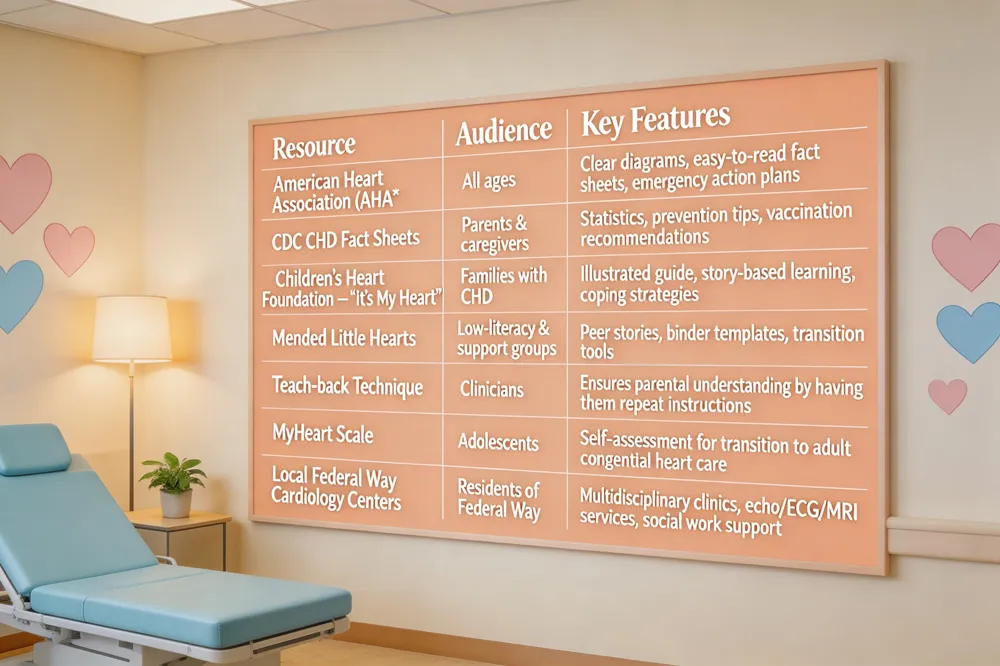 One‑third of U.S. adults have low health‑literacy, and many pediatric teams lack formal training to bridge that gap. A teach‑back technique—where parents repeat instructions in their own words—helps ensure understanding and reduces errors. Alarmingly, only 16.4 % of families of children with congenital heart disease received discharge education on home care after hospitalization. For low‑literacy families, trusted resources such as the American Heart Association, CDC CHD fact sheets, the Children’s Heart Foundation’s “It’s My Heart” book, and Mended Little Hearts provide clear diagrams and simple language. Parents are encouraged to keep a medical binder that records the heart‑defect name, imaging results, surgeries, medications, and emergency plans. Early transition planning—using tools like the MyHeart scale—prepares adolescents for adult‑congenital‑heart care and promotes lifelong self‑advocacy.
Conclusion and Next Steps
| Key Warning Signs | Recommended Action |
|---|---|
| Persistent bluish lips/tongue (cyanosis) | Immediate pediatric cardiology referral |
| Poor weight gain / failure to thrive | Schedule echocardiogram and ECG |
| Excessive sweating while feeding or during activity | Obtain cardiac evaluation (echo, labs) |
| Fainting or syncope with exertion | Urgent cardiac work‑up (ECG, echo, possibly MRI) |
| Unexplained fatigue, shortness of breath, chest discomfort | Prompt appointment with pediatric cardiologist; consider stress testing |
| Swelling of feet/ankles/abdomen | Assess for heart failure; order imaging and labs |
| Any new or worsening murmur | Cardiac auscultation by specialist, echo to define anatomy |
Next Steps: Contact a Children’s Cardiology location in Federal Way for a comprehensive exam, echocardiography, ECG, and multidisciplinary counseling. Keep a medical binder with imaging results, medication lists, and emergency contacts. Early evaluation improves outcomes and guides long‑term management.
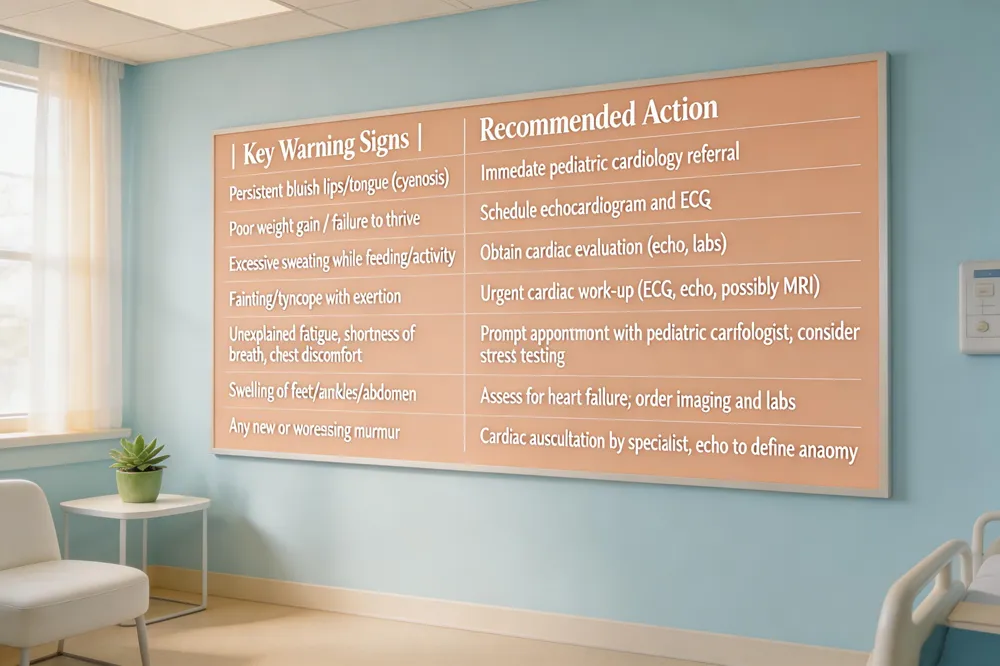 Key warning signs include persistent bluish lips, poor weight gain, excessive sweating while feeding, fainting with activity, and unexplained fatigue. Seek a pediatric cardiology evaluation promptly if any appear. Federal Way offers multidisciplinary care—cardiologists, surgeons, nurses, social workers, and support groups such as Mended Little Hearts and local cardiac‑health forums—to guide families through diagnosis, treatment, and long‑term management.
Take Action Today
Use the checklist below to watch for hidden heart problems: bluish lips or nail beds, rapid breathing during feeds, poor weight gain, excessive sweating while eating, fainting or palpitations with activity, and persistent shortness of breath. Record any new or worsening signs and bring the list to your pediatrician. Schedule routine well‑child visits at least annually, and ask for cardiac screening (pulse oximetry, murmur exam, or echocardiogram) if any of these symptoms appear or if there is a family history of congenital heart disease. When a concern is identified, connect with Children’s Cardiology in Federal Way. Their network of pediatric cardiologists offers comprehensive evaluation, imaging, and treatment planning, and can coordinate follow‑up care to keep your child heart‑healthy and active.