Why Emerging Diagnostics Matter
Advances in imaging, genomics, and artificial intelligence are reshaping pediatric cardiology. Hand‑held point‑of‑care ultrasound and AI‑enhanced echocardiography now give cardiologists instant, high‑resolution views of a child’s heart, while next‑generation sequencing panels can pinpoint genetic causes of congenital defects within days. These tools enable earlier detection of structural anomalies, arrhythmias, and metabolic disorders—often before symptoms appear—allowing prompt, personalized treatment plans. For families in Federal Way, Washington, and surrounding communities, telemedicine platforms and wearable cardiac monitors bring specialist expertise into the home, reducing travel and wait times. Early, accurate diagnosis improves outcomes across the age spectrum, from newborns with critical heart lesions to adolescents managing chronic cardiomyopathies, and supports coordinated, family‑centered care throughout childhood.
Finding a Pediatric Cardiologist Near You
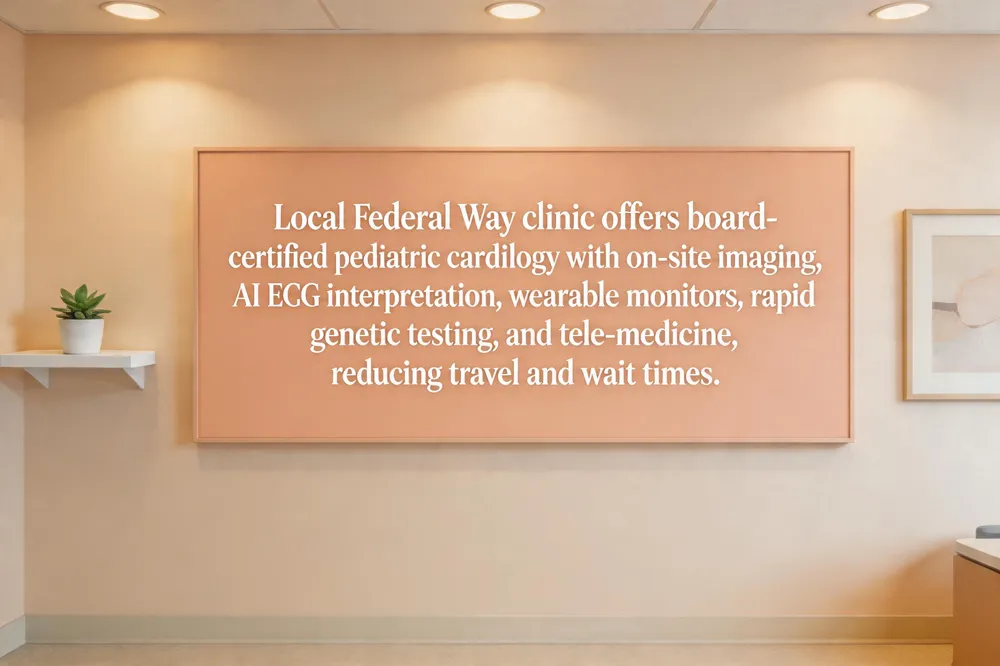 Local expertise in Federal Way, Washington
Our clinic, located at 123 4th Ave South, Federal Way, offers board‑certified pediatric cardiologists who provide comprehensive heart‑health services for infants, children, and adolescents. Families benefit from on‑site point‑of‑care ultrasound, AI‑assisted ECG interpretation, wearable cardiac monitors, and rapid genetic testing—all under one roof, with convenient parking and flexible scheduling.
Access to comprehensive cardiac services
We deliver full‑spectrum care: diagnostic imaging (echo, cardiac MRI, 3‑D printed heart models), catheterization, electrophysiology studies, medication management, and coordinated follow‑up via telemedicine. Advanced tools such as next‑generation sequencing panels and AI‑driven image analysis enable early detection of congenital defects and personalized treatment plans.
Comparison with regional options
While larger centers in Salt Lake City and Seattle provide specialized surgical suites, our Federal Way practice brings many of those capabilities closer to home, reducing travel burden and wait times. For families seeking a pediatric cardiologist near me, call (253) 555‑1234 or request an appointment online.
Pediatric Cardiology Utah
In Utah, the University of Utah Health’s Pediatric Cardiology Clinic offers a full range of services, including cardiac MRI, catheterization, and clinical trials. Appointments can be made by calling 801‑213‑3599. This regional hub complements local care, ensuring families have access to both community‑based and tertiary expertise.
Training Pathways in Pediatric Imaging and Cardiology
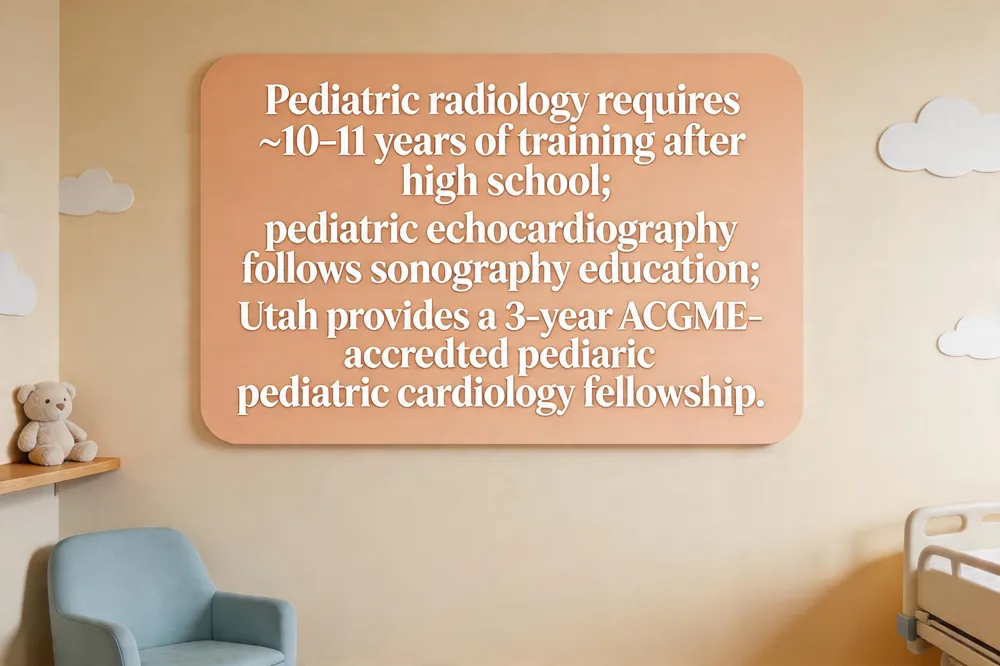 How many years does it take to be a pediatric radiologist?
Becoming a pediatric radiologist typically requires 10–11 years of training after high school. This includes a 4‑year undergraduate degree, 4 years of medical school, a 1‑year clinical internship, a 4‑year diagnostic radiology residency, and a 1‑2 year pediatric radiology fellowship. After fellowship, board certification is required.
How many years does it take to be a pediatric radiologist?
Becoming a pediatric radiologist typically requires 10–11 years of training after high school. This includes a 4‑year undergraduate degree, 4 years of medical school, a 1‑year clinical internship, a 4‑year diagnostic radiology residency, and a 1‑2 year pediatric radiology fellowship. After fellowship, board certification is required.
Is it hard to become a pediatric echocardiographer? The path is rigorous but achievable. Candidates need an associate’s or bachelor’s degree in Diagnostic Medical Sonography, followed by specialized pediatric echocardiography coursework and clinical rotations. Certification (RDMS‑PS or ACS‑CCI) is often required. Mastery of complex congenital heart anatomy and child‑friendly communication skills is essential, yet dedication and hands‑on experience make the career attainable.
Utah Pediatric Cardiology Fellowship The University of Utah offers a three‑year ACGME‑accredited Pediatric Cardiology Fellowship at Primary Children’s Hospital. Fellows rotate through a cardiac ICU, NICU, and outpatient sites across Utah, Idaho, and Wyoming, gaining expertise in echocardiography, catheterization, electrophysiology, and fetal cardiology. Applicants must have completed a pediatric residency and meet visa or citizenship requirements.
Artificial Intelligence: From Nursing Support to Governance
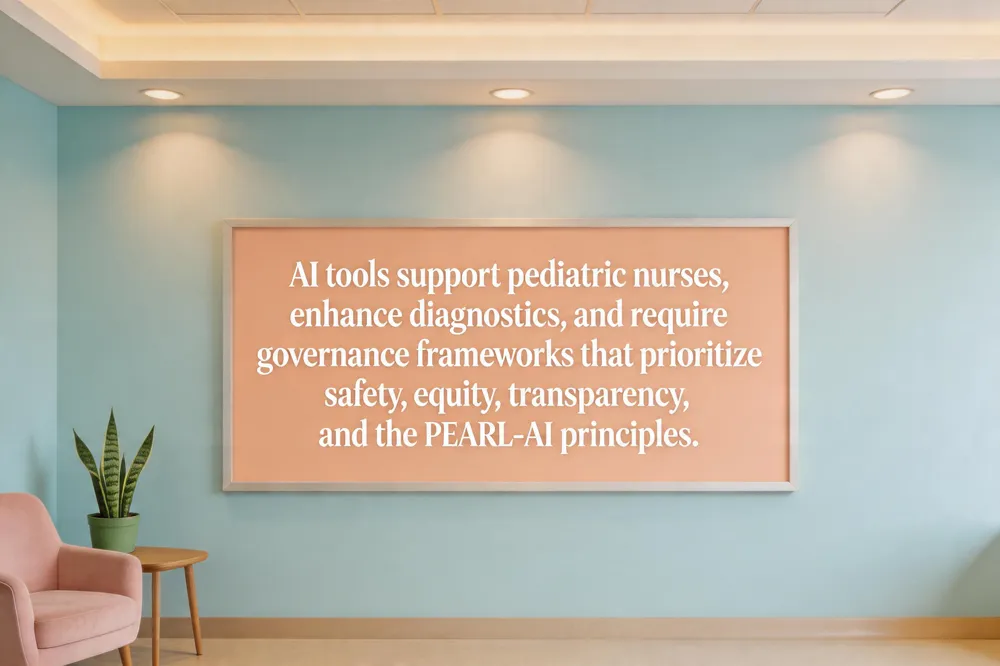 AI in pediatric nursing
Intelligent tools are easing nurses' workloads by automating documentation and flagging early signs of deterioration, such as arrhythmias in children with congenital heart disease. Virtual triage assistants answer parental questions, freeing staff for bedside care. While boosting efficiency, these systems must safeguard privacy and avoid bias.
AI in pediatric nursing
Intelligent tools are easing nurses' workloads by automating documentation and flagging early signs of deterioration, such as arrhythmias in children with congenital heart disease. Virtual triage assistants answer parental questions, freeing staff for bedside care. While boosting efficiency, these systems must safeguard privacy and avoid bias.
AI in pediatric care Across Federal Way clinics, AI enhances diagnostics by analyzing imaging, electronic health records, and wearable data to spot disease earlier and personalize therapy. Predictive analytics can alert clinicians to sepsis or heart failure, and chat‑bots provide families with evidence‑based guidance. Careful validation is essential to address limited child‑specific data and consent requirements.
Ethical considerations and child‑centered recommendations AI must prioritize safety, equity, and transparency. Informed consent should involve parents and age‑appropriate assent. Applying the PEARL‑AI framework—justice, dependability, auditability, accountability, and trust—helps ensure unbiased, secure, and explainable tools.
Toward governance of AI in pediatric healthcare A pediatric‑focused governance model should include clinicians, families, ethicists, and regulators from design to deployment, mandating bias mitigation, clear accountability, and continuous monitoring.
AI in pediatrics past, present, and future From early expert systems to today’s deep‑learning image analysis and predictive genomics, AI is evolving into an “augmented intelligence” partner that supports clinicians, reduces diagnostic errors, and expands specialist access for families across the region.
Emerging Diagnostic Technologies in Pediatric Radiology
 Emerging technologies in pediatric radiology – current developments and future prospects
Low‑dose CT and MRI now use ultra‑fast, motion‑corrected sequences and pediatric‑specific protocols that cut radiation by up to 40 % while preserving image quality. AI‑assisted tools automatically segment chambers, flag subtle congenital defects, and link imaging features to genetic data for personalized care. Portable point‑of‑care ultrasound devices equipped with AI‑guided acquisition let pediatricians obtain high‑resolution cardiac images in the exam room, reducing referrals and exposure to radiation. Looking ahead, 3‑D printed heart models and virtual‑reality overlays will aid surgical planning, while integrated tele‑radiology platforms will bring expert interpretation to remote clinics.
Emerging technologies in pediatric radiology – current developments and future prospects
Low‑dose CT and MRI now use ultra‑fast, motion‑corrected sequences and pediatric‑specific protocols that cut radiation by up to 40 % while preserving image quality. AI‑assisted tools automatically segment chambers, flag subtle congenital defects, and link imaging features to genetic data for personalized care. Portable point‑of‑care ultrasound devices equipped with AI‑guided acquisition let pediatricians obtain high‑resolution cardiac images in the exam room, reducing referrals and exposure to radiation. Looking ahead, 3‑D printed heart models and virtual‑reality overlays will aid surgical planning, while integrated tele‑radiology platforms will bring expert interpretation to remote clinics.
What tools and technology are used by a pediatrician? Digital stethoscopes, age‑appropriate blood‑pressure cuffs, pulse oximeters, handheld ECGs, and AI‑enhanced handheld echocardiograms form the core exam kit. Wearable biosensors that track heart rate and oxygen saturation, with data streamed to the electronic health record for real‑time alerts.
What is emerging technology for kids? Beyond imaging, AI‑driven video analysis (e.g., Canvas Dx for autism), wearable biosensors that track heart rate and oxygen saturation, and rapid point‑of‑care PCR panels are reshaping early diagnosis and home monitoring, making pediatric care faster, safer, and more family‑centered.
Precision Diagnostics, Genomics, and Novel Therapies
 New Improvements in Pediatric Disease Diagnosis and Treatment
Point‑of‑care ultrasound (POCUS) now lets pediatricians quickly view heart, lung and abdominal structures without radiation. Next‑generation sequencing (NGS) panels identify genetic causes of congenital heart defects and metabolic disorders within days, guiding personalized treatment. Wearable biosensors continuously track heart rate, oxygen saturation and breathing, alerting clinicians to arrhythmias or early heart‑failure signs. AI‑driven analysis of echocardiograms and MRI speeds interpretation and uncovers subtle anomalies. Tele‑medicine platforms provide remote cardiac monitoring for families in Federal Way, Washington, expanding specialty access. Liquid biopsies (cell‑free DNA) and CRISPR‑based assays (SHERLOCK, DETECTR) are emerging as minimally invasive tools for tumor detection and cardiomyopathy mutation screening.
Precision diagnostics in children
Integrating genomics, proteomics, metabolomics and AI boosts diagnostic yield for rare diseases up to 50 %. Whole‑exome/genome sequencing is now a first‑tier test for heterogeneous pediatric conditions, while optical genome mapping refines structural‑variant detection. Machine‑learning models improve cardiac imaging interpretation, and digital health ecosystems enable lifelong health‑trajectory tracking.
Treatment of congenital heart disease in newborns
Management depends on defect severity. Small atrial or ventricular septal defects often need routine echo monitoring. Patent ductus arteriosus may close medically with ibuprofen or indomethacin. Larger lesions are addressed via catheter‑based device placement or open‑heart surgery; palliative shunts stabilize infants too small for definitive repair. In extreme cases, heart transplantation or ventricular assist devices are considered. Wearable monitors and AI alerts support early detection of post‑operative arrhythmias, improving outcomes.
Future Directions: Telemedicine, Education, and Clinical Innovation
 Remote cardiac monitoring and virtual visits are expanding access to pediatric cardiology, especially for families in Federal Way and surrounding areas. Hand‑held ultrasound (POCUS) and AI‑assisted image analysis let clinicians evaluate heart function in real time, while wearable biosensors transmit rhythm, oxygen saturation, and activity data to secure cloud platforms for early arrhythmia detection.
Educational topics that resonate with clinicians and families include the latest advances in congenital heart disease screening, genomic sequencing for personalized therapy, and the impact of the 2025 immunization schedule (early HPV vaccination and RSV monoclonal antibodies). Integrating mental‑health discussions—ADHD, autism, adolescent psychiatry—creates a holistic view of child well‑being.
Pediatric nursing technology now features AI‑driven diagnostic support, continuous wearable biosensor monitoring, and virtual‑reality tools that reduce pain and anxiety during procedures.
Interesting pediatric topics for presentation: cutting‑edge cardiology, antibiotic resistance, lifestyle‑related health, rare diseases, and genomic medicine.
What technology do pediatric nurses use? AI diagnostics, wearable biosensors, VR for comfort, and integrated EHR decision‑support.
IHC Pediatric Cardiology: a family‑centered program in Federal Way offering comprehensive cardiac care—from congenital defect management to rhythm disorders—using advanced imaging, genetics, and multidisciplinary teams.
Red flags on an echocardiogram: signs of heart failure with preserved ejection fraction, abnormal ECG, elevated troponin/NT‑proBNP, and structural abnormalities on echo or CMR.
Do cardiologists deal with cholesterol? Primary care usually manages cholesterol, but cardiologists intervene when lifestyle changes fail, offering specialized strategies and treatments.
Looking Ahead
At Wasatch Pediatric Cardiology we are shaping the future of heart care by uniting artificial‑intelligence analysis, rapid genomic sequencing, and imaging into a single, child‑focused workflow. AI‑driven echocardiogram and ECG interpretation flags subtle abnormalities faster than traditional review, while next‑generation sequencing panels reveal inherited risk factors within days, guiding personalized treatment plans. Our handheld ultrasound devices and 3‑D printed heart models bring detailed visual insight to the exam room, reducing the need for multiple appointments. Serving families in Federal Way and surrounding communities, we prioritize easy access, tele‑medicine visits, and bilingual support to ensure every child receives compassionate, expert care close to home. We invite you to schedule a consult, explore our advanced diagnostic tools, and join a partnership that puts your child’s heart health first.