Introduction
Compassionate care in pediatrics means recognizing a child’s suffering and responding with empathy, active listening, and timely, respectful action. When clinicians genuinely hear a child’s and and a parent’s concerns, trust builds, and families feel empowered to follow treatment plans. A robust body of evidence—from systematic reviews to pediatric cardiology studies—shows that such empathetic interactions raise medication adherence by 20‑30% and reduce missed appointments, especially for chronic conditions like congenital heart disease or asthma. In practice, this translates to clearer explanations of medication timing, shared decision‑making, and coordinated follow‑up that fit a family’s daily routine. By prioritizing compassionate communication, providers create a therapeutic alliance that directly improves health outcomes and eases the logistical challenges of ongoing pediatric care.
Foundations of Family‑Centered Compassionate Care
| Key Elements of FCC | Description |
|---|---|
| Partnership Model | Parents/caregivers co‑design care plans |
| Shared Decision‑Making | Joint choices on treatment, discharge, follow‑up |
| Integrated Plans | Medical, emotional, social needs addressed |
| Digital Extension | Tele‑health, patient portals, decision‑support tools |
| Outcomes | Higher adherence, satisfaction, reduced stress |
| Future Directions | Standardized training, value‑based care metrics |
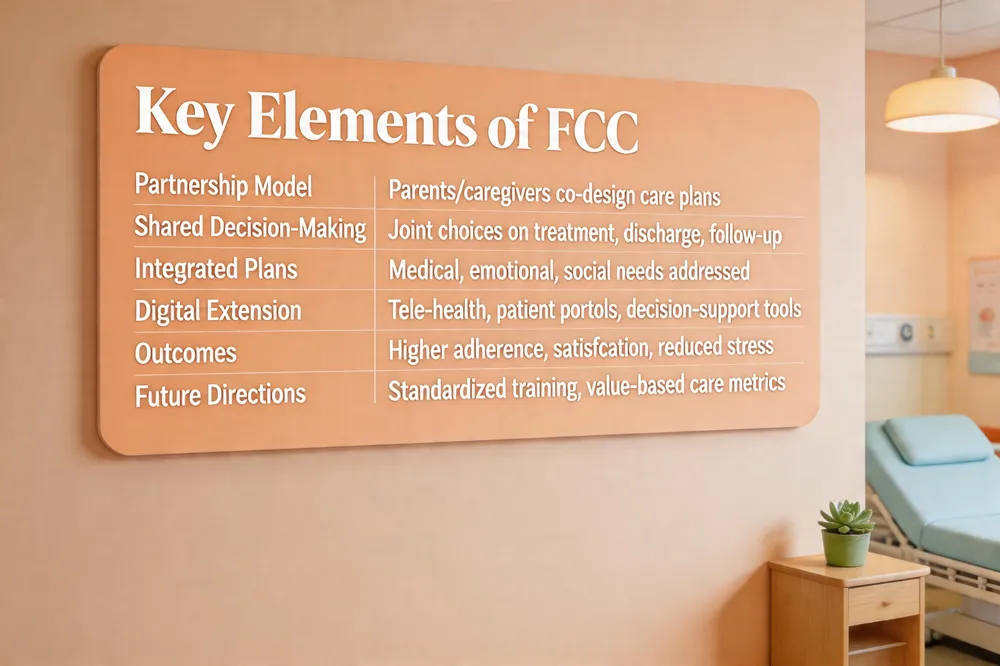 Family‑centered care (FCC) is a partnership model that engages parents and caregivers as active participants in pediatric health‑care decision makingmaking. Current applications include family‑centered rounds, shared‑decision‑making tools, and integrated care plans that address the child’s medical, emotional, and social needs. Evidence shows FCC improves treatment adherence, patient satisfaction, and health outcomes when consistently applied across inpatient and outpatient settings. Future directions emphasize leveraging digital health platforms, telehealth, and data‑driven decision support to extend family involvement beyond the clinic visit. Ongoing research and policy initiatives aim to standardize FCC training, measure its impact on health‑care quality, and embed it within value‑based care models for sustained system‑wide transformation.
Importance of family‑centered care in nursing: It respects the child’s family as a pivotal partner, enhancing trust and collaboration. By actively listening to families’ values, cultural beliefs, and preferences, nurses create individualized care plans that improve adherence and reduce stress. Clear, complete information empowers families to participate confidently in treatment choices, leading to better outcomes and higher satisfaction for both patients and clinicians.
Family‑centered care for children in hospital: Placing the child and family at the heart of every medical decision honors their values and preferences. Collaborative planning—whether for routine treatment, surgery, or discharge—ensures coordinated care across specialties, including pediatric cardiology, and smooth transitions to home. This respectful partnership reduces anxiety, improves clinical outcomes, and enhances satisfaction for patients and staff.
Mechanisms Linking Compassion to Adherence
| Compassion Mechanism | How It Improves Adherence |
|---|---|
| Trust & Therapeutic Alliance | Families feel heard → follow recommendations |
| Active Listening & Empathy | Reduces anxiety & stigma |
| Child‑Friendly Environments | Lowers fear → better self‑management |
| Respect & Cultural Sensitivity | Aligns care with family values |
| Shared Information | Clear, jargon‑free instructions empower actions |
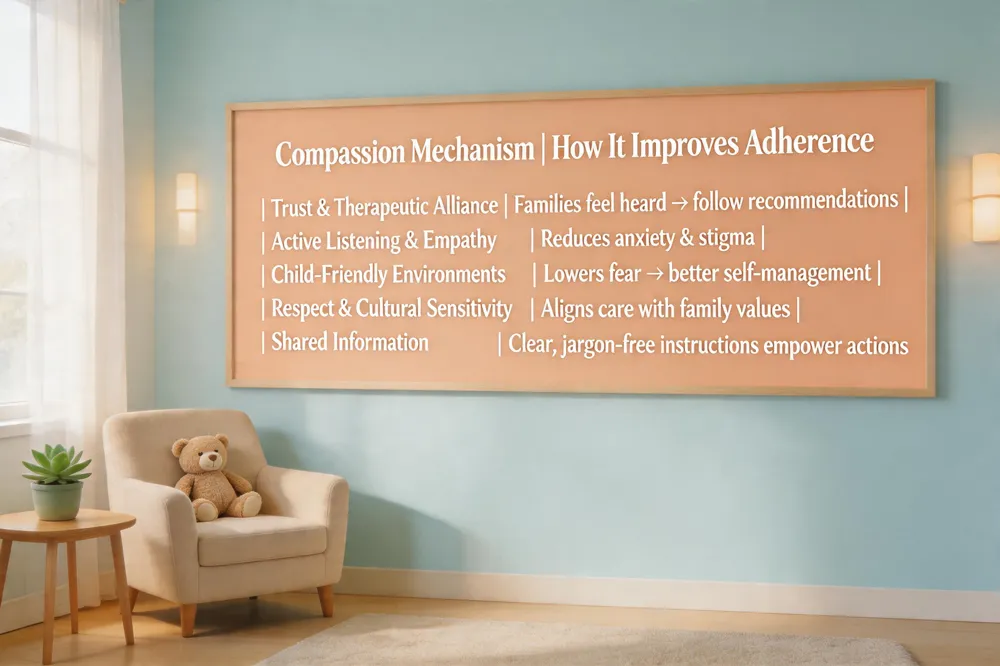 Compassionate care builds a therapeutic alliance rooted in trust; when children and families feel heard, they are more likely to follow treatment plans. Active listening and empathetic communication create a sense of partnership, reducing anxiety and stigma that often drive non‑adherence. Atraumatic, child‑friendly environments further lower fear, enabling children to engage in self‑management.
Family‑centred care in paediatric nursing – FCC treats the child, parents, and care team as equal partners, emphasizing open information sharing, cultural respect, and shared decision‑making. Research shows FCC training improves nurse attitudes and, with institutional support, translates into higher satisfaction and better health outcomes.
Family‑centered care Nursing theory – The theory’s core concepts—respect, information sharing, participation, collaboration—guide nurses to listen actively, involve families in planning, and reduce child stress, ultimately strengthening recovery and adherence.
Child and family centred care – This collaborative model places the child’s health and family needs at the centre of every decision, fostering open communication and shared decision‑making that improve adherence and outcomes, especially in chronic pediatric cardiology.
Practical Strategies to Boost Medication Adherence
| Strategy Pillar | Specific Actions |
|---|---|
| Clinician Empathy Training | Role‑play, age‑appropriate explanations, compassionate reassurance |
| Shared Decision‑Making | Co‑create dosing schedule, use visual aids, confirm understanding |
| Technology‑Assisted Reminders | Text alerts, pill‑box apps, tele‑health check‑ins |
| Simplify Regimens | Once/twice‑daily doses, flavored chewables, align with daily routines |
| Positive Reinforcement | Rewards, praise, tracking charts |
| Address Cost Barriers | Generic options, financial assistance programs |
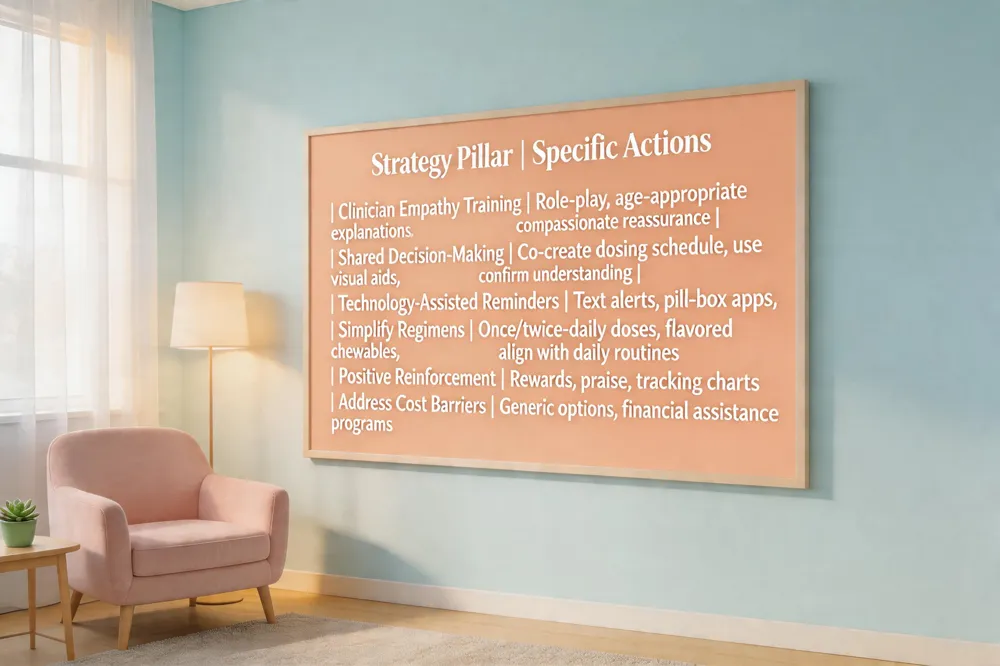 Effective medication adherence in children with chronic illness hinges on three pillars. First, training programs that enhance clinicians’ empathy and communication skills, enable active listening, age‑appropriate explanations, and compassionate reassurance—behaviors that directly increase trust and adherence. Second, shared decision‑making paired with clear, jargon‑free instructions empowers families, reduces anxiety, and ensures that treatment goals align with daily routines. Third, technology‑assisted reminders—such as personalized text alerts, pill‑box apps, and telehealth check‑ins—provide timely prompts while preserving the warm, supportive tone essential for pediatric care.
Patient and family‑centered care for children: a concept analysis – This model is built on partnership, open communication, mutual respect, and compassion. Its antecedents include active family involvement, motivated clinicians, and supportive policies, leading to better health outcomes, safety, satisfaction, and reduced family stress.
Atraumatic care in pediatric nursing – By using age‑appropriate explanations, medical play, soothing environments, and family involvement, nurses lower psychological and physical stress, fostering cooperation and healing.
Medication adherence and health care utilization in pediatric chronic illness (systematic review) – Poor Medication adherence was linked to higher hospitalizations and emergency visits in 90 % of studies, highlighting the need for routine adherence assessment and targeted, compassionate interventions.
Compassionate Care in Pediatric Cardiology
| Compassionate Cardiology Practices | Impact on Adherence |
|---|---|
| Family‑Centered Rounds | 30‑50 % higher medication & appointment compliance |
| Nurse Navigator Programs | Coordination of meds, appointments, travel → reduced barriers |
| Telehealth Check‑Ins with Warm Tone | 15 % rise in appointment attendance |
| Developmentally Tailored Communication | Improves trust, reduces anxiety |
| Simplified Dosing & Visual Aids | Boosts daily routine integration |
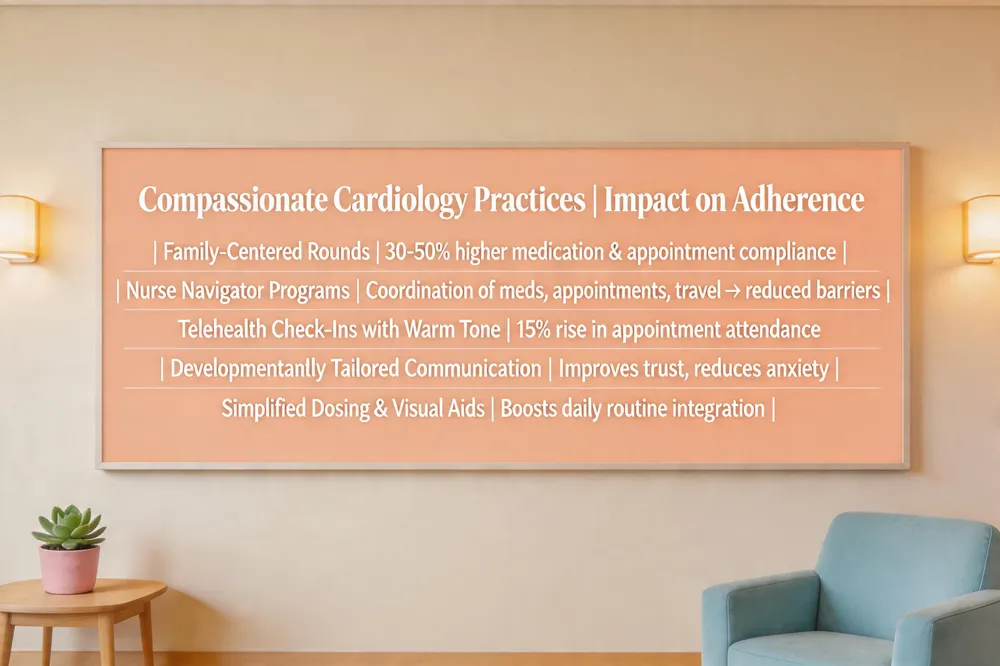 Compassionate, family‑centered communication is a proven driver of medication and follow‑up adherence in children with chronic heart conditions. When clinicians listen actively, validate concerns, and tailor explanations to a child’s developmental level, families feel trusted and motivated, resulting in 30‑50 % higher rates of medication compliance and appointment attendance.
Family‑centered rounds and Nurse Navigator programs further reinforce adherence. Rounds that involve parents and children in real‑time decision‑making create a shared therapeutic alliance, while Navigator nurses coordinate appointments, medication schedules, and travel logistics, reducing logistical barriers and anxiety.
Telehealth visits that embed compassionate check‑ins, combined with electronic health record prompts that remind clinicians to ask about emotional well‑being, sustain adherence even when in‑person care is limited. These prompts have been linked to a 15 % rise in appointment attendance.
How to improve medication compliance in children? Improving medication compliance starts with simplifying regimens—prescribe once‑ or twice‑daily doses, use flavored or chewable forms, and pair dosing with daily routines. Provide clear written and visual instructions, set alarms or use pill‑boxes, and offer positive reinforcement. Address cost barriers with generics and financial‑assistance resources, and keep open communication for side‑effect concerns.
Do cardiologists deal with cholesterol? Yes. Cardiologists evaluate elevated LDL, order lipid panels, and prescribe statins, PCSK9 inhibitors, or other agents when heart‑related risk is high. They coordinate with primary‑care providers and monitor therapy impact on cardiac health.
Can a cardiologist help with shortness of breath? Yes. When dyspnea stems from cardiac causes—inefficient pumping, fluid overload, rhythm disorders, or valve problems—a cardiologist uses ECGs, echocardiograms, and stress testing to diagnose and treat the underlying heart issue, collaborating with other specialists when needed.
Beyond the Clinic: Community Resources and Future Directions
| Community Resource | How It Supports Compassionate Care |
|---|---|
| Local Support Groups (e.g., Federal Way Children’s Foundation) | Peer emotional support, practical tips, empathetic facilitators |
| Education Workshops | Hands‑on medication management, disease‑specific webinars |
| Digital Health Platforms (MyChart, tele‑medicine) | Warm‑tone reminders, virtual therapeutic alliance |
| Provider Well‑Being Programs | Mindfulness, peer debriefs → sustain compassionate interactions |
| Policy Initiatives | Standardized FCC training, value‑based metrics, burnout mitigation |
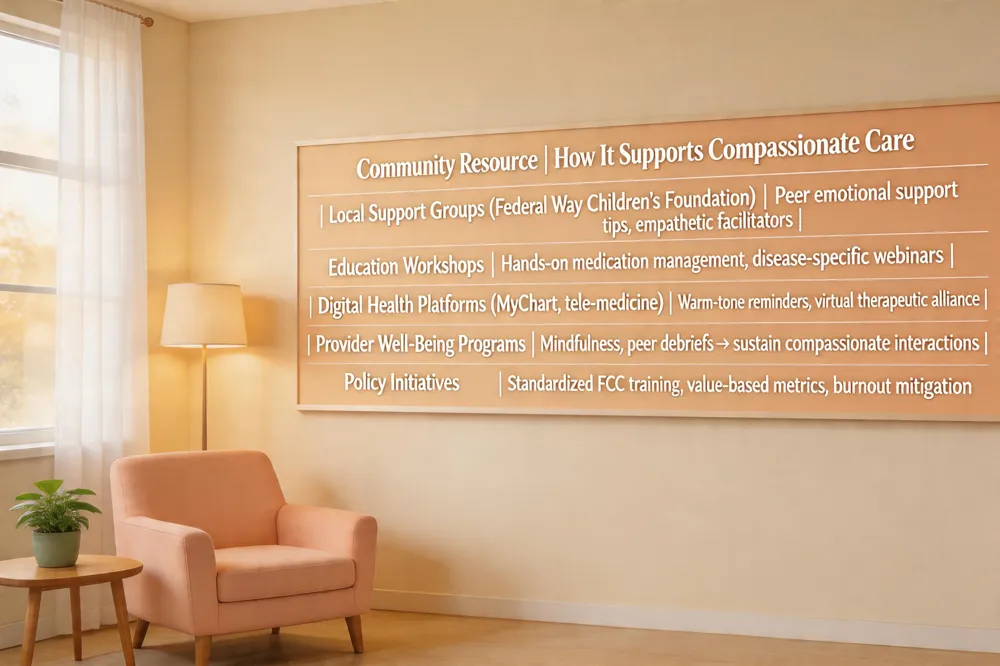 Parents in Federal Way can strengthen their child’s chronic‑condition care by tapping into local support groups, education workshops, and digital health tools that extend Compassionate care beyond the exam room.
Local Support Groups and Education Workshops Community organizations such as the Federal Way Children’s Foundation and the Pacific Northwest Heart Foundation host regular parent circles, disease‑specific webinars, and hands‑on medication‑management classes. These sessions provide emotional support, practical tips, and a space to share experiences, all delivered with empathetic facilitators.
Digital Health Platforms and Telehealth Integration Secure patient portals (e.g., MyChart) and tele‑medicine visits let families ask questions, receive warm‑tone reminders, and review personalized care plans from home. Virtual check‑ins preserve therapeutic alliance and have been shown to keep appointment attendance steady during periods of limited in‑person access.
Addressing Provider Burnout and Compassion Fatigue Health systems are implementing mindfulness workshops, peer‑support debriefs, and staffing models that allow clinicians adequate time for empathetic listening. Protecting clinician well‑being sustains the compassionate interactions that drive adherence.
Pediatric diseases list
Pediatric diseases span organ systems, from asthma and infections to endocrine disorders (type 1 diabetes), neurological conditions (autism, ADHD), and cardiovascular anomalies (atrial septal defect, Tetralogy of Fallot).
Common inpatient pediatric conditions
Frequent admissions involve fever in infants <90 days, severe hyperbilirubinemia, skin/soft‑tissue infections, pneumonia, bronchiolitis, seizures, failure‑to‑thrive work‑ups, and brief resolved unexplained events (BRUE).
Conclusion
Compassionate care—recognizing a child’s suffering and responding with empathy, active listening, and respectful communication—has consistently been linked to higher treatment adherence, reduced anxiety, and better clinical outcomes in pediatric chronic illness, especially cardiology. By embedding family‑centered practices such as shared decision‑making, coordinated multidisciplinary support, and culturally sensitive education, clinicians can strengthen therapeutic alliances and empower caregivers to sustain home‑based regimens. Ongoing research should evaluate innovative models, including telehealth and AI‑assisted documentation, that preserve compassionate interaction while easing clinician workload. Partnerships with schools, community groups, and patient‑advocacy networks will further reinforce compassionate, adherence‑focused care for every child and lasting health benefits.