Introduction
Pediatric cardiology is essential because children’s hearts are not miniature adult hearts; specialized expertise detects congenital defects, rhythm disorders, and acquired conditions early, preventing complications and supporting normal growth. Parents should watch for key warning signs such as a persistent heart murmur, cyanosis or bluish skin, unexplained fatigue or shortness of breath during play, fainting spells—especially with activity—palpitations, and poor weight gain. In Federal Way, families have several trusted options: the Seattle Children’s South Clinic (34920 Enchanted Pkwy. S) offers comprehensive exams, echocardiograms, and tele‑health visits; Mary Bridge Children’s Hospital and the Independent Care Works network (Dr. Nauman Ahmad) provide on‑site ECGs, echocardiograms, and coordinated care. A pediatrician referral is typically required; call 253‑838‑5878 (Seattle Children’s) or 253‑396‑4868 (Mary Bridge) to schedule, and ask about insurance acceptance and virtual‑appointment availability.
When to Seek Specialized Heart Care
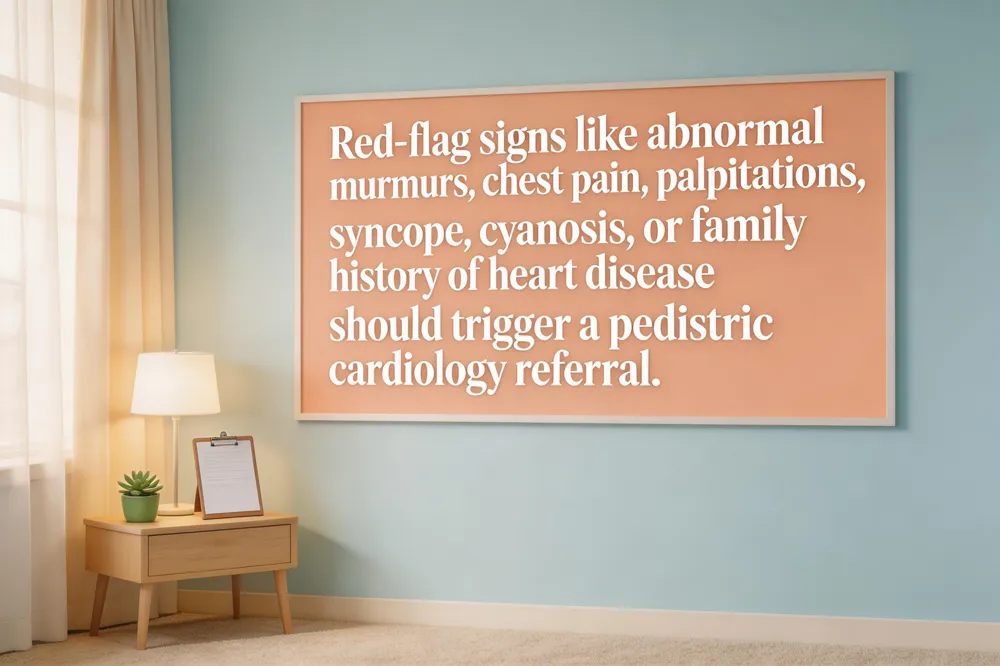 Red‑flag symptoms that should prompt a pediatric cardiologist referral include an abnormal heart murmur that may reflect a structural defect, persistent or severe chest pain, palpitations, and syncope—especially when these occur during activity or are accompanied by dizziness, cyanosis, or excessive fatigue. A strong family history of congenital heart disease, sudden cardiac death, pacemaker or defibrillator placement, or known genetic syndromes also warrants early evaluation.
Age‑specific signs:
- 9‑year‑old: Tiring easily, inability to keep up with peers, shortness of breath or sweating with mild activity, bluish lips/tongue, exertional chest pain, racing or skipping beats, dizziness, or fainting after exercise.
- 5‑year‑old: Quick fatigue during play, shortness of breath or sweating, cyanosis, fainting, palpitations, or activity‑related chest discomfort.
- 4‑year‑old: Detected abnormal murmur, recurrent chest pain, palpitations, fainting spells, or a family history of heart disease.
Early signs in children overall include unexplained fainting, dizziness, rapid or irregular heartbeat, persistent shortness of breath, excessive fatigue, chest discomfort, and cyanosis. In newborns, look for rapid breathing, poor feeding or weight gain, sweating while feeding, and a bluish tint to skin or lips. A heart “whooshing” murmur or frequent respiratory infections may indicate a septal defect.
Referral process: The pediatrician is the first point of contact. If any of the above symptoms appear, the pediatrician will order an ECG and an echocardiogram and coordinate a referral to a pediatric cardiologist—such as those at Seattle Children’s South Clinic in Federal Way or Mary Bridge Children’s Hospital—for comprehensive evaluation and, if needed, ongoing follow‑up.
Common Symptoms and Their Meaning
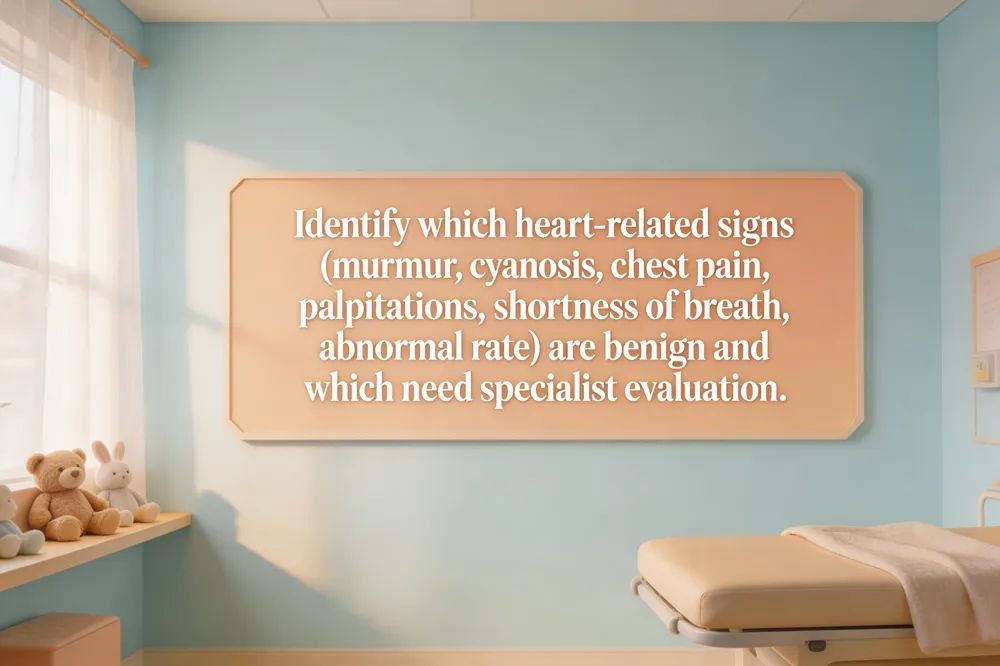 Parents often wonder which heart‑related signs in children merit a specialist’s eye. A heart murmur is a whooshing sound heard with a stethoscope; most are "innocent" and harmless, but a murmur that comes with cyanosis, poor feeding, or growth failure may signal a congenital defect such as a septal hole or valve abnormality and should be evaluated with an echocardiogram. Chest pain in kids is usually musculoskeletal, yet pain that worsens with exercise, is heavy or squeezing, or is accompanied by dizziness or shortness of breath is a red flag for cardiac disease and warrants pediatrician review and possible cardiology referral. Palpitations—the sensation of a racing or irregular heartbeat—are often benign, especially during fever or excitement, but persistent rapid beats lasting several minutes, especially with chest discomfort or fainting, need an ECG and possibly a pediatric cardiology consult. Shortness of breath can stem from lung issues, but when it occurs at rest, with activity, or at night, it may reflect heart failure, valve disease, or arrhythmia; a cardiologist will use echo and stress testing to pinpoint the cause. Finally, an abnormal heart rate—either unusually fast while sick or a rapid rhythm while sleeping—can be a normal response to fever, dehydration, or REM dreaming, yet a sustained or symptomatic tachycardia should prompt a pediatrician’s evaluation and, if needed, a pediatric cardiologist’s assessment to rule out arrhythmias or structural problems. Early detection and appropriate testing keep children healthy and give families peace of mind.
Diagnostic Tools and What to Expect
 When a pediatrician suspects a heart problem, a pediatric cardiologist will use several painless, high‑resolution tests to see how the heart works and looks. An electrocardiogram (ECG) records the rhythm with a report leads placed on the chest and limbs; it quickly identifies arrhythmias, conduction delays, and signs of chamber enlargement. An echocardiogram uses ultrasound to create moving images of the heart’s chambers, valves, and blood flow, allowing doctors to spot structural defects such as septal holes or valve abnormalities. For more detailed rhythm analysis, a Holter monitor is worn for 24‑48 hours, continuously recording the ECG while the child goes about daily activities. When anatomy is complex, a cardiac MRI provides three‑dimensional views of heart tissue, blood vessels, and function without radiation. If a problem is suspected before birth, a fetal echocardiogram performed around 18‑24 weeks visualizes the unborn heart and guides perinatal planning.
FAQ
- What type of cardiologist treats tachycardia? A pediatric electrophysiologist, a specialist in the heart’s electrical system, evaluates and manages rapid rhythms using tools like Holter monitoring and catheter ablation.
- What is a dangerous heart rate for a child with a fever? Rates exceeding age‑specific norms—> 200 bpm in infants, > 180 bpm in toddlers, > 150 bpm in school‑aged children—warrant urgent evaluation, especially if accompanied by chest pain, cyanosis, or fainting.
- What causes heart defects in a fetus? Genetic abnormalities, maternal diabetes, infections (e.g., rubella), certain medications, and tobacco or alcohol exposure can disrupt cardiac formation, prompting a fetal echocardiogram when risk factors exist.
- How to check a child's heart rate? Feel the radial pulse (or brachial in infants) for 15 seconds, multiply by four, or listen with a stethoscope for a full minute; compare to age‑appropriate ranges and contact your pediatrician if the rate is unusually fast, slow, or symptomatic.
Local families in Federal Way can schedule appointments through Seattle Children’s South Clinic (253‑838‑5878) or Mary Bridge Children’s Hospital (253‑396‑4868). Both offer on‑site ECG, echo, Holter, MRI, and fetal cardiology services, with virtual visits available for follow‑up.
Local Pediatric Cardiology Services in Federal Way
 Parents in Federal Way have several expert options for pediatric heart care.
Federal Way pediatrics Dr. Ahmad – Dr. Nauman Ahmad, MD, is board‑certified in pediatrics and pediatric cardiology and practices at Federal Way Pediatrics (32124 1st Ave S Suite 100, Federal Way, WA 98003). He evaluates congenital heart disease, murmurs, hypertension, and cardiomyopathy, offering on‑site ECGs, echocardiograms, and fetal echo. The clinic accepts Medicaid, UnitedHealthcare, and AARP Medicare Advantage, provides telehealth, and offers multilingual support (English, Hindi, Russian, Spanish, Urdu). Call (253) 661‑5939 to schedule.
Children's Hospital Federal Way – Seattle Children’s South Clinic (34920 Enchanted Pkwy S, Federal Way, WA 98003) delivers pediatric specialty care, including cardiology, with extended urgent‑care hours. Same‑day appointments with board‑certified specialists are available, and free parking is provided. Nearby, Mary Bridge Children’s Outpatient Center (505 South 336th St, Suite 200 & 330) offers complementary pediatric services.
Federal Way Pediatric Associates – Operated by Dr. Ahmad, this private practice offers routine well‑child visits, immunizations, chronic disease management, and cardiac testing such as echocardiograms. Telehealth and 24/7 on‑call support are available; appointments are made by calling (253) 661‑5939 or online.
Pediatric cardiologist near me – Our Federal Way clinic provides board‑certified pediatric cardiologists who diagnose and treat congenital and acquired heart conditions, using echocardiography, fetal imaging, and rhythm monitoring. In‑person or video visits are convenient for busy families.
Pediatric Cardiology near me – Seattle Children’s Hospital, a short drive away, offers a nationally recognized pediatric heart center with fetal echocardiography, advanced imaging, catheter‑based interventions, and coordinated surgical care. Call (206) 252‑8222 for appointments.
Pediatric cardiologist – A pediatric cardiologist is a specialist who performs comprehensive heart exams, ECGs, echocardiograms, stress tests, and catheterizations, working with surgeons and intensive‑care teams to manage complex heart disease from infancy through adolescence. Our local team ensures timely, family‑centered care and smooth transition to adult services when appropriate.
Understanding Heart Rate and Fever
 My child's heart is beating fast and has a fever
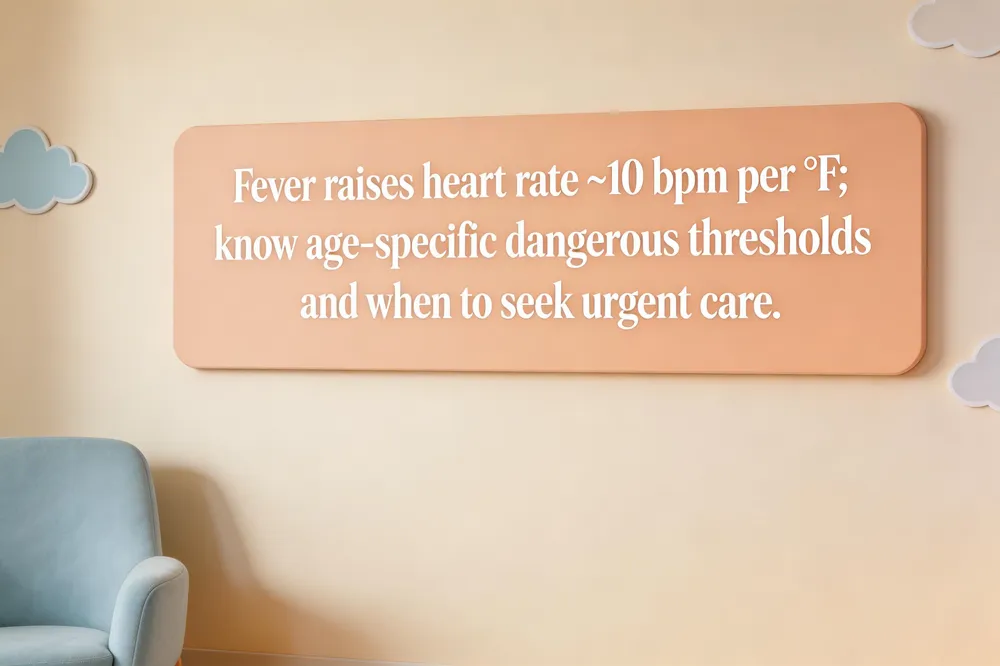
A fever typically raises a child’s pulse by about 10 beats per minute for each degree Fahrenheit above normal. This increase is usually harmless. Check the pulse (radial for toddlers, brachial for infants) and see if it stays within the age‑appropriate range—roughly 70‑110 bpm for a resting toddler. As the fever subsides, the heart rate should fall. Give an age‑appropriate fever reducer (e.g., acetaminophen) and encourage fluids. Contact your pediatrician, or seek urgent care if the pulse stays markedly high, the child looks pale, dizzy, has trouble breathing, or the fever lasts >3 days. Persistent concerns warrant a pediatric cardiology evaluation to rule out arrhythmias.
My child's heart is beating fast and has a fever
A fever typically raises a child’s pulse by about 10 beats per minute for each degree Fahrenheit above normal. This increase is usually harmless. Check the pulse (radial for toddlers, brachial for infants) and see if it stays within the age‑appropriate range—roughly 70‑110 bpm for a resting toddler. As the fever subsides, the heart rate should fall. Give an age‑appropriate fever reducer (e.g., acetaminophen) and encourage fluids. Contact your pediatrician, or seek urgent care if the pulse stays markedly high, the child looks pale, dizzy, has trouble breathing, or the fever lasts >3 days. Persistent concerns warrant a pediatric cardiology evaluation to rule out arrhythmias.
Why is my child's heart beating fast while sleeping? Brief tachycardia during sleep can be caused by fever, a REM‑dream surge of adrenaline, low blood sugar, or a stimulant. If the fast rhythm repeats, lasts long, or is accompanied by dizziness, pale skin, chest pain, or breathing difficulty, it may signal an arrhythmia such as supraventricular tachycardia and should be evaluated promptly. Take the pulse, note duration, and call your primary‑care provider; urgent care is needed for fainting or severe shortness of breath.
What is a dangerous heart rate for a child with a fever? Infants > 200 bpm, toddlers > 180 bpm, and school‑aged children > 150 bpm while febrile are generally concerning. A rate below 60 bpm (older children) or < 80 bpm (infants) is also worrisome. Immediate medical attention is required if these thresholds are met with chest pain, breathing difficulty, pallor, cyanosis, or fainting.
How to check a child's heart rate Sit or lie the child quietly for 5 minutes. Feel the radial pulse on the thumb side of the wrist (or brachial for infants) and count beats for 15 seconds, then multiply by four. A stethoscope can be placed just below the left nipple for a full‑minute count. Compare to age‑appropriate norms and contact a pediatrician if abnormal.
Is it normal for a child's heart to beat fast when sick? Yes. Fever, infection, pain, dehydration, or increased metabolic demand raise cardiac output, causing a temporary pulse increase. This is usually benign, but if rapid beats are paired with dizziness, fainting, chest pain, or prolonged duration, seek pediatric evaluation to exclude underlying heart rhythm problems.
Conclusion
Key takeaways: most childhood heart symptoms are benign, but persistent murmurs, chest pain with activity, fainting, palpitations or cyanosis warrant specialist evaluation. Early referral to a pediatric cardiologist improves outcomes for congenital and acquired heart disease.\n\nNext steps for families: schedule a well‑child exam, bring any concerning symptoms or family‑history details to your pediatrician, and ask for a referral to a pediatric cardiologist if indicated. Keep a symptom log (timing, triggers, associated activities) to help the specialist assess the child’s heart health.\n\nHow to get help: contact your child’s primary‑care physician for a referral, then call local pediatric cardiology centers such as Seattle Children’s South Clinic (253‑838‑5878), Mary Bridge Children’s Hospital (253‑396‑4868), or Federal Way Pediatric Associates (health‑plan accepted, telehealth available). For urgent concerns—syncope during sports, severe chest pain, or cyanosis—call 911 or go to the nearest emergency department.