Why Understanding Insurance Matters for Young Patients
Health insurance is the backbone of reliable pediatric care, ensuring that children receive timely check‑ups, vaccinations, and specialist referrals without financial delay. For families of children with heart conditions, pediatric cardiology services—such as echocardiograms, medication management, and surgical follow‑up—are medically necessary and often covered when a qualified plan is in place. Medicaid and Washington’s CHIP (Apple Health for Kids) provide low‑cost or free coverage for eligible families, including cardiology visits, diagnostic testing, and prescription drugs, while private Marketplace plans may offer broader provider networks but typically involve higher premiums and cost‑shares. Balancing these options involves comparing premiums, out‑of‑pocket maximums, copayments, and any income‑based subsidies to choose the plan that best protects a child’s health and the family’s budget. Regularly reviewing eligibility each year prevents coverage gaps and secures cardiac care.
Public Coverage Options for Children in Federal Way
 In Federal Way, Washington, every child can obtain low‑cost or free health coverage through the state’s public programs. Apple Health (Medicaid) offers free coverage for families whose income is at or below 138 % of the Federal Poverty Level (FPL). Children who earn too much for Medicaid but still fall below about 209 % of FPL qualify for Apple Health for Kids (CHIP), which caps premiums and out‑of‑pocket costs at no more than 5 % of household income; many families pay no premium at all. Eligibility requires Washington residency, age under 19, and U.S. citizenship or lawful residency. Coverage ends on the child’s 19th birthday, after which the young adult must transition to adult Medicaid, a Marketplace plan, or private insurance. All benefits include routine check‑ups, immunizations, dental, vision, prescription drugs, hospital and emergency services, and specialist care such as pediatric cardiology. Families can apply anytime online via the Washington Healthplanfinder, by phone, or through a local enrollment navigator, and can also compare private Marketplace plans with income‑based subsidies.
Private Child‑Only Plans and Their Costs
 Choosing a private child‑only health plan in Washington gives families flexibility, but understanding costs is essential.
Blue Cross Blue Shield premiums – A child‑only Blue Cross Blue Shield (Regence) plan typically costs $150‑$250 per month after any ACA premium tax credits are applied. The exact amount varies by the child’s age, ZIP code, and metal tier (bronze through platinum). Deductibles, copays and out‑of‑pocket caps differ by plan, so families should review the Summary of Benefits before enrolling.
Other private insurers – Washington’s marketplace and insurers offer child‑only options, including Cigna, Kaiser Permanente, PacificSource, Premera Blue Cross, Aetna and UnitedHealthcare. These plans meet state mandates to cover preventive pediatric services at no cost‑share and are accessible through the Washington Health Benefit Exchange or directly from the carriers during open enrollment.
Typical monthly cost range – Across the state, child‑only plans fall between $120 and $300 per month. Premium tax credits can lower the out‑of‑pocket cost, sometimes to under $100. families qualify for financial assistance via CHIP, which caps costs at about 5 % of household income, often resulting in very low monthly payments.
Federal Way specifics – In Federal Way, child‑only premiums generally range $130‑$220 after subsidies. CHIP‑eligible families pay little or nothing, while marketplace plans remain competitive for moderate‑income households. Copayments for doctor visits are usually around $30.
For the most accurate quote, use the Washington Healthplanfinder tool or contact a licensed insurance agent.
Pediatric Cardiology Coverage and Self‑Pay Decisions
 Insurance coverage for cardiology visits
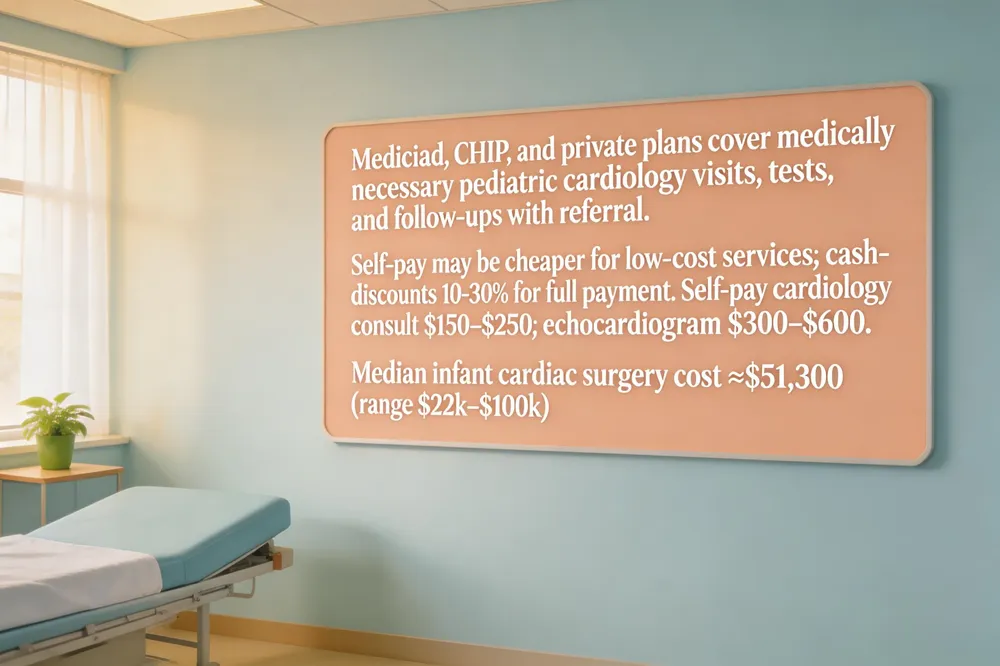
In Washington, most insurance plans—including Medicaid, Apple Health for Kids (CHIP), and private carriers—cover medically necessary pediatric cardiology visits, diagnostic tests, and follow‑up appointments. A primary‑care referral and documentation of medical necessity are generally required. Copays, deductibles and coinsurance vary by plan, but the visit is billed as a standard specialist appointment and all health information is protected under HIPAA.
Insurance coverage for cardiology visits
In Washington, most insurance plans—including Medicaid, Apple Health for Kids (CHIP), and private carriers—cover medically necessary pediatric cardiology visits, diagnostic tests, and follow‑up appointments. A primary‑care referral and documentation of medical necessity are generally required. Copays, deductibles and coinsurance vary by plan, but the visit is billed as a standard specialist appointment and all health information is protected under HIPAA.
When self‑pay may be cheaper Families may choose self‑pay for routine, low‑cost services (well‑child exams, vaccinations, minor office visits) when a cash‑discount is offered or when a high deductible would make the out‑of‑pocket cost higher than the discounted rate. Self‑pay is also useful for uncovered services, elective procedures, or out‑of‑network care where the practice’s fee schedule is lower than the insurer’s allowed amount. For high‑cost treatments—surgeries, hospitalizations, advanced imaging—insurance is usually advisable to protect against large bills.
Self‑pay rates for cardiology services in Federal Way Self‑pay cardiology consultations range from $150 to $250 per visit; echocardiograms cost $300–$600. Clinics often provide a 10‑30 % discount for full payment at the time of service and may offer interest‑free payment plans for larger procedures.
Median cost of infant cardiac surgery The median cost for infant cardiac surgery in the United States is about $51,300, with a range of $32,000–$100,000.
How Families in Federal Way Enroll Their Children
 Online enrollment portals and hotlines
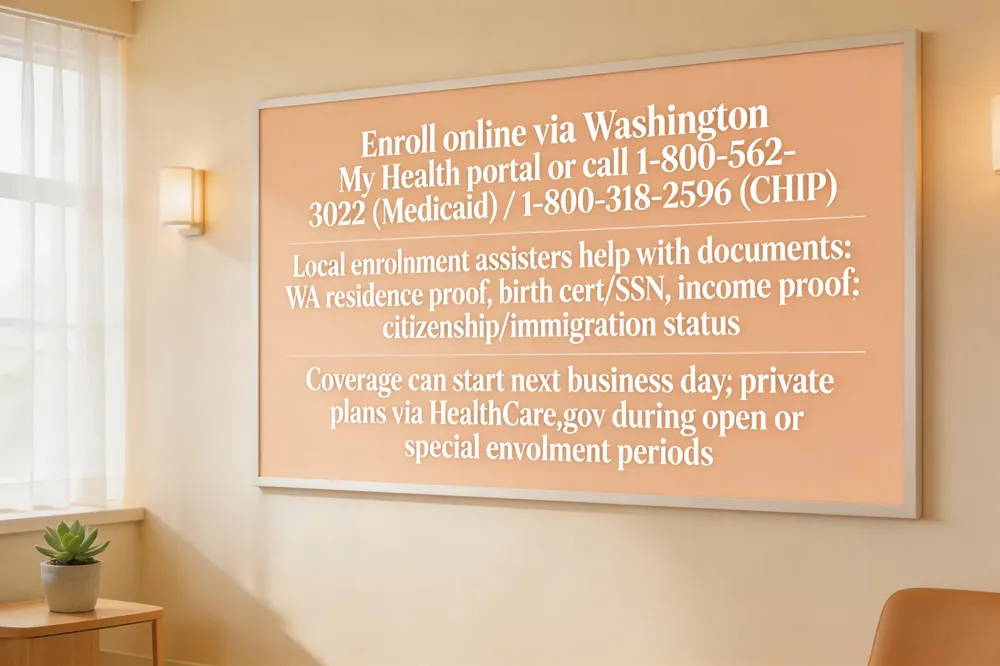
Parents can start the process on the Washington My Health portal (https://myhealth.wa.gov) where a Medicaid or CHIP application is submitted and eligibility is shown instantly. The state’s dedicated enrollment hotline, 1‑800‑562‑3022 (or 1‑800‑318‑2596 for CHIP), offers live assistance and can mail a paper form if needed.
Local enrollment assistance
Community health centers, the Federal Way Public Health Center, schools, and social‑service agencies have trained enrollment assisters. They help families gather required documents, complete the online or paper application, and answer questions about income thresholds, premium subsidies, and provider networks.
Timing and documentation needed
Applications are accepted year‑round; once approved, coverage can begin the next business day. Families should have proof of Washington residence, child’s birth certificate or SSN, recent pay stubs or tax returns, and proof of citizenship or immigration status. If a private plan is preferred, families can also use HealthCare.gov to compare marketplace options and enroll during open enrollment or a special enrollment period.
Answers to key questions
- How can parents enroll their child in health insurance in Washington? Through the My Health portal, the enrollment hotline, or local enrollment assisters; coverage can start immediately after approval.
- What child health insurance options are available for children in Federal Way, Washington? Apple Health for Kids (CHIP), Apple Health Medicaid, employer‑provided child‑only plans, Washington Healthplanfinder marketplace policies with subsidies, TRICARE, FEHB, and private plans from carriers like Blue Cross Blue Shield and Cigna.
Financial Assistance and Payment Plans at Federal Way Pediatrics
 Federal Way Pediatrics offers several ways to reduce the cost of pediatric care while ensuring families receive the specialist services they need.
Self‑pay discounts and cash‑price packages – For routine visits such as well‑child exams, vaccinations, or minor office appointments, the clinic provides a discounted cash price that is often lower than the out‑of‑pocket amount after a high deductible. Families can pay the reduced fee at the time of service and may receive an additional 10‑15 % discount for full payment upfront.
Sliding‑scale fees and payment plans for cardiology – Children requiring cardiac evaluations, echocardiograms, or follow‑up visits can qualify for a sliding‑scale schedule based on household income. The practice also offers interest‑free payment plans that spread larger balances over 6‑12 months, making high‑cost cardiology care more affordable.
Telehealth options and insurance coordination – Telehealth visits are covered at parity with in‑person appointments by most Medicaid, CHIP, and private plans, and the clinic can verify coverage before the visit. For families without insurance, telehealth provides a low‑cost alternative for routine follow‑ups.
When to use self‑pay instead of insurance – Self‑pay is advisable for low‑cost, routine services when a cash discount makes the expense lower than the insurance deductible or copay, or when a service is not covered by the family’s plan. For high‑cost treatments such as surgeries, advanced imaging, or emergency care, using insurance is typically the safer choice to protect against large bills and to access coordinated care.
Key Takeaways for Parents
Washington families have many ways to cover a child’s heart care. Public programs such as Medicaid (Apple Health) and the Children’s Health Insurance Program (CHIP) provide free or low‑cost coverage for eligible families, and the state caps premiums and out‑of‑pocket costs at no more than 5 % of annual income. Private plans available through the HealthCare.gov Marketplace may offer network choices and can be subsidized based on income. Knowing the income thresholds, premium limits and any required copayments helps avoid unexpected bills. For families who prefer or need it, self‑pay options with cash‑price schedules and payment plans can make exams and cardiac testing affordable.