Why Same‑Day Visits Matter for Your Child
Prompt evaluation reduces the risk that a mild illness, such as fever, cough, ear pain, rash, or vomiting, progresses to a more serious condition. Within hours, a pediatric clinician can confirm the diagnosis, start appropriate treatment (e.g., antibiotics, antivirals, rehydration), and give clear home‑care instructions, which eases parental anxiety and speeds recovery. Same‑day visits typically handle low‑grade fevers, sore throats, strep, ear infections, mild respiratory wheezing, gastroenteritis without blood, and minor injuries like sprains or simple cuts. Because the child is seen quickly, families avoid lengthy work absences, school disruptions, and the higher cost of an emergency‑room visit. In Federal Way, a robust network—including Seattle Children’s Urgent Care, Mary Bridge Children’s Outpatient Center, Federal Way Pediatrics, and UW Medicine Urgent Care—offers walk‑ins, online scheduling, and virtual options, all staffed by pediatric‑trained providers and equipped with on‑site labs and X‑rays for efficient, child‑focused care.
Preparing for the Visit: What to Bring and When to Come In
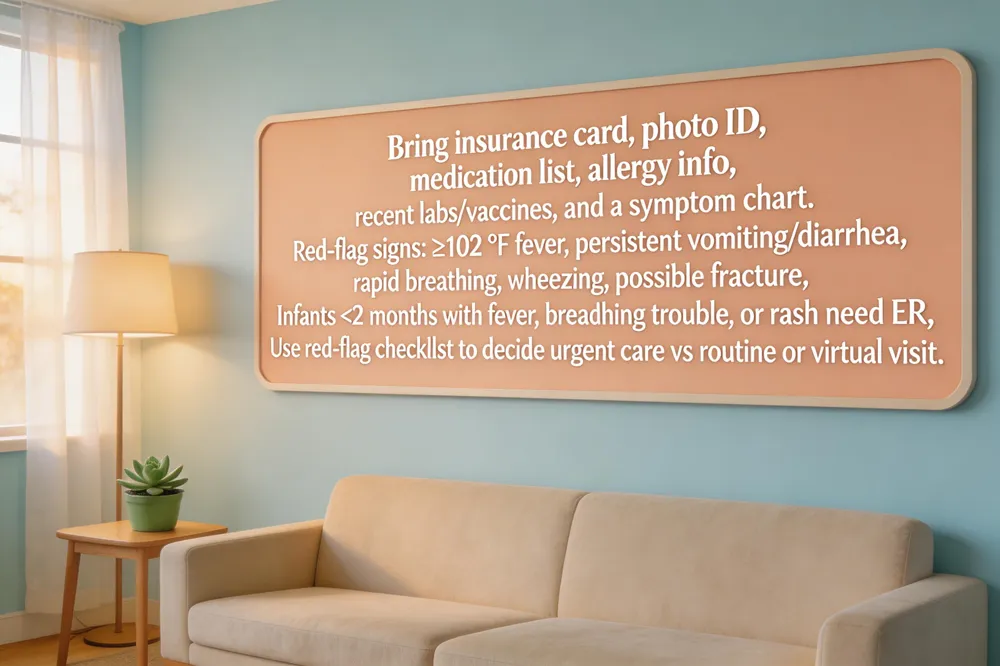 Essential documents and medication lists – Bring your child’s insurance card, a photo ID, a current list of all medicines (including dose and frequency), allergy information, and any recent lab results or vaccination records. Having a printed chart of the child’s normal temperature, fluid intake, and recent vomiting or diarrhea speeds the clinician’s assessment.
Symptom tracking and red‑flag signs – Note when each symptom started, whether it’s getting worse, and any associated changes in eating, sleeping, or urination. Red‑flag signs that demand urgent care include a high fever (≥102 °F/38.9 °C) that does not respond to fever‑reducers, persistent vomiting or diarrhea, signs of dehydration (dry mouth, few wet diapers), rapid breathing or wheezing, and a possible fracture after a fall.
Special considerations for infants – Infants can be seen at most Federal Way urgent‑care sites (e.g., Mary Bridge Children’s Pediatrics Northwest) but verify the clinic’s age limits. Any infant younger than 2 months with a fever, difficulty breathing, or a concerning rash should be taken directly to the emergency department.
Guidelines for deciding if urgent care is needed – Use the above red‑flag checklist. If none are present and the child’s condition is mild (e.g., low‑grade fever, mild sore throat), schedule a routine pediatric appointment or consider a virtual visit.
When should you take a kid to urgent care? – High fever that won’t subside, persistent vomiting/diarrhea, dehydration, moderate‑to‑severe pain, rapid breathing, wheezing, possible fracture, spreading rash, stiff neck, or sudden mental status changes require urgent care. Otherwise, a routine appointment suffices.
Urgent care for babies – Federal Way clinics accept infants for fever, dehydration, ear infections, minor cuts, and similar concerns. Most treat newborns, but some require the baby to be at least 30 days old. Severe symptoms (e.g., difficulty breathing, high fever, suspected fracture) call for call 911 or the ER.
What are the 5 general danger signs in a child? – 1. Severe drowsiness or unresponsiveness. 2. Difficulty breathing (rapid, labored, chest indrawing). 3. Pale, bluish, or cold extremities. 4. Convulsions or seizures that do not stop quickly. 5. Non‑blanching rash. Call emergency services immediately if any appear.
Clinical Workflow: From Triage to Treatment
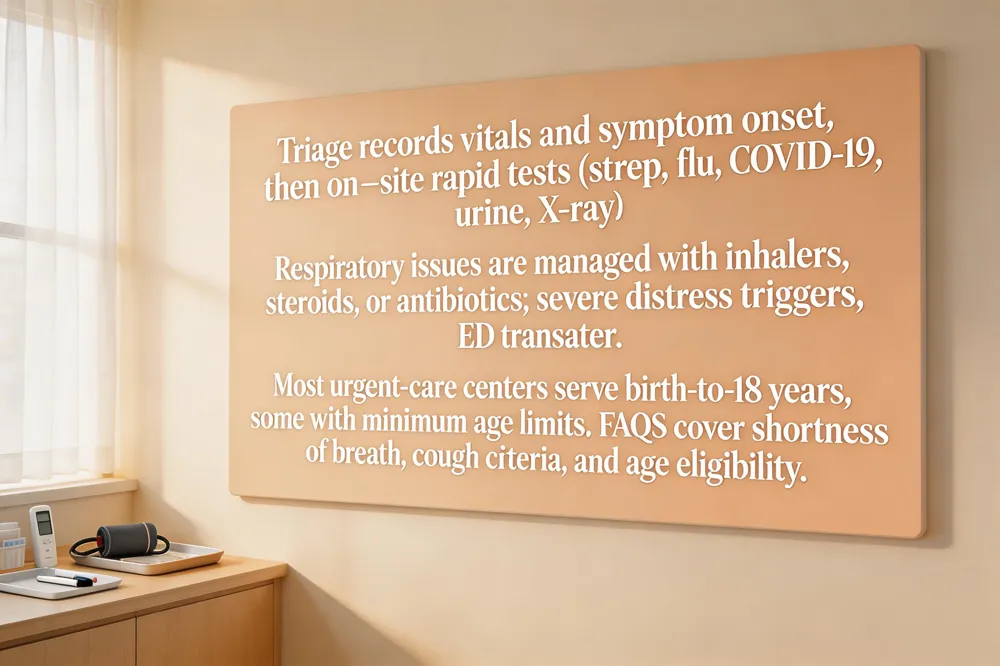 When a parent contacts a pediatric urgent‑care clinic, the first step is a triage assessment. A nurse records the child’s temperature, heart rate, respiratory rate, oxygen saturation, and asks about symptom onset, severity, and any red‑flag signs such as difficulty breathing, dehydration, or a rash. This rapid vital‑sign check helps prioritize the visit and determines whether immediate attention is needed.
During the on‑site testing phase, clinicians can perform point‑of‑care diagnostics: rapid strep, influenza, COVID‑19 antigen swabs, urine dipsticks, and, when indicated, a chest X‑ray. Results are often available within minutes, allowing the provider to confirm infections or rule out pneumonia before prescribing treatment.
Management of respiratory symptoms includes listening to the lungs, measuring oxygen levels, and delivering inhaled bronchodilators or nebulizer therapy on the spot. Mild asthma flare‑ups, bronchiolitis, or early‑stage pneumonia are treated with inhalers, oral steroids, or antibiotics as appropriate. If the child shows severe distress, low oxygen, or an unclear cause, the clinic arranges immediate transfer to an emergency department.
Age limits and pediatric eligibility: Most urgent‑care centers serve patients from birth through 18 years, though a few require a minimum age of six months for certain procedures. Parents should verify age‑specific policies ahead of time, especially for newborns.
FAQs
- Can urgent care treat shortness of breath? Yes. Clinics assess and manage asthma, bronchiolitis, allergic reactions, and early pneumonia with exams, pulse‑ox, X‑ray, inhalers, or meds, referring severe cases to the ER.
- When to take child to urgent care for cough? If the cough exceeds five days, is paired with fever > 101 °F, wheezing, or breathing difficulty, prompt evaluation is warranted.
- At what age can a child visit urgent care? Typically birth‑to‑18 years, with some sites setting a six‑month minimum; always call ahead for infant policies.
Choosing the Right Care Setting
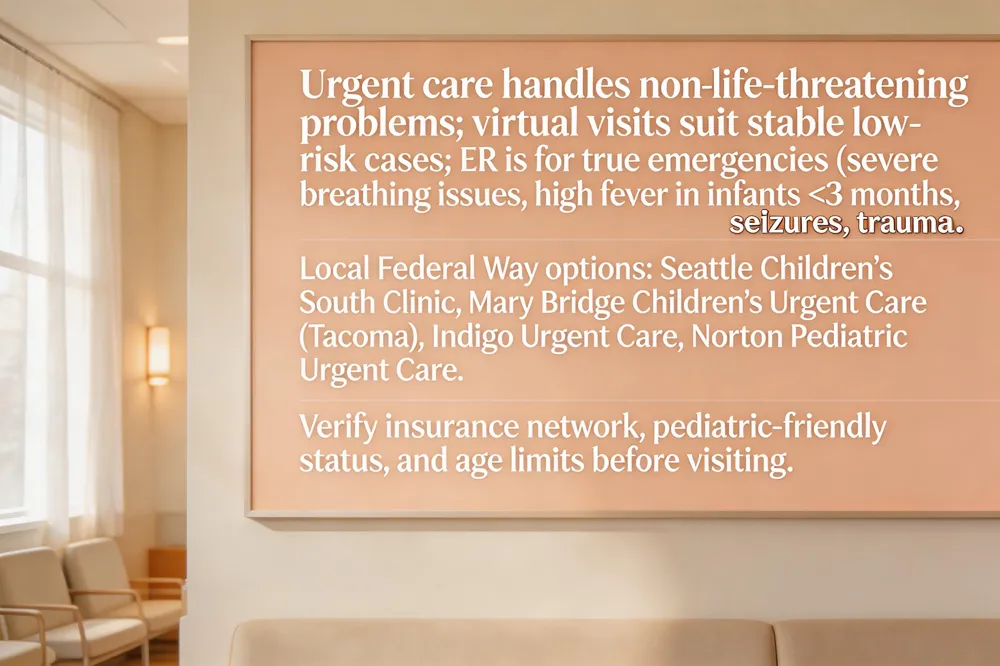 When a child becomes ill, parents must decide quickly whether an urgent‑care clinic, a virtual visit, or the emergency department (ER) is the most appropriate venue.
Differences between urgent care, virtual visit, and ER – Same‑day urgent‑care centers provide in‑person evaluation for non‑life‑threatening problems such as fever, ear pain, mild wheezing, rashes, or minor injuries. They have pediatric‑trained staff, on‑site rapid labs, X‑rays, and can prescribe medication. Virtual visits (e.g., Norton eCare or Seattle Children’s eCare) are ideal for stable children with low‑risk symptoms—pink eye, sore throat, mild fever—allowing a clinician to assess via video and send prescriptions without a trip. The ER is reserved for true emergencies: difficulty breathing, high fever in infants < 3 months, severe allergic reactions, seizures, or serious trauma.
Local options in Federal Way and nearby cities –
- Seattle Children’s South Clinic (34920 Enchanted Pkwy S) offers daytime primary care and evening/weekend urgent‑care (4 p.m.–10:30 p.m.) for children of all ages.
- Mary Bridge Children’s Urgent Care in Tacoma (1812 S. Mildred St Suite H) is a 15‑minute drive and provides walk‑ins, rapid testing, and virtual follow‑up.
- Indigo Urgent Care (31861 Gateway Center Blvd S, Suite A) in Federal Way operates 8 a.m.–8 p.m. daily with pediatric walk‑ins and on‑site digital X‑ray.
- Norton Pediatric Urgent Care in Seattle, a short drive away, offers same‑day evaluation, labs, X‑rays, and vaccination services staffed by board‑certified pediatricians.
Insurance and network considerations – All of the above clinics accept most major insurance plans, including Medicaid and private carriers. Families should verify co‑pay amounts and network participation before arrival—most locations list this information on their websites or can confirm it over the phone.
How to verify pediatric‑friendly status – Call the facility’s triage line and ask whether clinicians are pediatric‑certified, whether the clinic has age‑appropriate equipment (e.g., infant scales, child‑size blood‑pressure cuffs), and if they can treat infants under 2 months. Checking for a dedicated pediatric urgent‑care label on the clinic’s website (e.g., “Pediatric Urgent Care”) and reading patient reviews can also confirm a child‑focused environment.
Answering common questions –
- Pediatric urgent care near me: Federal Way Pediatrics provides primary care but no walk‑in urgent care; nearby options include Federal Way Urgent Care Center on 31st Avenue and Sea‑Tac Urgent Care, both pediatric‑friendly and walk‑in.
- Norton pediatric Urgent Care: A Seattle‑based, child‑focused walk‑in clinic offering same‑day care, on‑site labs, X‑rays, and referrals, accepting most insurance.
- Seattle Children’s Federal Way: Offers daytime primary care and evening/weekend urgent‑care with 25+ specialties, free parking, and broad insurance acceptance.
- Children's Urgent Care Tacoma: Mary Bridge Children’s Urgent Care (Tacoma) provides walk‑ins, rapid testing, and virtual visits, accepting major insurers.
- Indigo Urgent Care – Federal Way: Open daily 8 a.m.–8 p.m., provides pediatric walk‑ins, digital X‑ray, and rapid labs; most insurers accepted.
- 24‑hour urgent care in Federal Way: None exist; after 8 p.m., families should go to the nearest ER (e.g., MultiCare Tacoma General Hospital).
- Can I take my child to a normal urgent care?: Some urgent‑care centers see children, but confirm pediatric‑friendly status and age limits beforehand; Kaiser Permanente Medical Center, for example, does not offer pediatric urgent care.
By matching the child’s symptoms to the appropriate setting, confirming insurance coverage, and ensuring the clinic is truly pediatric‑focused, parents can secure timely, compassionate care while avoiding unnecessary ER visits.
Financial and Insurance Considerations
 When you need a same‑day pediatric sick visit, understanding the cost structure can reduce stress and help you budget for care.
Typical out‑of‑pocket costs – In Washington state, a pediatric urgent‑care or office sick visit usually runs between $80 and $150 after insurance, depending on the plan’s copay, coinsurance and any additional services such as labs or X‑rays. Preventive well‑child visits are typically $0 in‑network, but acute sick visits are billed separately.
Co‑payment vs. deductible – Many commercial plans apply a fixed copay (often $20‑$40) for pediatric visits, while others use a percentage of the charge after the deductible is met. If your deductible has not yet been satisfied, you may owe a larger amount up front; once the deductible is met, the copay or coinsurance applies.
Medicaid/CHIP coverage – Families enrolled in Medicaid or the Children’s Health Insurance Program (CHIP) usually pay little or nothing for a sick visit, often only a modest state‑set copay. These programs cover most on‑site tests and medications needed for typical acute illnesses.
Verifying network status – Before you travel, confirm that the urgent‑care center (e.g., Seattle Children’s Urgent Care, Norton Children’s Prompt Care, or UW Medicine Federal Way Urgent Care) is in‑network for your insurer. Call the office or check the provider directory on your insurer’s website to avoid unexpected charges.
Answer to common question – How much is a pediatric sick visit out of pocket? In Washington, a pediatric sick‑visit (urgent‑care or office) usually costs $80 – $150 after insurance, depending on your plan’s copay or coinsurance and services rendered. Marketplace or employer plans often have a fixed copay ($20‑$40) plus deductible. Preventive well‑child visits are $0 in‑network, but sick visits are not. Medicaid or CHIP families typically pay little or nothing, often only a small state‑set copay. Verify your plan’s details and network status before the visit.
After the Visit: Follow‑Up, Vaccines, and Warning Signs
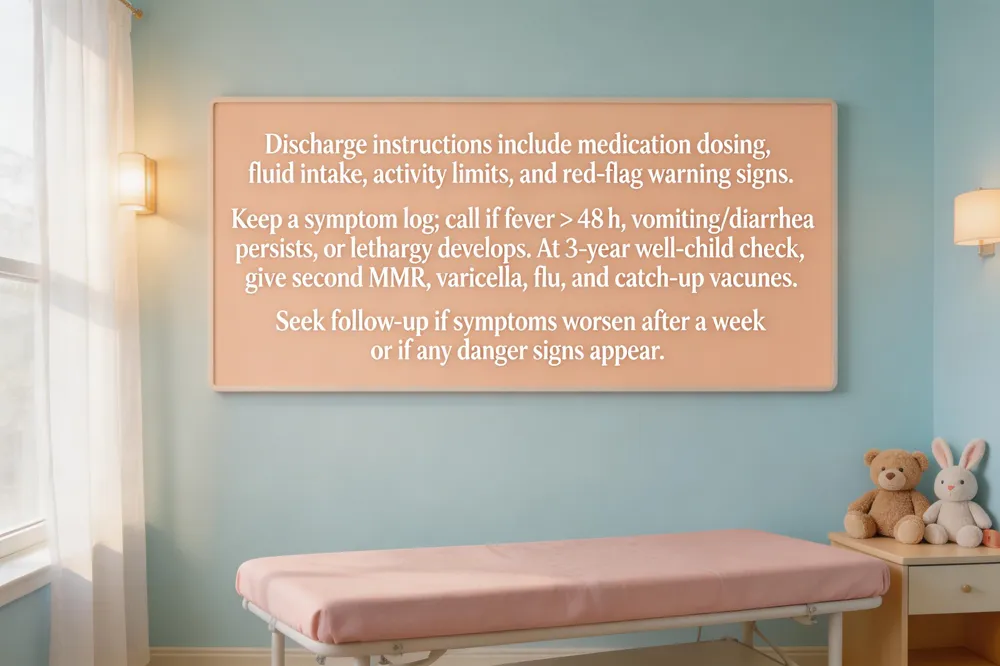 After a same‑day sick visit, the clinician will hand you written discharge instructions that spell out medication dosing (e.g., ibuprofen 10 mg/kg every 6 hours, max 40 mg/kg per day) and clear guidance on fluid intake, activity, and when to give antipyretics. Keep a log of temperature, urine output, and any new symptoms; if fever persists beyond 48 hours, vomiting or diarrhea continues, or the child becomes unusually sleepy, call the office or seek urgent care.
Vaccination schedule for toddlers: at the 3‑year well‑child check‑up children receive the second MMR and varicella doses, the seasonal flu shot, and any catch‑up DTaP, IPV, or pneumococcal vaccines if earlier doses were missed.
Long‑term monitoring: most viral illnesses improve within 5‑7 days. If symptoms last longer than a week without improvement, worsen, or are accompanied by fever, dehydration, or a spreading rash, arrange a follow‑up appointment.
Answers to common questions
- Do toddlers get shots at a 3‑year check‑up? Yes – MMR, varicella, flu, and any needed catch‑up doses.
- How long should a child be sick before seeing a doctor? More than a week without improvement, or any worsening signs (high fever, persistent vomiting, dehydration, lethargy, breathing difficulty, rapidly spreading rash) warrant prompt evaluation.
- What is considered a medical emergency for a child? Severe breathing problems, choking, uncontrolled bleeding, head injury with loss of consciousness, seizures, anaphylaxis, high‑fever seizures, major fractures, severe burns, unresponsiveness, sudden mental‑status changes, or severe chest pain – call 911.
- What are the 5 general danger signs in a child? 1) Severe drowsiness/unresponsiveness; 2) Labored or rapid breathing; 3) Pale, bluish, or cold extremities; 4) Prolonged seizures; 5) Non‑blanching rash. These require immediate emergency care.
Putting It All Together for Your Child’s Health
Key takeaways for same‑day visits – Call your pediatric office or use the online portal as soon as symptoms appear (fever, cough, ear pain, rash, vomiting, diarrhea, or wheezing). Have a symptom log, medication list, allergy information, recent temperature readings, and insurance ready. The clinician will perform a focused exam, vital‑sign check, and may run rapid tests (strep, flu, COVID‑19) on‑site. Early treatment can prevent complications and reduce the need for an ER trip.
When to use urgent care versus ER – Urgent‑care centers (e.g., Seattle Children’s Federal Way Urgent Care, Norton Immediate Care, or Federal Way Pediatrics) are appropriate for moderate illnesses such as fever, ear infections, sore throat, mild asthma flare‑ups, minor injuries, or dehydration without severe signs. Go directly to the emergency department for life‑threatening signs: difficulty breathing, high fever in infants < 3 months, severe allergic reaction, persistent vomiting with no urine output, seizures, or serious injuries.
Resources for families in Federal Way – Use MyChart or call 253‑792‑6630 for same‑day appointments at Mary Bridge Children’s Outpatient Center (505 South 336th St). Walk‑in/online‑reserve urgent‑care options include Seattle Children’s Urgent Care (34920 Enchanted Pkwy S) and UW Medicine Urgent Care (32018 23rd Ave S). Both offer free parking, on‑site labs/X‑ray, and accept most insurance. For 24/7 virtual evaluation, try Norton eCare or Atrium Health’s video visits. Keep the clinic’s phone numbers and the 911 emergency line handy for rapid response.