Why Early Detection Matters
Congenital heart disease (CHD) is the most common birth defect in the United States, affecting about 1 in every 100 newborns – roughly 40,000 infants each year. When a defect is identified early, before symptoms progress to heart failure or severe cyanosis, treatment can be planned and often less invasive, dramatically improving survival, growth and development, and quality of life. In Federal Way, WA, families have access to a dedicated pediatric cardiology team that offers newborn pulse‑oximetry screening, fetal echocardiogram review, and same‑day echocardiography for any concerning murmur. The clinic coordinates referrals, schedules follow‑up appointments within 48 hours of a positive screen, and provides counseling on medication, catheter‑based procedures, or surgery. Prompt evaluation ensures children receive the right care at the right time, supporting healthier futures for the whole family.
Early Warning Signs Across the Childhood Timeline
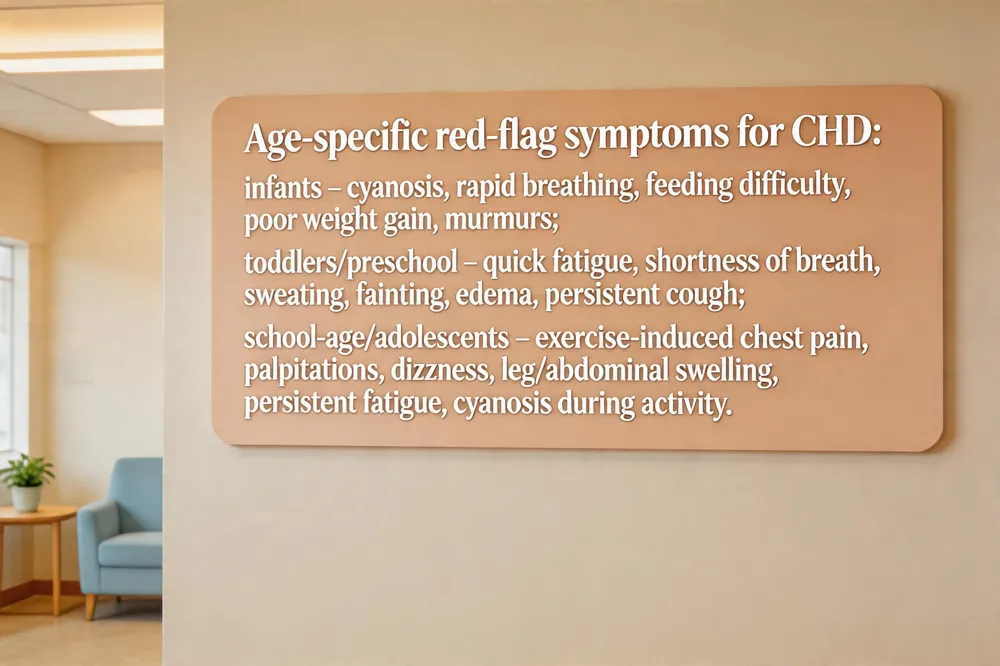 Congenital heart defects (CHDs) affect roughly 1 % of U.S. births (≈40,000 infants each year) and can present at any age. Recognizing age‑specific red‑flag symptoms helps parents seek timely evaluation by a pediatric cardiologist.
Infant red‑flag symptoms – Within days to weeks after birth, look for cyanosis (bluish lips, tongue, or nail beds), rapid or labored breathing, difficulty feeding, excessive sweating during feeds, and poor weight gain or failure to thrive. A loud or continuous heart murmur heard at a routine exam also warrants an echocardiogram.
Toddler and preschool age clues – Between 1‑5 years, children may tire quickly during play, develop shortness of breath with minimal activity, excessive sweating , or experience fainting spells (syncope). Swelling of the hands, ankles, or feet (edema) and persistent cough that does not improve with typical respiratory treatment can be early signs of cardiac dysfunction.
School‑age and adolescent signs – From 6 years onward, watch for exercise‑induced chest discomfort or chest pain, palpitations (racing or irregular heartbeat), dizziness or fainting after exertion, and swelling of the legs or abdomen. Persistent fatigue, shortness of breath during sports, and a bluish tint to lips or gums during activity are red‑flag symptoms.
What are 5 warning signs of heart disease? Chest pain or pressure, shortness of breath, pain radiating to neck/jaw/upper abdomen, persistent fatigue, and swelling of legs/ankles/arms.
Heart problems in child symptoms – Easy fatigue, shortness of breath, excessive sweating, chest pain, palpitations, fainting, and swelling of extremities or abdomen; infants may also show rapid breathing, feeding difficulty, cyanosis, and poor weight gain.
Signs of heart problems in a 5‑year‑old – Shortness of breath during normal play, quick tiring, chest discomfort, fainting, swelling of feet/ankles/hands, excessive sweating, cyanosis of lips/gums, dizziness, and palpitations.
Signs of heart problems in a 2‑year‑old – Rapid or labored breathing, excessive sweating, poor weight gain, cyanosis of lips/gums, frequent fatigue/irritability, inability to keep up with peers, swelling of hands/feet, and abnormal heart murmur.
Signs of heart problems in a 9‑year‑old – Quick fatigue, shortness of breath during sports, chest pain with exertion, dizziness or fainting, unexplained swelling, excessive sweating, palpitations, and cyanosis during activity.
Signs of heart problems in a 6‑year‑old – Early tiring, shortness of breath, chest discomfort, rapid/pounding heartbeat, fainting or dizziness after activity, excessive sweating, cyanosis of lips/gums, and swelling of hands/feet/ankles.
Early detection enables timely interventions—ranging from medication to catheter‑based procedures or surgery—and improves long‑term outcomes. If any of these signs appear, contact your pediatrician promptly for a cardiac evaluation and possible referral to a pediatric cardiology team.
Diagnostic Pathway for Congenital Heart Defects
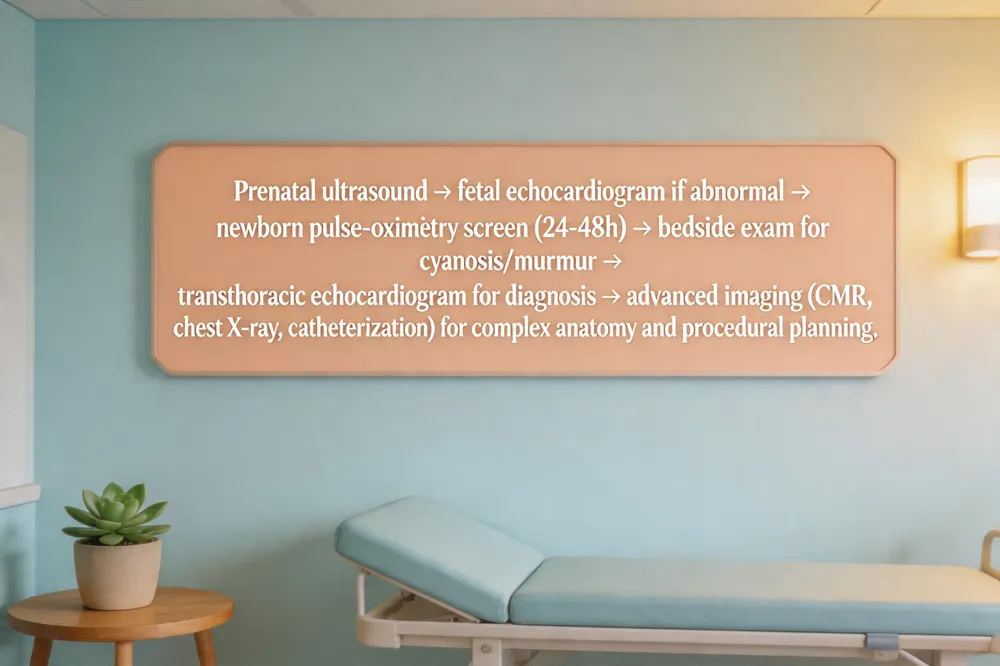 Congenital heart disease (CHD) is often first suspected during routine prenatal ultrasounds. When an abnormality is seen, a detailed fetal echocardiogram is performed to visualize the heart’s chambers, valves and blood flow before birth, allowing the care team to plan interventions that may be needed immediately after delivery.
After birth, every newborn in the United States undergoes a pulse‑oximetry screen within the first 24‑48 hours. A low oxygen saturation reading flags the possibility of a critical CHD, especially cyanotic lesions, and prompts a bedside physical exam for cyanosis, rapid breathing or a heart murmur.
If the screen or exam raises concern, a transthoracic echocardiogram is ordered. This non‑invasive ultrasound provides a real‑time view of heart structure, valve function and blood flow, confirming the diagnosis and grading severity. In more complex cases, cardiac magnetic resonance imaging, chest X‑ray or cardiac catheterization may be added to clarify anatomy, assess pressures and guide surgical or catheter‑based planning.
Early signs of heart failure in infants
Infants with developing heart failure often breathe rapidly (tachypnea) or appear to struggle for air even at rest or during feeds. They tire quickly while feeding, may pause to catch their breath, and frequently fail to gain weight or lose previously gained weight. Excessive sweating—especially on the forehead or back—along with a bluish tint to the lips, tongue or nail beds signals low oxygen delivery. Fluid overload can appear as a swollen abdomen, hepatomegaly or peripheral edema of the feet and ankles.
How do I know if my baby’s heart is ok?
Prenatal ultrasounds detect many serious defects; any abnormal finding is followed by a fetal echocardiogram. After delivery, a normal pulse‑oximetry screen is reassuring. Parents should still watch for rapid breathing, cyanosis, poor feeding, excessive sweating or a heart murmur. If any of these appear, the pediatrician will order an echocardiogram and refer the baby to a pediatric cardiologist for a comprehensive evaluation.
Symptoms of heart failure in infants
Typical manifestations include labored breathing during feeding, wheezing or coughing, poor feeding with vomiting after feeds, and failure to thrive despite adequate caloric intake. Excessive sweating while feeding or playing, irritability and fluid retention (edema of the feet, ankles, abdomen or liver) are also common.
Newborn baby heart‑problem symptoms
The most urgent clues are cyanosis of the lips, tongue or skin, rapid breathing with flaring nostrils or chest retractions, and excessive sweating during feeds. Poor feeding, frequent pauses to breathe, weight loss and inconsolable crying after meals suggest the heart is working under strain. An abnormal heart sound or murmur heard on routine exam often prompts further cardiac imaging.
Early detection through prenatal imaging, newborn pulse‑oximetry screening, and prompt echocardiography allows timely referral to a pediatric cardiology team for medical management, catheter‑based interventions or surgery, dramatically improving outcomes and quality of life for children with CHD.
Epidemiology, Risk Factors, and the Five T’s
 How common is heart disease in children? Congenital heart defects (CHDs) affect roughly 1 in 100 live‑born infants in the United States—about 40,000 newborns each year (8 per 1,000 births). This makes CHDs the most frequent pediatric heart condition, while acquired disorders such as Kawasaki disease are far less common.
What causes heart defects in fetus? Fetal cardiac development can be disrupted by genetic abnormalities (e.g., Down syndrome, chromosomal deletions), maternal diabetes, uncontrolled rubella infection, and exposure to teratogens such as lithium, isotretinoin, alcohol, tobacco, or certain prescription drugs. A family history of CHD also raises a child’s risk.
What are the 5 T’s of congenital heart disease? The mnemonic for the most common cyanotic lesions includes: Tetralogy of Fallot, Transposition of the Great Arteries, Total Anomalous Pulmonary Venous Return, Truncus arteriosus, and Tricuspid valve abnormalities (e.g., atresia, stenosis).
What is the most common heart disease in children? Congenital heart disease is the leading pediatric cardiac disorder, occurring in about 1 % of births. Among acquired conditions, Kawasaki disease is the most frequent cause of heart disease in U.S. children under five.
Heart defects in babies Infants with CHD may present with cyanosis, rapid breathing, poor feeding, failure to thrive, or a heart murmur. Early detection relies on pulse‑oximetry, fetal echocardiography, and post‑natal echocardiograms, allowing timely referral to a pediatric cardiologist for monitoring, medication, catheter‑based therapy, or surgery.
Management Strategies & Cutting‑Edge Care Options
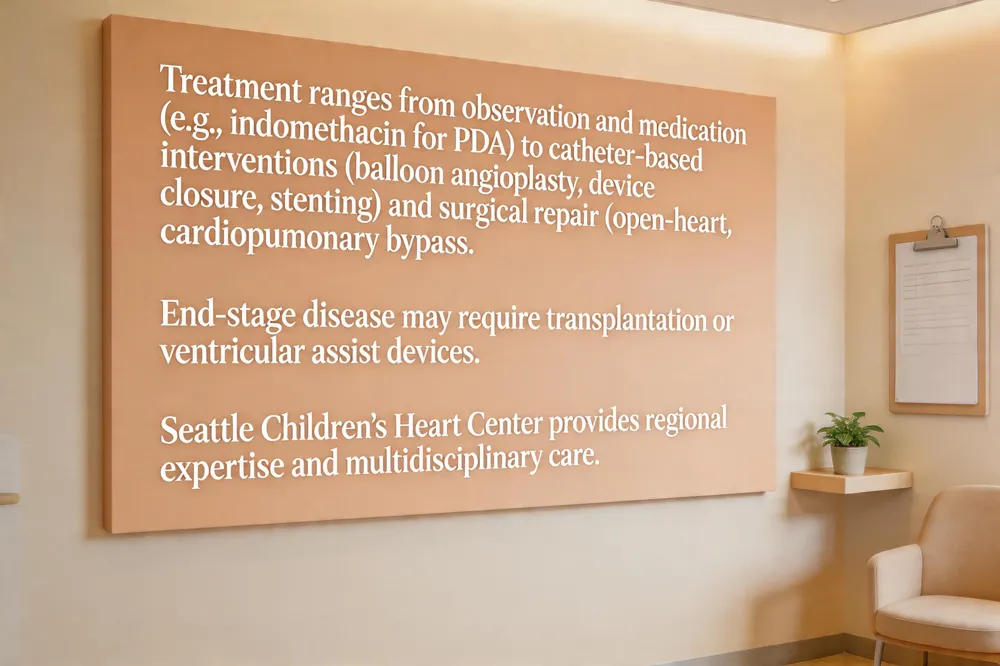 Congenital heart disease (CHD) in a child is treated according to the defect’s anatomy and severity. Simple lesions may be managed with observation and routine echocardiograms, while many defects respond to medication—e.g., indomethacin or ibuprofen to close a patent ductus arteriosus. Catheter‑based interventions such as balloon angioplasty, device closure of septal defects, and stenting of narrowed vessels often correct or palliate abnormalities without open surgery, reducing hospital stays and recovery time. More complex or severe anomalies typically require surgical repair; pediatric open‑heart surgery involves a sternotomy, cardiopulmonary bypass, and precise repair or replacement of valves, holes, or vessels. In rare, end‑stage cases, heart transplantation or ventricular assist devices may be needed, with lifelong follow‑up by a pediatric cardiologist.
Families in Federal Way can access world‑class expertise locally. Seattle Children’s Heart Center, ranked nationally, offers comprehensive care from prenatal diagnosis through young adulthood, with a dedicated South Sound Cardiology clinic for convenient, child‑focused services. The center’s multidisciplinary team provides advanced imaging, catheter procedures, and surgery, and coordinates travel and housing for out‑of‑area patients. Early referral and individualized treatment plans enable children to lead active, healthy lives.
Long‑Term Follow‑Up, Complications, and Family Resources
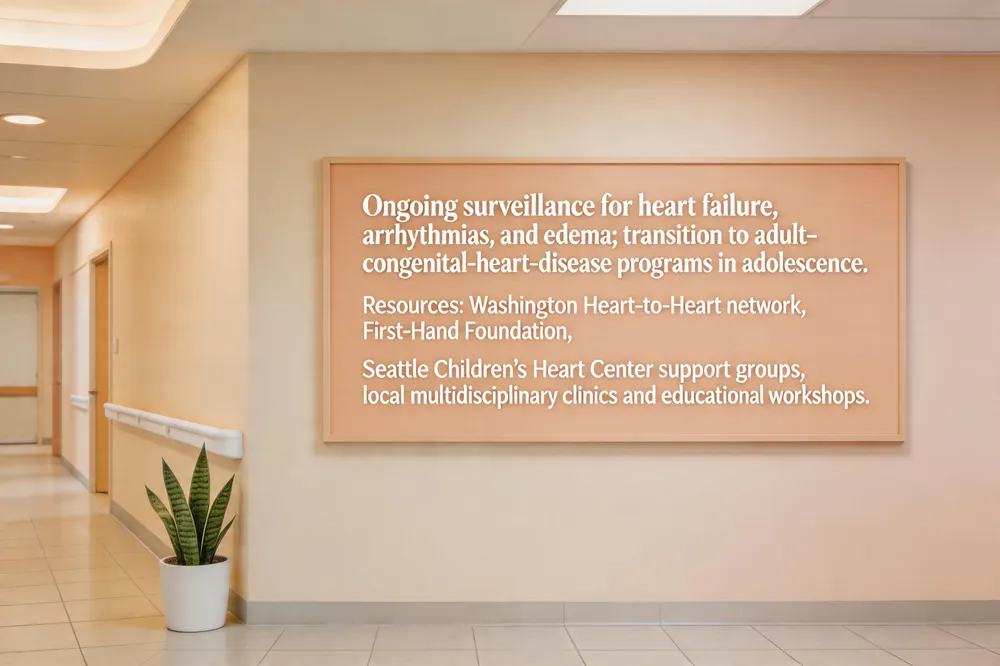 Children who have been treated for a congenital heart defect need ongoing surveillance to catch early signs of heart failure and arrhythmias. Parents should watch for swelling in the feet, ankles, abdomen or neck veins, rapid breathing, wheezing, persistent coughing, poor feeding, excessive sweating during feeds, fatigue, irritability, weight loss or fainting spells. Any of these findings merit prompt evaluation by a pediatric cardiologist. As the child approaches adolescence, a structured transition to an adult‑congenital‑heart‑disease program is essential; the team reviews medical history, imaging, medications and plans for lifelong care. In Washington State, families can access the Heart‑to‑Heart network, the First Hand Foundation, and the Seattle Children’s Heart Center’s support groups, which provide counseling, financial assistance and peer connections. Local clinics in Seattle, Tacoma and Spokane also offer multidisciplinary cardiac clinics and educational workshops to empower caregivers throughout the journey. These resources aid families with insurance matters.
Taking the Next Step for Your Child’s Heart Health
Regular well‑child visits are the foundation of early heart‑health detection. During each appointment, ask your pediatrician whether a pulse‑oximetry screen or cardiac exam is appropriate—these quick, non‑invasive tests can reveal low oxygen levels or abnormal heart sounds that may indicate a congenital heart defect. If a murmur, cyanosis, poor feeding, or excessive sweating during feeds is noted, request a prompt referral to a pediatric cardiology clinic in Federal Way. Our regional centers offer same‑day echocardiograms, ECGs, and specialist consultations, ensuring timely diagnosis and a clear treatment plan. Early, family‑centered evaluation helps safeguard your child’s growth, development, and long‑term heart health.