Why Early Detection Matters
Routine well‑child examinations are the first line of defense against pediatric heart disease. During each visit, clinicians listen for faint murmurs, assess skin color, observe feeding effort, and measure growth—subtle clues that can be easily missed if visits are spaced too far apart. Early identification of these signs allows timely referral for ECG, echocardiogram, or Holter monitoring, which can uncover structural defects or rhythm disturbances before they cause damage. Prompt diagnosis dramatically improves long‑term outcomes, reducing the risk of heart failure, growth delays, and the need for complex surgery, while preserving a child’s ability to thrive and stay active.
Newborn and Toddler Cardiac Indicators
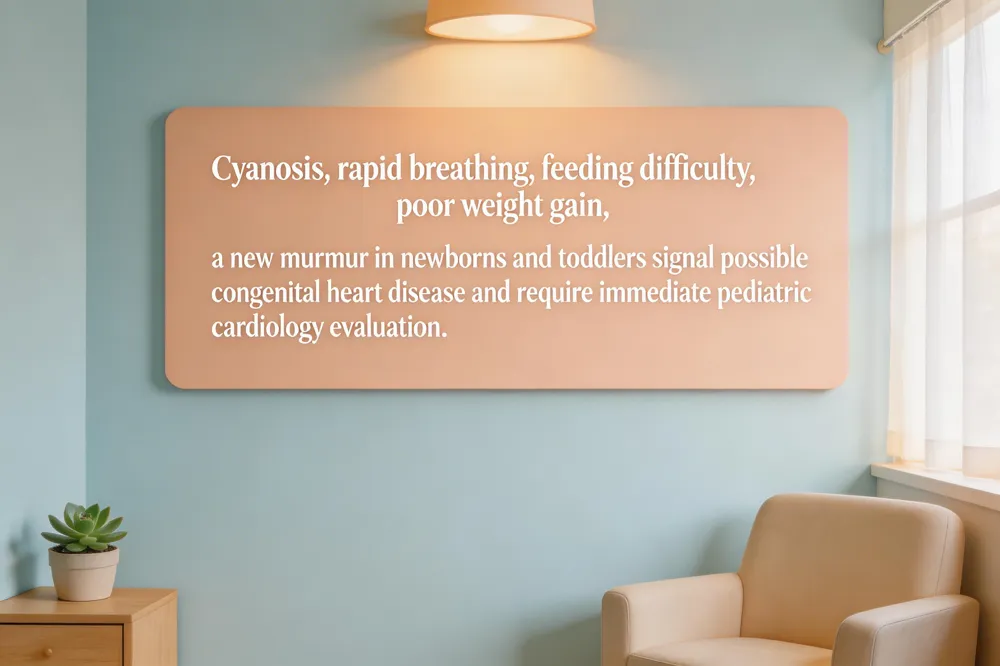 Cyanosis and low‑oxygen clues in newborns – A Cyanosis (bluish or purplish discoloration) of the lips, tongue, or nail beds signals that the baby’s blood isn’t being oxygenated properly. In the first weeks, this may appear during crying, feeding, or at rest and should prompt immediate evaluation.
Feeding difficulty and rapid breathing – Infants with a cardiac defect often tire during feeds, rapid breathing (tachypnea), or sweat profusely while nursing. Poor weight gain or failure to thrive is a red flag because the heart cannot pump enough blood to support growth.
Heart murmur detection during routine exams – Pediatricians listen for abnormal heart sounds at every well‑child visit. A new or changing murmur, even if faint, warrants referral to a pediatric cardiologist for an echocardiogram and ECG.
Early signs in 2‑year‑olds – Toddlers may tire quickly, become short‑of‑breath, or sweat with normal play. Look for cyanosis around the lips or gums, fainting spells, or an irregular pulse. An abnormal murmur heard on exam should trigger further cardiac testing.
Newborn baby heart problem symptoms – Cyanosis of the skin or lips, rapid breathing, sweating during feeds, poor weight gain, persistent fast heart rate, lethargy, and a detectable heart murmur are common early signs.
Signs of heart problems in 2‑year‑old – Easy fatigue, excessive sweating with activity, cyanosis during exertion, fainting, and an abnormal murmur or rhythm on exam warrant prompt cardiology referral.
Parents in Federal Way can schedule a same‑day consult at our pediatric cardiology office, where on‑site ECG, echocardiogram, and Holter monitoring are available to expedite diagnosis and treatment.
Preschool Warning Signs (3‑6 Years)
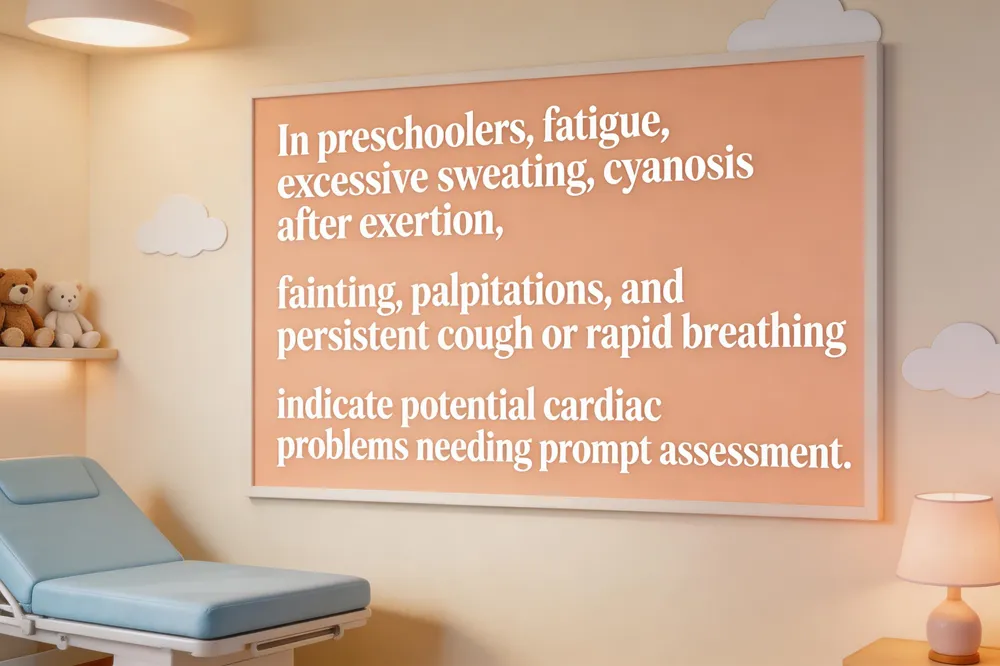 Parents and caregivers should be alert to subtle cardiac clues during the preschool years.
Signs of heart problems in a 4‑year‑old – Quick fatigue, inability to keep up with peers, excessive sweating with mild play, bluish lips or fingertips after exertion, fainting or dizziness, palpitations described as a flutter, and poor weight gain despite normal appetite.
Signs of heart problems in a 5‑year‑old – Similar energy intolerance, shortness of breath, cyanosis of lips/tongue, fainting episodes, unexplained chest pain, and rapid or skipping heartbeats.
Signs of heart problems in a 6‑year‑old – Easy tiring, early sweating, cyanosis during activity, fainting, palpitations, persistent cough or rapid breathing at night suggesting fluid buildup.
Early signs of heart failure in children – Rapid or labored breathing at rest or while feeding, poor feeding, failure to thrive, strong resting pulse, coughing/wheezing, fatigue, swelling of feet/ankles/abdomen, nighttime urination, and irregular rapid pulse.
Any of these findings warrant prompt evaluation by a pediatrician and possible referral to a pediatric cardiologist for auscultation, ECG, echo, or further testing.
School‑Age and Adolescent Red Flags
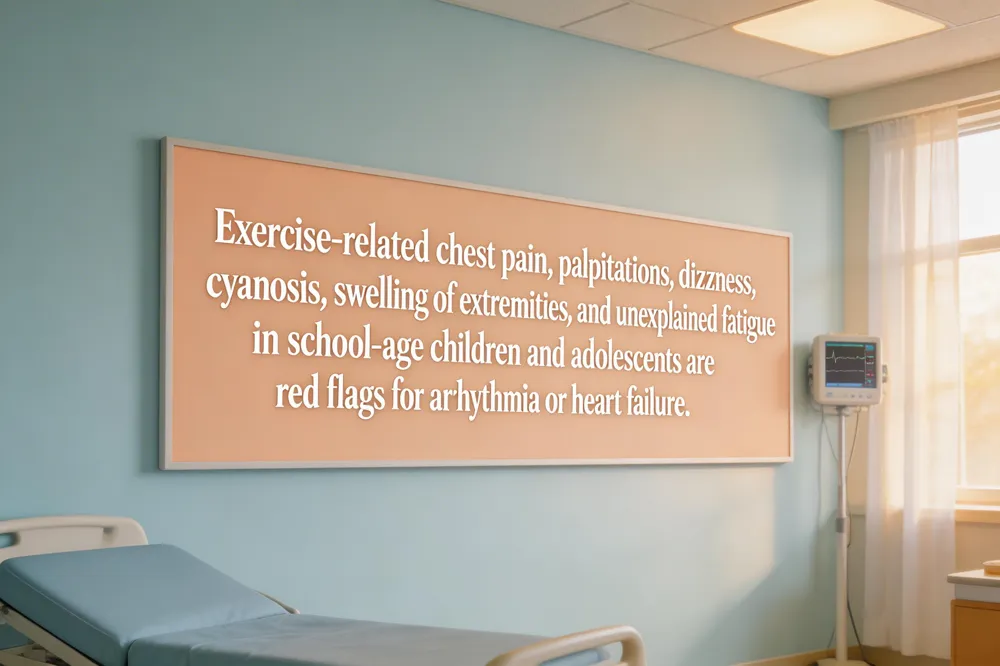 During school‑age years, cardiac red flags often appear with activity. Exercise‑related chest pain that awakens during play, especially if sharp or tight and linked to shortness of breath, warrants evaluation. Palpitations—fluttering or race‑like beats—felt at rest or after exertion, together with dizziness or fainting, suggest arrhythmia or reduced output. Cyanosis (bluish lips, tongue, nail beds) and swelling of feet, ankles, or abdomen point to low oxygen delivery or early heart failure. Early warnings include unexplained fatigue, rapid breathing, and poor growth.
8‑year‑old signs: chest tightness during play, fainting after activity, palpitations, pale or bluish lips, swelling of feet or abdomen.
9‑year‑old signs: quick fatigue, excessive sweating, fluttering heartbeat, dizziness or fainting, Cyanosis during exertion.
10‑year‑old signs: similar fatigue, shortness of breath, chest pain, palpitations, dizziness, fainting, cyanotic lips.
Three early warnings: chest discomfort, shortness of breath on light activity, and unexplained fatigue or fainting.
Management Strategies for Pediatric Heart Disease
 Effective management of pediatric heart disease blends medical therapy, procedural treatment, and coordinated long‑term care.
Medical therapy and medications – Many children with mild congenital lesions are monitored with periodic echocardiograms and may receive medications to support heart function, such as diuretics for fluid overload, ACE inhibitors for afterload reduction, or anti‑arrhythmic drugs for rhythm disturbances.
Surgical and catheter‑based interventions – Structural defects that compromise blood flow or cause significant overload often require repair. Open‑heart surgery is used for complex anomalies, while minimally invasive catheter techniques (e.g., balloon angioplasty, device closure of septal defects) address many moderate lesions. In rare, life‑threatening cases, heart transplantation is an option.
Long‑term follow‑up and care coordination – After any intervention, children continue regular visits with a pediatric cardiologist for imaging, rhythm monitoring, and medication adjustments. Coordinated care with primary pediatricians, nutritionists, and school personnel ensures safe activity levels, growth monitoring, and psychosocial support.
Answer to common question – Treatment of congenital heart disease in child: Treatment depends on defect type and severity. Minor defects are often managed with regular monitoring and periodic echocardiograms. More significant defects may require open‑heart surgery or minimally invasive catheterization to repair or replace abnormal structures. In life‑threatening cases where repair is not feasible, heart transplantation can be considered. Ongoing care includes medications for heart failure or rhythm problems, regular follow‑up with a pediatric cardiologist, and guidance on activity, nutrition, and lifelong health.
Specialized Pediatric Cardiology Services in Federal Way
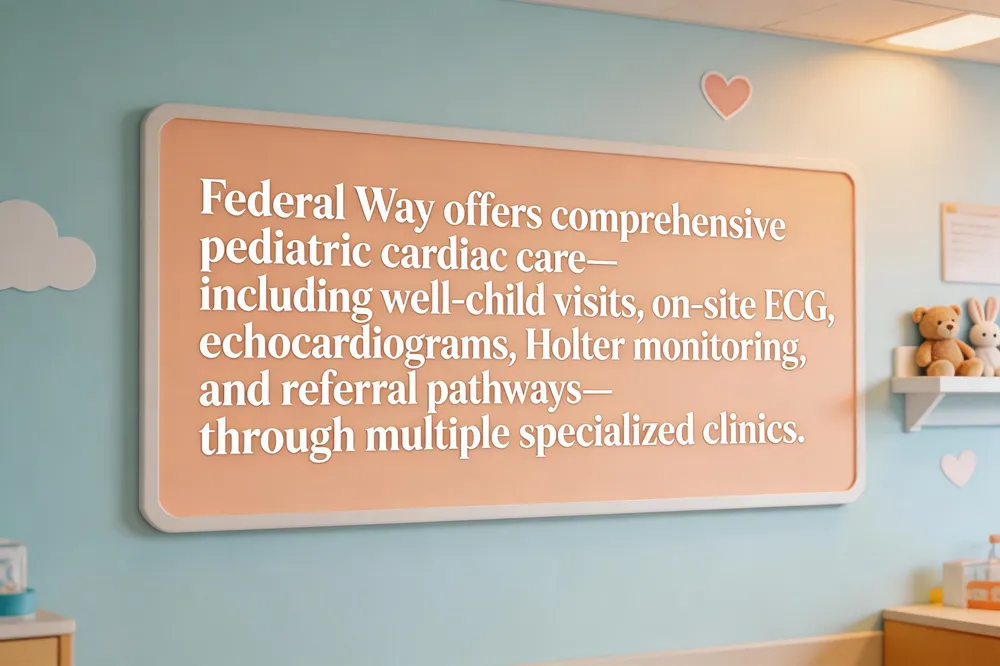 Federal Way offers several expert cardiac centers. Federal Way Pediatrics C&C (710 S 348th St, Suite B) provides routine well‑child visits, telehealth, and on‑call pediatricians; families call (206) 395‑6049 or use MyChart. Federal Way Pediatric Associates (32124 1st Ave S, Suite #100) features Dr. Nauman Ahmad’s pediatric cardiology program; appointments are via (253) 661‑5939 or email. Seattle Children’s Cardiology – Federal Way (34920 Enchanted Pkwy S) delivers echocardiograms, ECGs, Holter monitoring, and coordinated referrals to the Seattle Heart Center; call 253‑838‑5878. Children’s Hospital Federal Way (same address) offers full specialty services and an Urgent Care Center, while Mary Bridge Children’s Outpatient Center (505 South 336th St) adds therapy and developmental care. Pediatrics Northwest (505 South 336th St, Suite 210) integrates primary care with cardiology, pulmonology, and sleep medicine, using MyChart for results. Pediatrician Specialty Practices bring subspecialists under one roof, streamlining referrals and care plans. Referral pathways start with a primary pediatrician exam—any abnormal murmur, cyanosis, or fatigue prompts a cardiology consult, often via telehealth for quick evaluation. Advanced imaging (ECG, echo, cardiac MRI) is performed on‑site or coordinated with Seattle Children’s for complex cases, ensuring seamless, family‑centered cardiac care.
Complementary Health Resources for Families
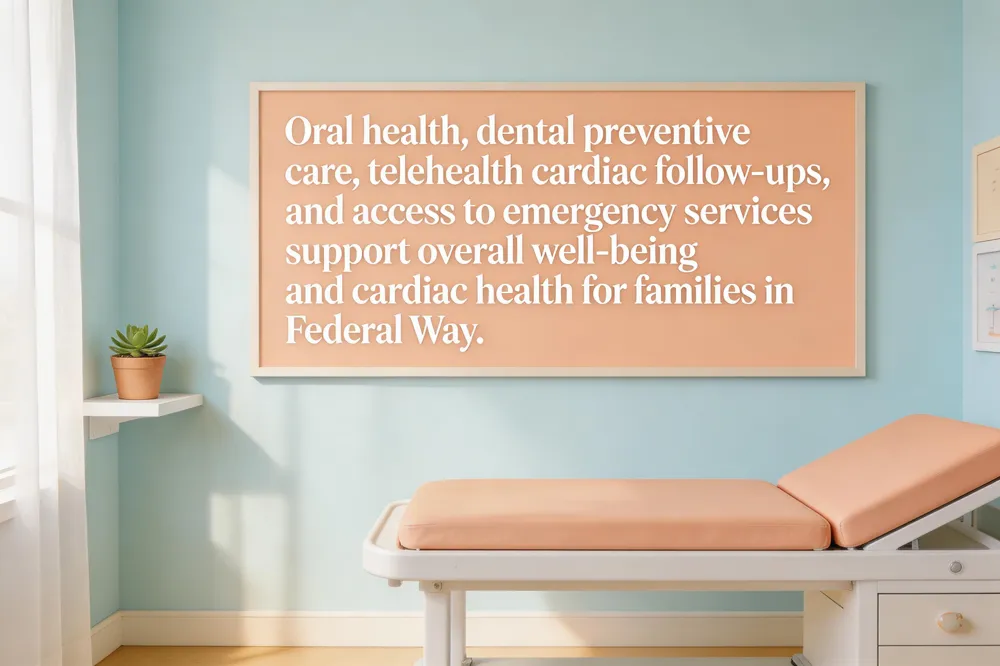 A child’s oral health is a cornerstone of overall well‑being; untreated dental disease can exacerbate cardiac stress, while routine cleanings, fluoride treatments, and early sealants help keep the heart and body thriving. For families in Federal Way, Federal Way Pediatric Dentistry, led by board‑certified Dr. Soo Jun, provides gentle, fear‑free dental care at 1035 S 320th St., Unit B (Mon‑Wed‑Fri 8 a.m.–5 p.m.). They accept most insurance plans and offer free Wi‑Fi; schedule at 1‑253‑262‑6589 or office@federalwaypediatricdentistry.com.
When urgent cardiac‑related symptoms arise, seek a local emergency department or a qualified pediatric emergency specialist. Dr. Ashik Ahmad, MD, is a board‑certified pediatric emergency physician practicing in Florida, but he is not affiliated with Federal Way Pediatrics. Our clinic directs families to nearby emergency services for immediate care.
Telehealth visits are available for routine cardiac follow‑up, medication adjustments, and counseling, and we welcome a wide range of private, Medicaid, and Medicare Advantage plans to ensure accessible, family‑centered heart care.
Take Action and Stay Vigilant
Watch your child’s breathing and stamina at every routine check‑in. Note any rapid breathing, excessive sweating, or sudden fatigue during play, feeding, or sleep, and record how long the episode lasts. Seek urgent care if you observe cyanosis, fainting, persistent chest pain, or a new murmur that worsens with activity. In Federal Way, Washington, families can quickly access pediatric cardiac expertise at the Seattle Children’s South Sound Cardiology clinic or the Federal Way Pediatrics cardiology office, both offering on‑site ECG, echocardiogram, Holter monitoring, and tele‑health follow‑up. Call your primary pediatrician to arrange a referral and schedule an appointment within days promptly.