Why Same‑Day Pediatric Urgent Care Matters
Same‑day pediatric urgent care offers rapid relief for fevers, sore throats, ear pain, minor cuts, rashes, and other non‑life‑threatening conditions, getting children back to health faster than a routine office visit. By providing quick, age‑appropriate evaluation, it helps families avoid unnecessary trips to the emergency department, reducing wait times and healthcare costs. Clinics are staffed by pediatric‑trained physicians and nurses who understand children’s unique needs and can perform on‑site testing, stitches, or imaging. Extended evening and weekend hours fit busy schedules, ensuring that urgent, child‑ are level care when primary‑care offices are closed.
Getting Ready: Documents, Medications, and Comfort Items
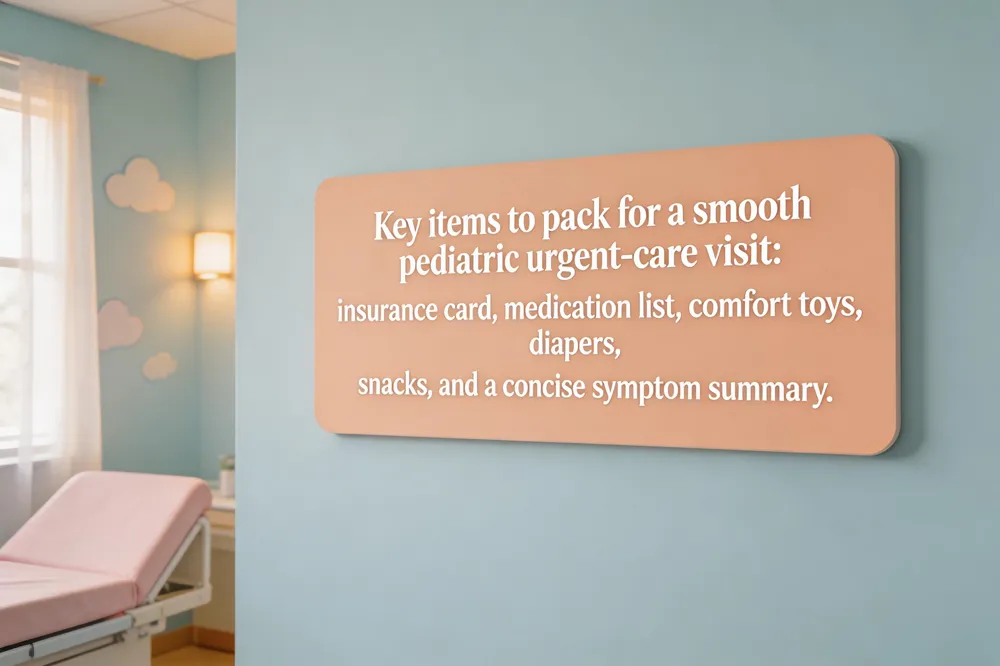 Preparing for a same‑day pediatric urgent‑care visit can make the experience smoother for both child and parent.
Essential paperwork – Bring the child’s health‑insurance card, a photo ID for the parent, and a printed list of current medications (including dosages) and known allergies. If the child has a chronic condition, add a brief summary of the care plan and any recent lab or imaging results.
Comfort items – Pack a favorite blanket, stuffed animal, pacifier, or other soothing object. These familiar items lower anxiety and help the child feel secure while waiting.
Practical supplies – For visits where vomiting or diarrhea is possible, include diapers, wipes, and a change of clothing. A small snack, water bottle, and a quiet activity (coloring book, tablet with headphones) keep the child occupied and prevent low blood‑sugar dips.
Symptom summary – Write a concise note describing the onset, duration, and severity of symptoms, plus any recent exposures (sick contacts, travel). This helps the clinician assess quickly and reduces repeat questioning.
Answers to common questions
- How to prepare for a pediatric urgent‑care visit? Bring only the ill child and their comfort items, the insurance card, medication list, diapers, and a change of clothes if needed. Pack quiet toys or a tablet, snacks, and a written symptom log. Use online check‑in or “Save My Place” tools to shorten wait times.
- Can urgent care treat shortness of breath? Yes, for moderate breathing difficulty such as asthma flare‑ups or mild infections. Clinicians will check oxygen levels, listen to lungs, and may perform a quick X‑ray or labs, then provide inhalers, nebulizer treatments, or medications. Life‑threatening signs (blue lips, inability to speak, severe chest pain) require immediate emergency department care.
By gathering documents, comfort items, and a clear symptom summary, families can ensure a quick, compassionate, and effective urgent‑care experience.
When Urgent Care Is the Right Choice
 Pediatric urgent‑care clinics are usually open after routine office hours and accept walk‑ins, but policies differ by age group. Most centers will see children presentse 1, but confirm that the location is staffed by pediatric‑trained providers and that the clinic accepts the child’s age before arriving. Call ahead or use a phone‑triage line to describe the symptoms; the nurse can tell you whether the visit can be handled on‑site or if an emergency department is needed.
Should you bring a child to a regular urgent‑care? Yes, many urgent‑care centers welcome children, but verify pediatric capabilities—staff training, size‑appropriate equipment, and age limits. For mild fevers, colds, minor cuts, or uncomplicated sprains, an urgent‑care visit is usually appropriate. Infants under two months with fever, suspected fractures, severe breathing difficulty, or any serious sign should go directly to the emergency department.
When to take a baby to urgent care for vomiting? Bring the baby if there are dehydration signs (dry mouth, no tears, dark urine, no wet diapers > 8 hrs) or if vomiting occurs > 3 times consecutively, is projectile, or the baby is < 12 weeks old. Fever > 104 °F, severe abdominal pain, recent head injury, or lethargy also warrant prompt evaluation.
What are the five general danger signs in a child? Severe drowsiness/unresponsiveness, difficulty breathing, cold or bluish extremities (or pale, blotchy skin), seizures, and a non‑blanching rash. Any of these signs require immediate emergency care call 911) emergency admission) recognize instruction.
Local After‑Hours and 24‑Hour Options in Federal Way
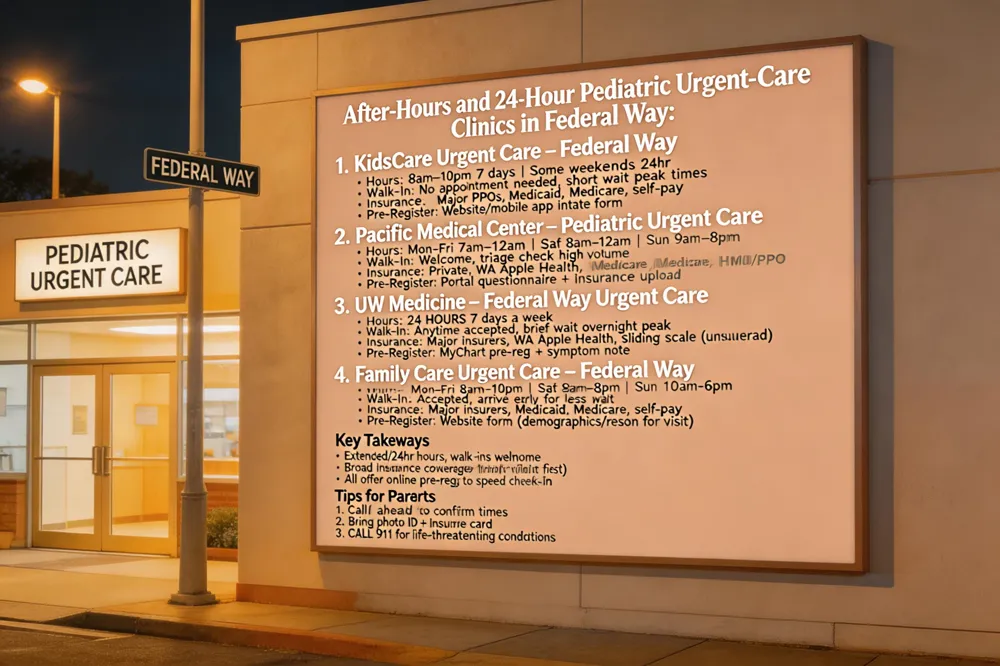 Federal Way families have several convenient after‑hours and 24‑hour pediatric urgent‑care resources that keep non‑life‑threatening illnesses and injuries out of the emergency department.
Meritus After Hours Pediatrics on Crayton Blvd – Located at 13620 Crayton Blvd., Meritus offers walk‑in urgent care for children and teens up to age 21 after regular office hours. Hours are 6 p.m.–11 p.m. weekdays and 1 p.m.–8 p.m. weekends, with no appointment required. The clinic treats sore throats, rashes, minor burns, sprains, mild‑to‑moderate asthma flare‑ups, and eye irritations. Call 240‑313‑3100 for current policies or to speak with a provider.
24‑Hour pediatric urgent‑care sites – Federal Way hosts multiple round‑the‑clock centers that evaluate fevers, colds, flu, cuts, sprains, ear infections, and rashes, offering on‑site X‑rays and rapid viral testing. Parents can pre‑register online, receive text updates on wait times, and bring insurance cards or pay a deposit for self‑pay patients.
Walk‑in policies and online pre‑registration – Most clinics accept walk‑ins and encourage completing registration before arrival via web portals or MyChart, which shortens check‑in and speeds care.
Insurance acceptance and self‑pay options – The majority of centers accept major private plans, Medicaid, and Washington Apple Health; self‑pay patients are typically asked for a modest deposit and receive transparent fee estimates.
Nearby Greenbelt clinic for families traveling outside WA – PM Pediatric Urgent Care in Greenbelt, MD (7401 Greenbelt Road) provides walk‑in and same‑day appointments for ages birth‑26, with X‑ray, splinting, and IV fluids. Hours extend into the night, and online check‑in reduces wait times. Call 301‑982‑5437 for triage or book online; most insurance plans are accepted, and telemedicine is available from 6 a.m. to midnight.
These options give parents reliable, child‑friendly care outside regular pediatric office hours, helping keep children healthy and families confident.
Resources for Clinicians and Families: Pediatric Emergency Medicine
 For pediatric emergency physicians and families in Federal Way, the American Academy of Pediatrics (AAP) Section on Emergency Medicine offers evidence‑based guidelines and policy statements that cover everything from fever work‑ups to trauma care. The American College of Emergency Physicians (ACEP) Pediatric Emergency Medicine Section provides a wealth of resources, including the ACEP Clinical Policy on children younger than three with fever, the “Children in the ED” preparedness kit, and a virtual mentorship program in partnership with EMRA. National tools such as Translating Emergency Knowledge for Kids (TREKK), the Care of Children in the Emergency Department (COPEM) policies, and the “Don’t Forget the Bubbles” airway reference sheets give quick, point‑of‑care guidance for common emergencies. Interactive learning platforms like ImageSim, Brown PEM Listserv, and the PEM Playbook podcast help clinicians stay up‑to‑date on topics ranging from asthma to BRUE. Finally, local Federal Way hospitals and urgent‑care centers follow the UNC Pediatric Emergency Medicine clinical pathways, which include standardized algorithms for airway management, sepsis, and pediatric cardiac arrest.
Creating a Child‑Friendly Experience at Urgent Care
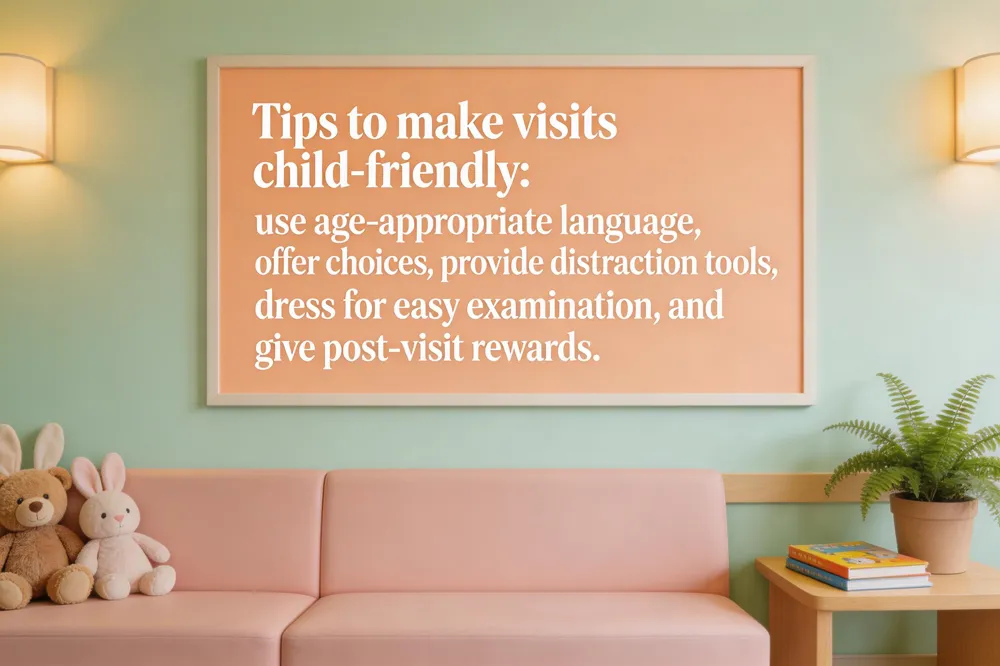 When you walk into a pediatric urgent‑care clinic, the first goal is to make the visit feel safe and predictable for your child. Using age‑appropriate language helps children know what to expect: tell a toddler that the nurse will check their temperature and a doctor will look at their throat, while a school‑age child can be told the doctor will use a “tiny straw” (an IV) if needed. Offering choices, such as which shoes to keep on or which stuffed animal to bring, gives children a sense of control and reduces anxiety.
Distraction techniques and therapeutic play are standard in many urgent‑care waiting rooms. Child‑life specialists may offer bubbles, coloring books, or a tablet with headphones; these simple tools keep a child’s mind off the waiting time. For examinations, dress the child in easy‑to‑remove clothing—a short‑sleeve shirt and elastic waist pants—to make the clinician’s work quicker and less intrusive.
After the exam, post‑visit rewards like a sticker, a high‑five, or a small treat reinforce a positive experience and encourage future cooperation.
How to prepare for a pediatric urgent‑care visit? Bring only the ill or injured child and any comfort items they love—a favorite blanket, stuffed animal, or pacifier—to help them feel secure while waiting. Pack a list of current medications, the health‑insurance card, diapers or wipes, and a change of clothes if vomiting or diarrhea is possible, and consider giving fever‑reducing medicine before you arrive if appropriate. Bring quiet toys, coloring books, or a charged tablet to keep your child occupied during any wait, and have snacks and drinks on hand unless they have stomach upset. Write down any questions you want to ask the provider and verify pharmacy hours ahead of time. If the clinic offers a “Save My Place” or online wait‑time check, use it to reduce your wait and ensure a smoother visit.
Final Checklist for a Successful Same‑Day Visit
Before you leave home, double‑check that you have the child’s insurance card, photo ID, a list of current medications, allergy information, and any recent lab or imaging results. Pack a comfort item (favorite blanket, stuffed animal) and easy‑to‑remove clothing to keep the child calm. Speak in a soothing, age‑appropriate manner—explain each step and give the child choices to reduce anxiety. After the exam, review the clinician’s discharge plan, note medication doses, and schedule any needed follow‑up with the primary pediatrician. If questions arise or the child’s condition changes, use the clinic’s telehealth line or local nurse‑triage service for prompt guidance.