Why Pediatric Cardiology Matters
Congenital heart defects (CHDs) affect roughly 1 in 100 newborns in the United States, making them the most common type of birth defect. Early detection—through prenatal ultrasound, fetal echocardiography, or newborn pulse‑oximetry screening—allows clinicians to plan timely interventions, ranging from medication to catheter‑based procedures or open‑heart surgery, and dramatically improves long‑term outcomes. Specialized pediatric cardiology teams, such as those at Children’s Heart Center of Atlanta, Texas Children’s Hospital, and Federal Way clinics, combine board‑certified cardiologists, cardiac surgeons, nurses, and allied professionals to deliver care tailored to a child’s developmental stage. In addition to medical treatment, lifestyle factors play a crucial role: a heart‑healthy diet, at least 60 minutes of moderate‑to‑vigorous activity daily, adequate sleep, and avoidance of tobacco smoke reduce strain on the developing heart and help prevent obesity, hypertension, and dyslipidemia. By integrating early diagnosis, expert multidisciplinary care, and family‑centered lifestyle counseling, pediatric cardiology safeguards children’s present health and sets the foundation for a healthier adulthood.
Understanding the Scope of Childhood Heart Problems
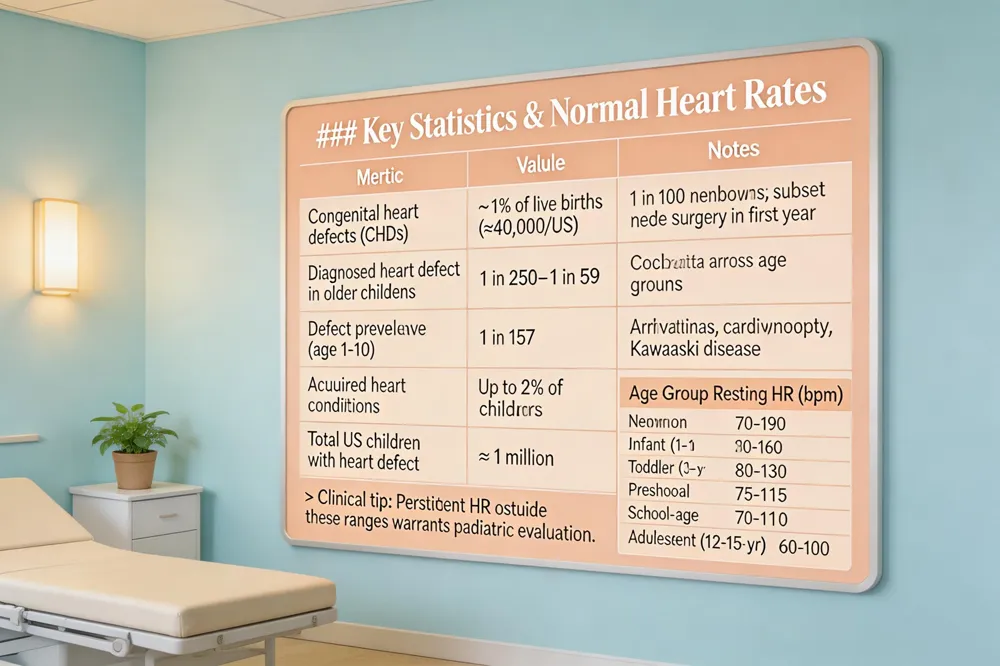
Key Statistics & Normal Heart Rates
| Metric | Value | Notes |
|---|---|---|
| Congenital heart defects (CHDs) | ~1 % of live births (≈40,000/US) | 1 in 100 newborns; subset needs surgery in first year |
| Diagnosed heart defect in older children | 1 in 250 – 1 in 59 | CDC data across age groups |
| Defect prevalence (age 1‑10) | 1 in 157 | Documented defects |
| Acquired heart conditions | Up to 2 % of children | Arrhythmias, cardiomyopathy, Kawasaki disease |
| Total US children with heart defect | ≈1 million | Highlights need for early detection |
| Age Group | Normal Resting HR (bpm) |
|---|---|
| Newborn (0‑1 mo) | 70‑190 |
| Infant (1‑12 mo) | 80‑160 |
| Toddler (1‑3 yr) | 80‑130 |
| Preschool (3‑5 yr) | 75‑115 |
| School‑age (6‑11 yr) | 70‑110 |
| Adolescent (12‑15 yr) | 60‑100 |
Clinical tip: Persistent HR outside these ranges warrants pediatric evaluation.
 How common are heart problems in children?
Congenital heart defects (CHDs) are the most common birth defect, affecting about 1 % of live births in the United States (≈40,000 babies each year). This translates to roughly 1 in 100 newborns, with a critical subset requiring surgery in the first year. Among older children, CDC data show that between 1 in 250 and 1 in 59 have a diagnosed heart defect, and about 1 in 157 children aged 1‑10 years have a documented defect. Acquired conditions such as arrhythmias, cardiomyopathy, or Kawasaki disease are less frequent but can affect up to 2 % of children. Overall, about 1 million U.S. children live with a heart defect, underscoring the need for early detection and specialized pediatric cardiology care.
How common are heart problems in children?
Congenital heart defects (CHDs) are the most common birth defect, affecting about 1 % of live births in the United States (≈40,000 babies each year). This translates to roughly 1 in 100 newborns, with a critical subset requiring surgery in the first year. Among older children, CDC data show that between 1 in 250 and 1 in 59 have a diagnosed heart defect, and about 1 in 157 children aged 1‑10 years have a documented defect. Acquired conditions such as arrhythmias, cardiomyopathy, or Kawasaki disease are less frequent but can affect up to 2 % of children. Overall, about 1 million U.S. children live with a heart defect, underscoring the need for early detection and specialized pediatric cardiology care.
What are normal heart rates for children? Resting rates rates vary by age: newborns (0‑1 mo) 70‑190 bpm; infants (1‑12 mo) 80‑160 bpm; toddlers (1‑3 yr) 80‑130 bpm; preschoolers (3‑5 yr) 75‑115 bpm; school‑age (6‑11 yr) 70‑110 bpm; adolescents (12‑15 yr) 60‑100 bpm. Rates may rise with fever, excitement, pain, or activity. Persistent values outside these ranges merit evaluation by a pediatrician or cardiologist.
How does cholesterol affect children? Elevated LDL cholesterol can initiate early atherosclerotic changes, raising future heart disease risk. Most children are asymptomatic; routine lipid screening—especially with a family history—detects the problem. Lifestyle changes (balanced diet, regular activity, weight control) are first‑line; severe or familial cases may require pediatric statin therapy. Early intervention helps protect the child’s heart for life.
Spotting the Red Flags: Warning Signs and Heartmururs
Warning Signs & Associated Findings
| # | Warning Sign | Typical Context | When to Seek Immediate Care |
|---|---|---|---|
| 1 | Unexplained shortness of breath / rapid breathing | Feeding, play, exercise | Any new or worsening pattern |
| 2 | Persistent or worsening heart murmur | Noted by clinician | Murmur louder, changes with position, or continuous |
| 3 | Chest pain, discomfort, tightness | During activity | Any chest pain warrants prompt evaluation |
| 4 | Fainting, near‑fainting, dizziness | Especially with exertion | Immediate cardiology referral |
| 5 | Irregular heartbeat / palpitations | At rest or activity | Evaluate if frequent or sustained |
Red‑Flag Murmur Characteristics
| Feature | Why It Matters |
|---|---|
| Very loud murmur | May indicate significant structural defect |
| Changes with position | Suggests hemodynamic impact |
| Continuous murmur | Could be patent ductus arteriosus or other pathology |
| Associated symptoms (fatigue, poor weight gain, cyanosis, sweating while feeding, liver/neck vein swelling, persistent cough) | Signals possible heart failure or severe disease |
Action: Any of the above warrants a pediatric cardiology referral for echocardiogram and further testing.
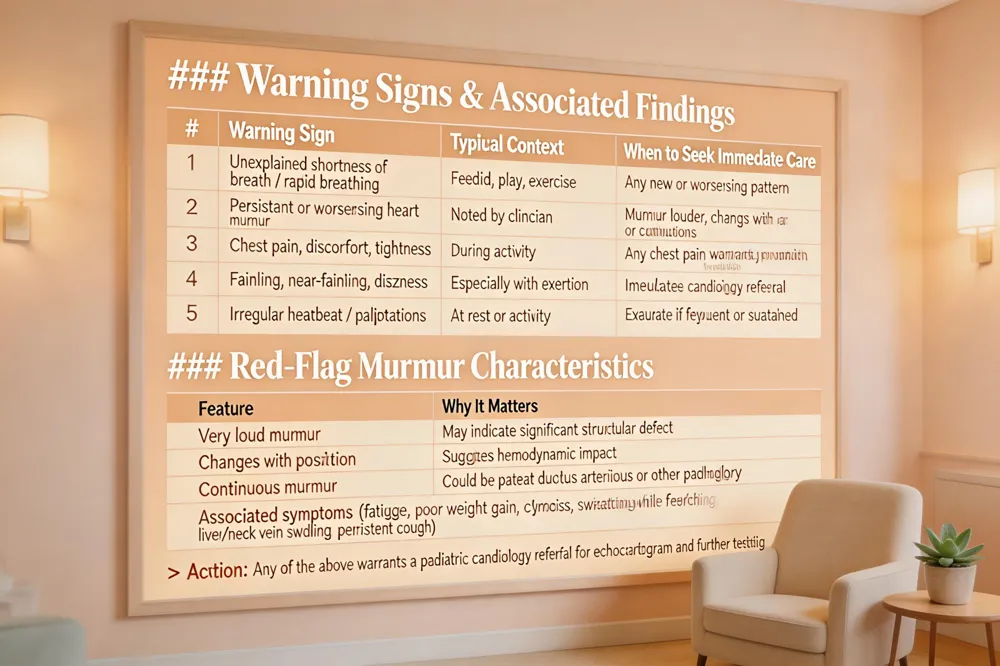 Parents should watch for five key warning signs that may indicate underlying heart disease in a child: (1) unexplained shortness of breath or rapid breathing during feeding, play, or exercise; (2) a persistent or worsening heart murmur noted by a clinician; (3) chest pain, discomfort, or tightness during activity; (4) fainting, near‑fainting, or unexplained dizziness, especially with exertion; and (5) irregular heartbeat or palpitations at rest or during activity. While most murmurs are innocent, urgent evaluation is needed when a murmur is unusually loud, changes with position, is heard continuously, or is accompanied by fatigue, poor weight gain, excessive sweating while feeding, cyanosis, chest pain, dizziness, swelling of the liver or neck veins, or a persistent cough. Parents can monitor their child’s heart health by noting any changes in breathing patterns, activity tolerance, growth trends, and skin color, and by scheduling regular pediatric check‑ups that include heart rate and blood pressure screening. If any red‑flag symptoms appear, a prompt referral to a pediatric cardiologist for an echocardiogram and further testing is essential.
Path to Specialist Care: Referral and Training
Referral Criteria & Training Timeline
| Referral Trigger | Typical Referral Destination |
|---|---|
| New/persistent murmur, palpitations, abnormal ECG | Pediatric cardiology clinic |
| Chest pain, syncope, unexplained dyspnea | Pediatric cardiology (urgent) |
| Poor growth despite nutrition, cyanosis | Pediatric cardiology (expedited) |
| Family history of CHD, arrhythmia, genetic syndromes (Marfan, Turner, Down) | Pediatric cardiology (early) |
| Prematurity with known structural issues (e.g., PDA, septal defects) | Pediatric cardiology (prompt) |
Training Pathway for Pediatric Cardiologists
| Training Phase | Duration | Core Experience |
|---|---|---|
| Bachelor’s degree | 4 years | Foundation science |
| Medical school | 4 years | Clinical rotations |
| Pediatric residency | 3 years | General pediatrics |
| Pediatric cardiology fellowship | 3 years (±1 yr) | Echo, cath, EP, research |
| Board certification | After fellowship | Exam & credentialing |
Typical total: 10‑11 years post‑college.
Appointment Access
| Appointment Type | How to Book |
|---|---|
| Routine follow‑up | Clinic call center (e.g., 404‑256‑2593) or MyChart portal |
| Urgent concerns (new severe murmur, syncope) | 24‑hour on‑call line or ED; many centers guarantee same‑day/next‑day eval |
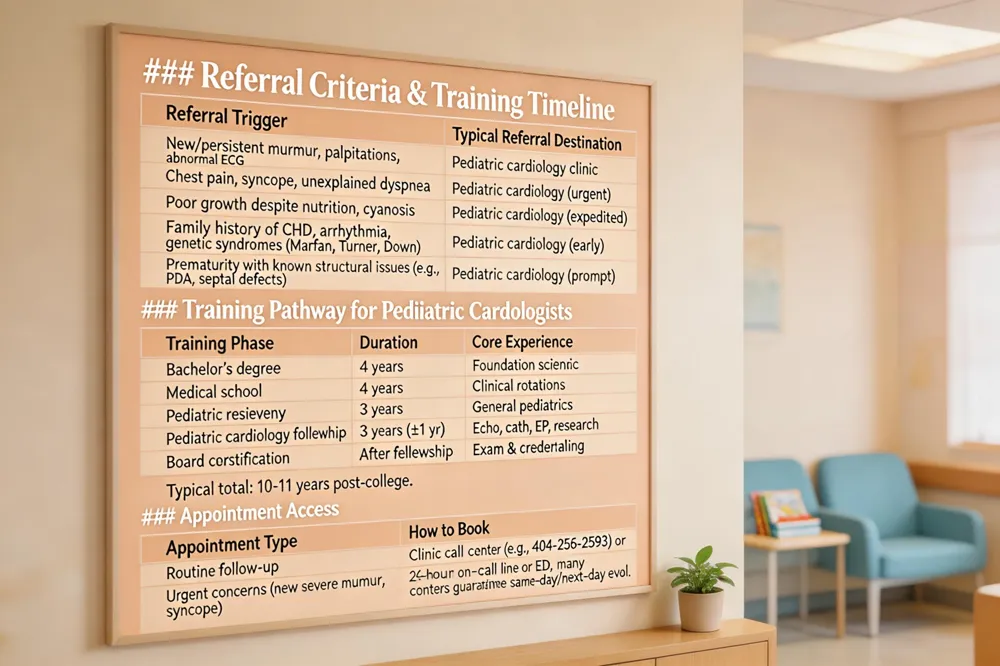 Why would my child be referred to a pediatric cardiologist? A pediatric cardiologist is consulted when a child shows signs that suggest a heart problem, such as a new or persistent murmur, palpitations, irregular rhythms, or an abnormal ECG. Red‑flag symptoms include chest pain, fainting, shortness of breath, poor growth despite adequate nutrition, or cyanosis. Children with high blood pressure, a family history of congenital heart disease or arrhythmia, or genetic conditions that affect the heart (e.g., Marfan, Turner, Down syndrome) also warrant referral. Infants born prematurely or with known structural issues like patent ductus arteriosus, septal defects, or unexplained cyanosis need prompt evaluation. Referral can often be scheduled within a week, but urgent appointments are arranged for any child who appears hemodynamically unstable or at risk for rapid deterioration.
How long does it take to become a pediatric cardiologist? Becoming a pediatric cardiologist typically requires about 10 years of post‑college training. After a bachelor’s degree, 4 years of medical school are followed by a 3‑year pediatric residency and a 3‑year pediatric cardiology fellowship, which includes echocardiography, catheterization, electrophysiology, and research. Some programs add an extra year, extending training to 11 years, after which the physician must pass the board exam to become certified.
How to access urgent versus routine appointments? Routine follow‑ups can be booked through clinic call centers (e.g., 404‑256‑2593 for cardiology at Children’s Heart Center, Atlanta) or via online portals such as MyChart. For urgent concerns—new severe murmur, syncope, or worsening symptoms—call the 24‑hour on‑call line or the hospital’s emergency department; many centers, including Texas Children’s and Seattle Children’s South Sound Cardiology, guarantee same‑day or next‑day evaluation for hemodynamically unstable children.
Heart‑Healthy Lifestyle for Kids
Nutrition & Activity Guidelines
| Category | Recommendation |
|---|---|
| Diet | • ½ of grain servings whole‑grain<br>• 1 serving fruit & veg each meal<br>• Lean proteins (fish, poultry, beans, nuts)<br>• Low‑fat dairy<br>• Limit saturated & trans fats < 7 % of calories<br>• Avoid excess sodium, added sugars, processed snacks |
| Beverages | • Breastfeed 4‑6 mo, then varied solids<br>• 100 % juice ≤ 4‑6 oz/day |
| Physical Activity | • ≥ 60 min moderate‑to‑vigorous daily (age 6‑17)<br>• Active play for younger kids |
| Sleep | • School‑aged: 9‑12 h/night<br>• Adolescents: 8‑10 h/night |
| Screen Time | • ≤ 2 h/day (non‑educational) |
Practical Tips: Cook meals together, involve kids in grocery shopping, schedule family walks/bike rides, keep consistent bedtime, model mindfulness/yoga.
Screenings: Regular well‑child visits, BP & lipid checks when risk factors present, avoid tobacco‑smoke exposure.
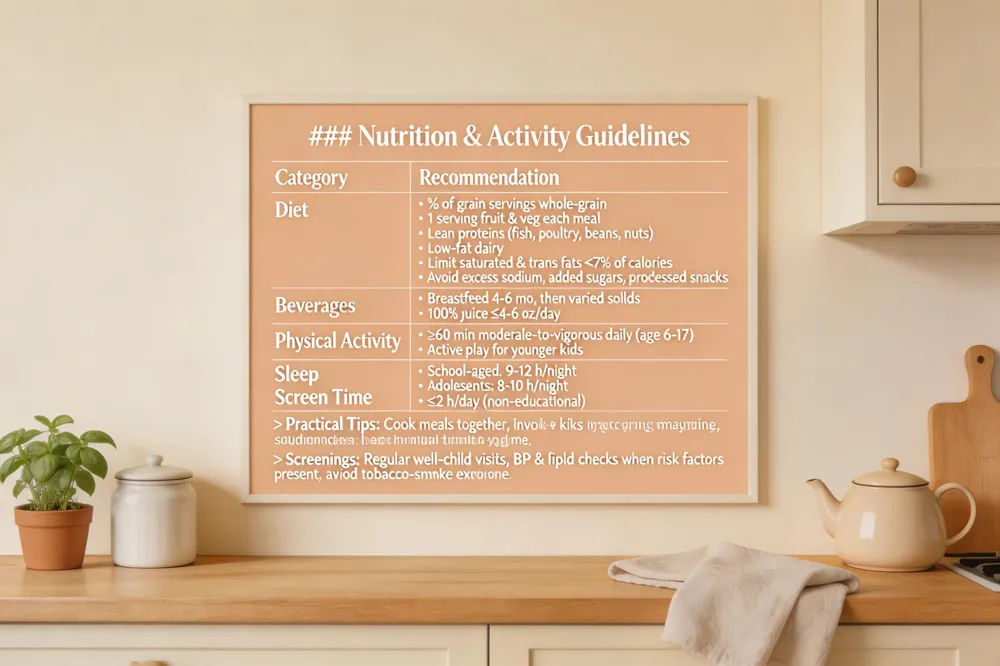 A heart‑healthy diet for children centers on nutrient‑dense foods such as fruits, vegetables, whole‑grain breads and cereals, lean proteins (fish, poultry, beans, nuts) and low‑fat dairy, while keeping calories appropriate for growth and activity level. The American Heart Association advises limiting saturated and trans fats to less than 7 % of daily calories, choosing unsaturated fats like olive or canola oil, and avoiding excess sodium, added sugars, and processed snacks. Breastfeeding for the first 4‑6 months, then introducing a variety of solid foods and limiting 100 % juice to no more than 4‑6 ounces per day, helps establish healthy habits early. Aim for at least one serving of fruit or vegetable at every meal, make half of grain servings whole‑grain, and serve fish regularly while steering clear of commercially fried options.
Physical activity guidelines recommend at least 60 minutes of moderate‑to‑vigorous activity each day for children 6‑17 and active play for younger kids. Adequate sleep—9‑12 hours for school‑aged children and 8‑10 hours for adolescents—supports cardiovascular health and weight control. Reducing screen time to no more than two hours per day helps prevent sedentary behavior that raises blood pressure and cholesterol.
Practical ways families can promote heart health include preparing meals together, involving children in grocery shopping and cooking, scheduling family walks or bike rides, establishing consistent bedtime routines, and modeling stress‑reduction techniques such as mindfulness or yoga. Regular well‑child check‑ups, routine blood‑pressure and cholesterol screening when risk factors exist, and protecting children from tobacco‑smoke exposure complete a comprehensive, family‑centered approach to lifelong heart health.
Finding Expert Care in Federal Way and Trusted Resources
Local Providers & Resources
| Institution / Provider | Services Offered | Contact / Access |
|---|---|---|
| Federal Way Pediatric Cardiology (Dr. Nauman Ahmad) | Echo, ECG, cardiac MRI, fetal echo, medical management | Online booking or call clinic; telehealth available |
| Seattle Children’s South Sound Cardiology | Comprehensive pediatric cardiology, surgery coordination | Referral via primary pediatrician or direct appointment |
| Mary Bridge Children’s Hospital | Pediatric cardiac surgery, ICU, rehab | Referral network; regional center |
| Kids at Heart Program (AHA) | Printable activity sheets, nutrition guides, videos, interactive games | Free online portal: https://www.choa.org/medical-services/heart-center |
| American Heart Association (AHA) – Education | Age‑appropriate heart health tools | https://www.healthychildren.org/English/health-issues/conditions/heart/Pages/Heart-Disease.aspx |
Multidisciplinary Support: Cardiac surgeons, nurses, child‑life specialists, social workers, psychologists, chaplain services, neuro‑developmental support.
How to Access: Call clinic (e.g., 404‑256‑2593) for appointments, use MyChart for routine visits, or call 24‑hour on‑call line for urgent concerns.
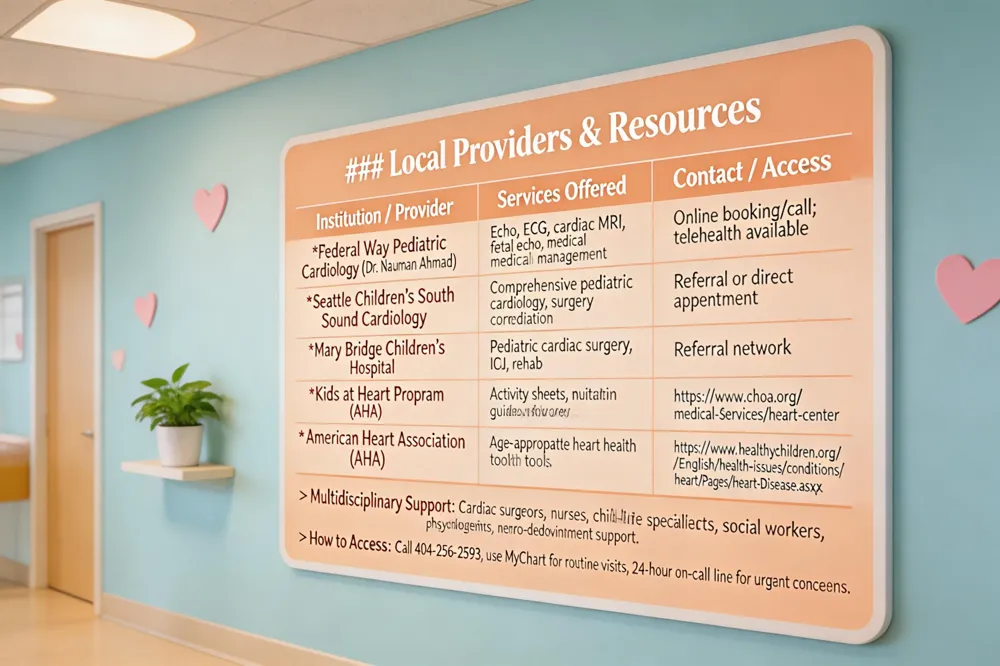 Parents in Federal Way, WA have several high‑quality options for pediatric cardiology. The Federal Way Pediatric Cardiology clinic, led by board‑certified Dr. Nauman Ahmad, offers comprehensive diagnostic services—including echocardiograms, ECGs, cardiac MRI, and fetal echo—alongside medical management and coordination with regional centers such as Seattle Children’s South Sound Cardiology and Mary Bridge Children’s Hospital. Appointments can be booked online or by calling the clinic’s office, and the practice provides telehealth visits for routine follow‑ups, reducing travel burden for families.
Multidisciplinary support is a hallmark of care in the area. Teams typically include pediatric cardiologists, cardiac surgeons, nurses, child‑life specialists, social workers, and psychologists, ensuring that medical, developmental, and emotional needs are addressed under one roof. Many clinics also offer family‑centered resources such as the Kids at Heart Program, chaplain services, and neuro‑developmental support for children who have undergone surgery.
The American Heart Association (AHA) complements clinical care with free, age‑appropriate educational tools. Its online portal features printable activity sheets, nutrition guides, videos on how the heart works, and interactive games that teach children the importance of regular activity, balanced meals, and smoke‑free environments. Parents can use these resources to reinforce healthy habits at home and empower kids to take an active role in their heart health.
Looking Ahead: Empowering Families and Kids
Building on its nationally ranked status, the Children’s Heart Center in Atlanta continues to drive research that expands treatment options for congenital and acquired heart disease. Collaborations with pediatric heart programs across the country enable multicenter trials of minimally invasive catheter techniques, 3‑D‑printed surgical models, and gene‑therapy approaches for complex lesions such as hypoplastic left heart syndrome. In Georgia and beyond, community outreach through the Kids at Heart Program, chaplain services, and child‑life specialists provides families with education on symptom recognition, medication management, and lifestyle choices. Free workshops, virtual webinars, and multilingual resources—available at the Center’s 20+ outpatient sites—teach parents how to incorporate heart‑healthy nutrition, regular activity, and smoke‑free environments into daily life. By pairing cutting‑edge science with compassionate, family‑centered support, the Center reinforces its commitment to lifelong heart health for every child. Families are also invited to join peer‑support groups and annual heart‑health fairs that celebrate progress and foster resilience.