Why Well‑Child Visits Matter
Well‑child visits are a cornerstone of preventive pediatric care, providing scheduled physical exams, growth tracking, immunizations, and developmental screenings from birth through adolescence. These visits identify vision, hearing, asthma, obesity, anemia, and other conditions early, enabling timely treatment that keeps children healthy and ready to learn. Research consistently shows that children who receive regular preventive care have higher attendance, better standardized‑test scores, and lower rates of chronic absenteeism because they miss fewer school days due to illness. In Federal Way, the pediatric cardiology program integrates cardiac screening and follow‑up into routine well‑child appointments, ensuring children with congenital heart disease receive coordinated care that supports exercise tolerance, classroom participation, and overall academic success.
Attendance and Absenteeism: The Health Connection
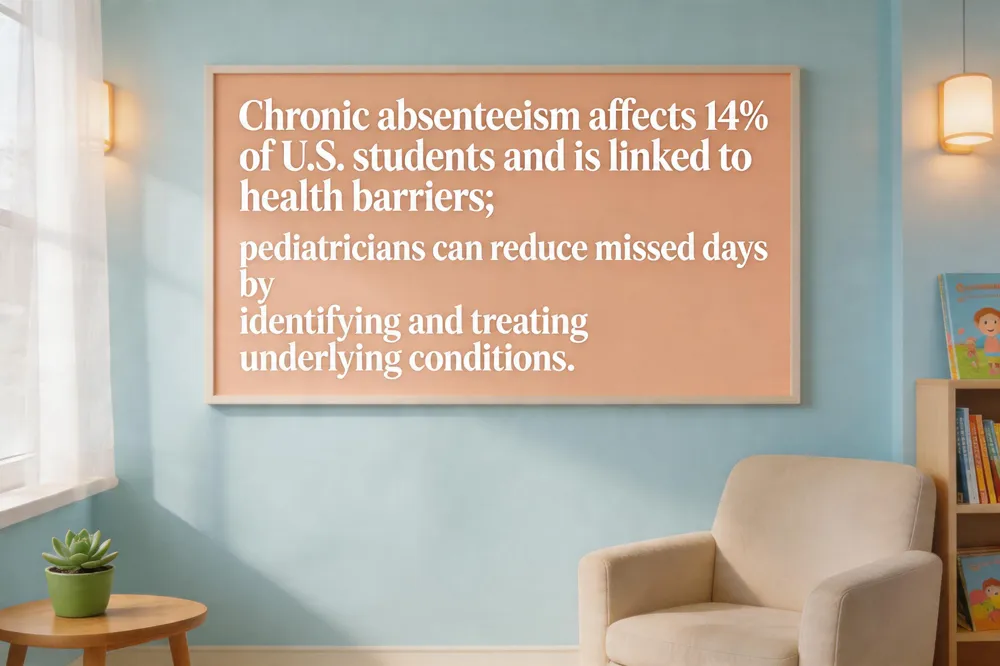 School absenteeism in children and adolescents is a major public‑health concern. Chronic absenteeism—missing ≥ 10 % of school days—affects about 14 % of U.S. students (≈ 6.8 million) and is linked to lower test scores, reduced grade‑level proficiency, and greater risk of social‑emotional difficulties. Children with chronic medical conditions (asthma, diabetes, heart disease), untreated vision or hearing problems, or mental‑health disorders such as anxiety and depression are especially vulnerable. Pediatricians should discuss attendance at every well‑child visit, develop individualized action plans (medication schedules, emergency protocols, symptom‑management strategies), and coordinate with school nurses and counselors to reduce missed days.
Attendance versus absenteeism is a simple but powerful metric: attendance is the proportion of days present, while absenteeism—especially chronic—signals underlying health or social barriers. Early identification of health‑related barriers allows timely interventions (e.g., asthma control, vision correction, mental‑health therapy) that keep children in class and improve academic outcomes.
Socio‑economic status (SES) strongly influences absenteeism. Systematic reviews of 55 studies show that children from lower‑income families miss more school days, often due to limited access to preventive health care, transportation challenges, and higher rates of chronic illness. Even modest effect sizes translate into measurable gaps in attendance, grades, and graduation rates. Addressing SES‑related barriers—through school‑based health services, Medicaid coverage of well‑child visits, and community outreach—can narrow these gaps and support both health and educational success.
Academic Gains from Preventive Care
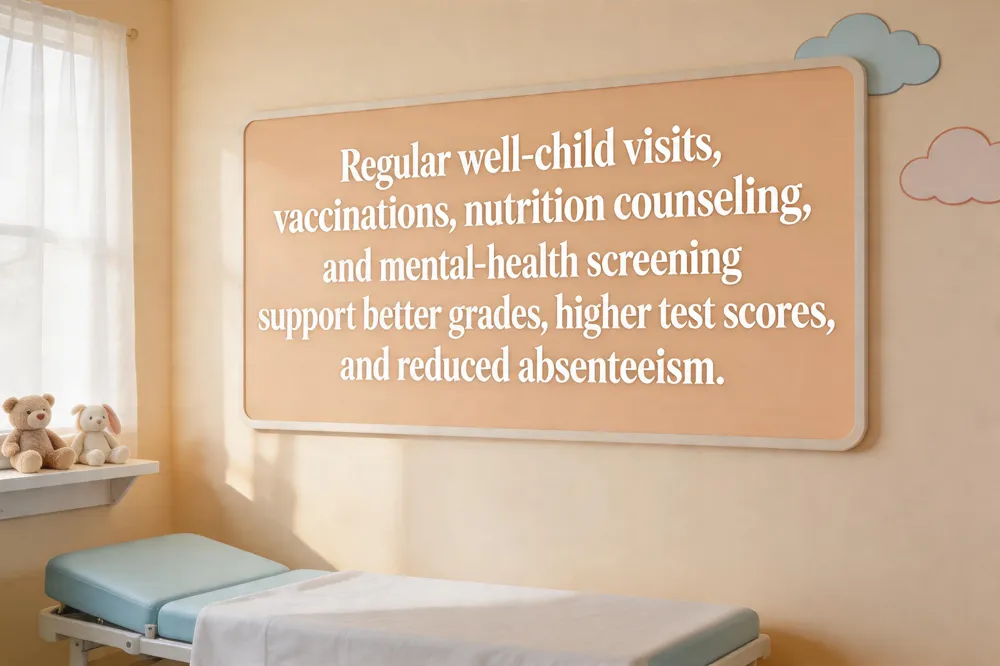 Regular well‑child visits lay the groundwork for higher school achievement. Good physical health, balanced nutrition, and consistent preventive care are strongly linked to better grades, higher test scores, and reduced absenteeism. When children receive timely vaccinations, vision‑ and hearing‑screens, and management of chronic conditions such as asthma or heart disease, they miss fewer school days and stay engaged in learning. Nutrition plays a pivotal role: adequate protein, iron, omega‑3s, and vitamins support brain development, attention, and mood, while daily breakfast and fruit‑vegetable intake keep energy steady for classroom tasks. Families that prioritize healthy meals and regular physical activity see children who concentrate longer and perform better academically. Mental‑health screening during visits catches anxiety, depression, and behavioral concerns early; timely counseling and support improve focus, attendance, and overall achievement. The Whole Child approach—addressing physical, emotional, social, and educational needs—ensures children thrive both at home and school. By partnering with pediatric teams, parents can secure the preventive care, nutrition counseling, and mental‑health resources essential for sustained academic success.
Well‑Child Visit Essentials
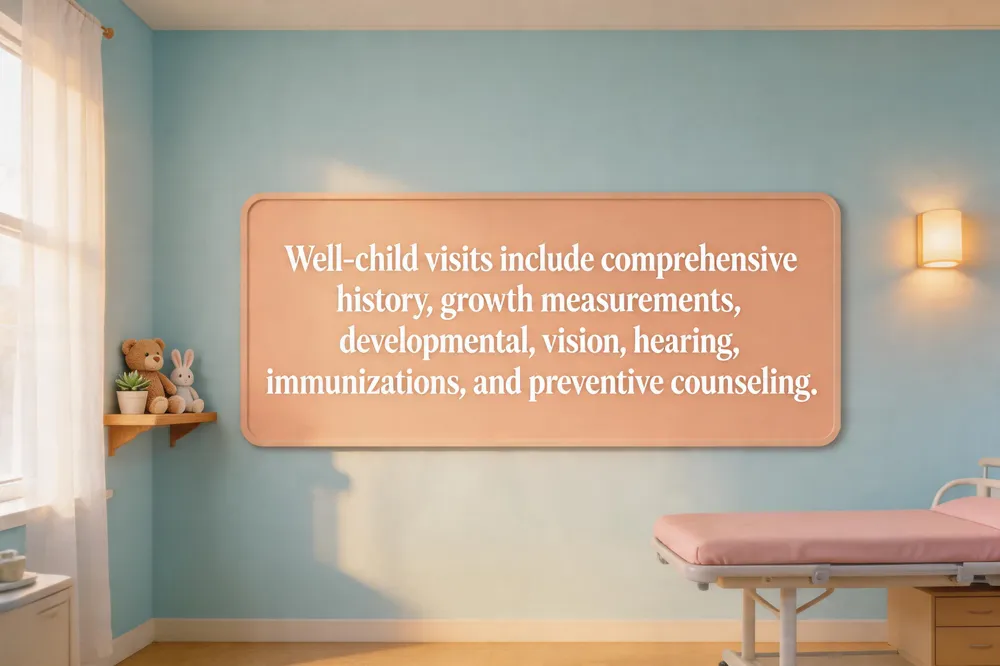 What does a well‑child visit include? A visit starts with a comprehensive history of birth, medical, family, sleep and feeding patterns, and any concerns about growth or behavior. The clinician performs a head‑to‑toe exam, records weight, height, head circumference and BMI percentiles, and conducts age‑appropriate screenings—developmental surveillance, vision and hearing checks, autism questionnaires, and lead testing for high‑risk children. Immunizations are updated, and counseling on nutrition, safety, sleep, activity and behavior is provided.
Pediatric well‑child visit schedule (by age) – The AAP recommends visits shortly after birth (3‑5 days), then at 1 mo, 2 mo, 4 mo, 6 mo, 9 mo, 12 mo, 15 mo, 18 mo, 24 mo, 30 mo, and annually from age 3 through adolescence.
CDC well‑child visit schedule – Mirrors the AAP periodicity schedule: frequent visits in the first two years, followed by annual check‑ups through age 21, each including growth measurements, developmental screening and age‑appropriate vaccines.
How often should a child see a pediatrician? – During the first two years, visits are recommended every 2–3 months; thereafter an annual exam is sufficient for healthy children, with more frequent visits for chronic conditions such as heart disease or asthma or developmental concerns.
Insurance, Legal, and Practical Aspects
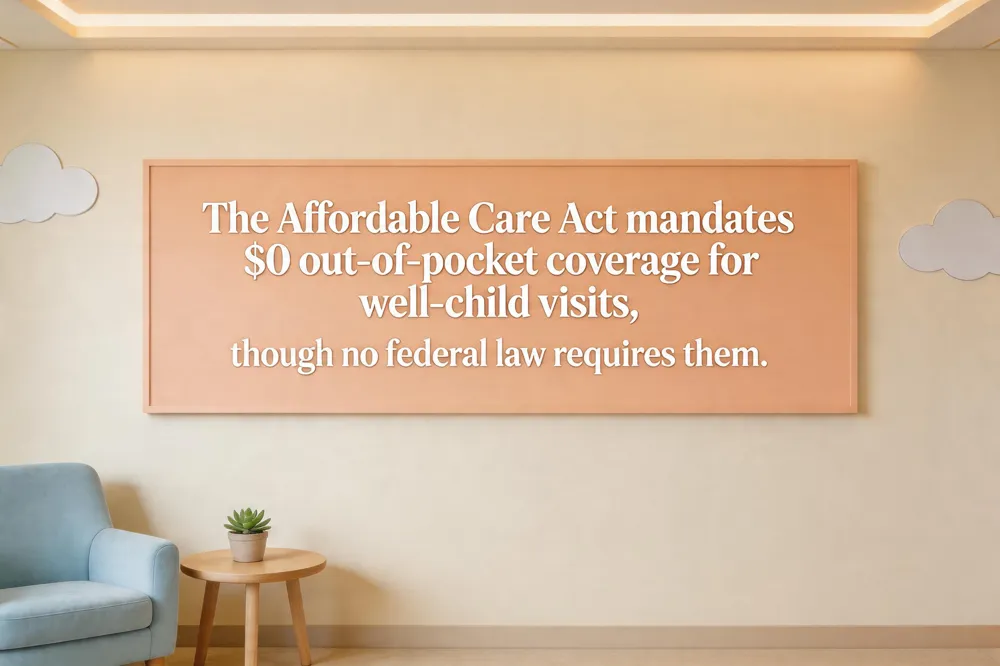 Should well‑child visits be covered by insurance? Yes. The Affordable Care Act classifies well‑child visits as preventive services, so most Medicaid, Marketplace, and private plans must cover them at $0 out‑of‑pocket when delivered by an in‑network pediatrician—no copay, coinsurance, or deductible applies. Verify network status and plan details to avoid billing errors.
Are well‑child visits required by law? No federal law mandates them, and Washington state has no direct legal requirement. However, Medicaid programs, many insurance policies, and school‑entry rules tie reimbursement and enrollment to up‑to‑date check‑ups and immunizations, effectively encouraging compliance.
Can you skip well‑child visits? Skipping is not advisable. Missing appointments leaves children without timely vaccines, vision/hearing screenings, developmental monitoring, and counseling on nutrition, safety and mental health—key factors that protect school attendance and academic success.
What are two benefits of well‑child visits? 1) Preventive care, including immunizations and health screenings, reduces illness‑related absences and catches health issues early. 2) Ongoing growth and developmental tracking enables early intervention for learning or behavioral concerns, fostering better school readiness and performance.
Beyond the Exam: Whole Child and Community Impact
 Regular well‑child visits, especially those that include pediatric cardiology follow‑up, keep children healthy enough for full participation in school activities and physical‑education classes. Community health systems that track school‑readiness metrics—such as immunization rates, vision/hearing screenings and developmental milestones—enable early referrals that boost attendance and academic performance. Policies like the AAP’s Bright Futures schedule, the Every Student Succeeds Act chronic‑absenteeism reporting, and Washington’s school‑health partnership create a coordinated framework supporting consistent attendance.
Why is children’s health and education important? Children’s health and education form the foundation for lifelong well‑being; early health interventions improve cognitive development, reduce chronic disease risk, and enhance school readiness, while quality education promotes health literacy and healthier lifestyles.
What are 5 causes of slow learning?
- Learning disabilities (e.g., dyslexia, ADHD). 2. Lower cognitive processing speed. 3. Unstable or resource‑limited environments. 4. Language barriers or speech‑language disorders. 5. Emotional/behavioral issues such as anxiety or depression.
Academic mental health Extrathreated mental‑health problems lower motivation, increase absenteeism, and diminish grades; integrated care that connects pediatricians, families, and schools mitigates these effects.
What are common red flags in a child's school performance? Drops in grades or test scores, frequent absences, school‑avoidance with somatic complaints, difficulty concentrating, long completion times, frustration, low self‑esteem, and disciplinary problems.
The effects of mental health on students' academic and social success Poor mental health harms concentration, leading to lower test scores and reduced classroom participation; it also weakens peer relationships, increases isolation, and raises dropout risk. Early identification and school‑based support are essential to protect both academic and social outcomes.
Putting It All Together
Regular well‑child visits are a cornerstone of school success. By delivering timely immunizations, vision and hearing screenings, developmental checks, and chronic‑condition management, these visits lower illness‑related absences, boost reading and math scores, and reduce the risk of chronic absenteeism by 15‑20 %. Early counseling on nutrition, sleep, and mental health also strengthens concentration and classroom behavior, while pediatric cardiology follow‑up for children with heart disease ensures stamina for physical education and daily learning.
Families in Federal Way are encouraged to schedule the AAP‑recommended visit schedule—at least 12 visits from birth through age 5 and an annual visit thereafter—to keep their child on track for school readiness. Use the Federal Way School District’s health portal to verify immunization records and request appointment reminders.
Next steps: locate a trusted pediatric practice such as Federal Way Pediatrics, enroll in the local Reach‑Out‑and‑Read program for literacy support, and coordinate with school nurses for attendance monitoring. Consistent preventive care today paves the way for academic achievement tomorrow.