The Value of Consistent Well‑Child Care
Routine well‑child visits follow the AAP Bright Futures schedule, beginning within the first week of life and continuing annually through age 21. Each appointment includes a head‑to‑toe physical exam, growth measurements, immunizations, and age‑appropriate developmental screenings. Early detection of hypertension, anemia, vision or hearing problems, and congenital heart defects allows timely treatment and can prevent more serious complications later. Regular visits also support mental and emotional well‑being by reducing parental anxiety, fostering a trusted doctor‑patient relationship, and providing anticipatory guidance on nutrition, sleep, safety and stress management. In Federal Way, WA, families benefit from local primary‑care clinics and pediatric cardiology services that integrate these screenings into the community medical home. The city’s free pediatric screening events and the presence of specialized cardiology programs ensure that children receive coordinated, family‑centered care without costly delays, promoting healthier futures for every child and lifelong health.
Legal Landscape and Insurance Support
Insurance Coverage & Payer Requirements
| Payer Type | Covered Service | Reimbursement Requirement | Impact of Skipping Visits |
|---|---|---|---|
| Medicaid & CHIP | All well‑child preventive services (vaccines, screenings, counseling) | Must follow AAP schedule to receive payment | Loss of coverage for immunizations, blood‑pressure checks, developmental screenings |
| Private Plans | Same as Medicaid/CHIP | Often require adherence to AAP schedule for preventive‑care benefit | May result in denied claims for vaccines or screenings |
| Federal/State Programs (e.g., Federal Way health initiatives) | Coordinated care for chronic conditions | Encourage full attendance to qualify for multidisciplinary support | Higher emergency‑department visits, hospitalizations, delayed diagnosis of hypertension, dyslipidemia, congenital heart disease |
Key Takeaway: While not a legal mandate, adherence to the AAP schedule is financially incentivized and directly linked to uninterrupted preventive care.
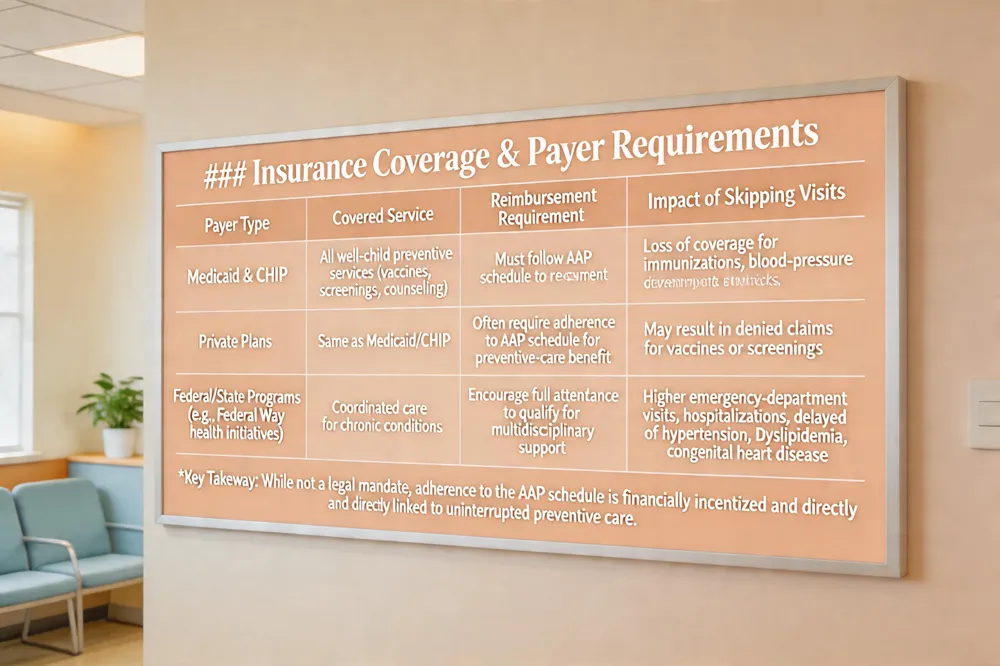 Insurance companies, both public (Medicaid and the Children’s Health Insurance Program) and private plans, treat well‑child visits as covered preventive services. Because they are reimbursed under the preventive‑care benefit, many payers require providers to follow the AAP schedule in order to receive payment for vaccines, screenings, and counseling. This payer‑driven requirement is not a legal mandate, but it does mean that skipping visits can jeopardize coverage for essential services such as immunizations, blood‑pressure checks, and developmental screenings.
When families miss or decline appointments, the impact can be measurable. Studies cited in the sources show that children who attend all recommended well‑child visits have lower rates of emergency‑department visits, hospitalizations, and delayed diagnoses of chronic conditions—including hypertension, dyslipidemia, and congenital heart disease. In Federal Way, WA, local health programs and pediatric cardiology services rely on consistent visit attendance to identify risk factors early and to coordinate multidisciplinary care.
In practice, while well‑child visits are not legally compulsory, they are strongly encouraged because they are financially supported, medically essential, and linked to better health outcomes for children. Parents should check their specific insurance policy and discuss the AAP schedule with their pediatrician to ensure that preventive care remains covered and uninterrupted.
Age‑Based Visit Schedule and CDC Alignment
Well‑Child Visit Schedule (AAP) vs. CDC Alignment
| Age | AAP Recommended Visit | CDC Recommended Visit | Core Components of Each Visit |
|---|---|---|---|
| 3‑5 days | Newborn check‑up | 3‑5 days | Physical exam, weight/length, head circumference, newborn screening |
| 1 month | Infant visit | 1 month | Growth, developmental milestones, feeding counseling |
| 2 months | Infant visit | 2 months | Growth, immunizations (DTaP, IPV, Hib, PCV, Rotavirus), developmental screen |
| 4 months | Infant visit | 4 months | Growth, immunizations (DTaP, IPV, Hib, PCV, Rotavirus), head‑to‑toe exam |
| 6 months | Infant visit | 6 months | Growth, immunizations (DTaP, IPV, Hib, PCV, Rotavirus), blood‑pressure check (if indicated) |
| 9 months | Infant visit | 9 months | Growth, developmental screening (Ages & Stages), vision/hearing check |
| 12 months | Infant visit | 12 months | Growth, MMR & Varicella vaccines, developmental screen |
| 15 months | Toddler visit | 15 months | Growth, DTaP booster, IPV booster, developmental surveillance |
| 18 months | Toddler visit | 18 months | Growth, Hib booster, developmental screening, autism screening |
| 2 years (24 months) | Toddler visit | 2 years | Growth, MMR, Varicella boosters, developmental screen |
| 2½ years (30 months) | Toddler visit | 2½ years | Growth, developmental screening (Ages & Stages) |
| 3 years | Early childhood | 3 years | Growth, blood‑pressure check (starts at age 3), developmental screen |
| 4 years | Early childhood | 4 years | Growth, vision/hearing check, developmental screen |
| 5 years | Early childhood | 5 years | Growth, immunization catch‑up, developmental screen |
| 6‑21 years (annual) | School‑age & adolescence | Annual through 18‑21 | Growth, blood‑pressure, physical exam, counseling, immunizations as needed |
All visits include a head‑to‑toe physical exam, growth measurements, developmental screening, immunizations, and anticipatory guidance.
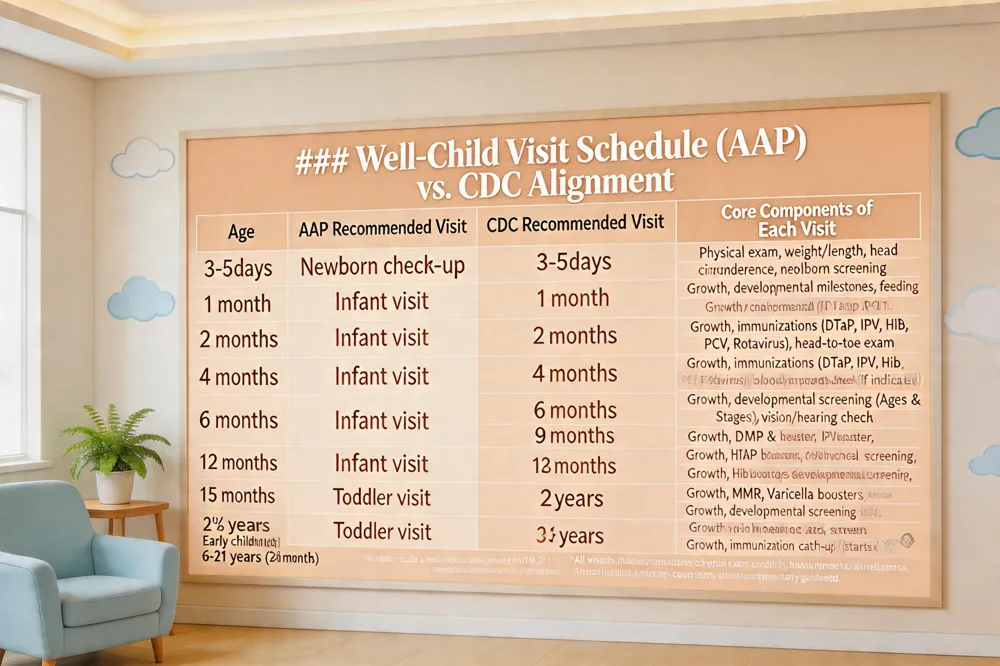 Well‑child visits schedule by age
- Newborn: within the first 3‑5 days after birth.
- Infancy: 1 month, 2 months, 4 months, 6 months, 9 months, and 12 months.
- Toddler: 15 months, 18 months, 2 years (24 months), and 2½ years (30 months).
- Early childhood: 3 years, 4 years, and 5 years.
- School‑age and adolescence: Annual visits from age 6 through 21 years. Each appointment includes a head‑to‑toe physical exam, growth measurements (height, weight, head circumference), developmental screening, immunizations, and counseling on nutrition, safety, behavior, and activity.
CDC well‑child visit schedule The CDC adopts the American Academy of Pediatrics’ Bright Futures periodicity schedule. Recommended visits occur at 3‑5 days, 1 month, 2 months, 4 months, 6 months, 9 months, 12 months, 15 months, 18 months, 2 years, 2½ years (30 months), 3 years, 4 years, 5 years, and then annually through age 18‑21. During each visit the pediatrician:
- Records growth charts to detect deviations early.
- Performs age‑appropriate physical examinations, including heart auscultation for murmurs and blood‑pressure checks beginning at age 3.
- Conducts developmental surveillance (motor, language, social, cognitive) using tools such as the Ages & Stages Questionnaires.
- Administers CDC‑recommended immunizations, protecting against diseases that can exacerbate cardiac or systemic illness.
- Provides anticipatory guidance on nutrition, physical activity, injury prevention, and mental‑health wellness.
Following this evidence‑based schedule in Federal Way, WA, ensures that children receive timely preventive care, early identification of chronic conditions (including hypertension, dyslipidemia, and congenital heart disease), and a trusted partnership with their pediatric and cardiology teams. This systematic approach reduces emergency visits, improves long‑term health outcomes, and supports families in fostering healthy growth and development.
After the First Year: Continuing the Momentum
Post‑12‑Month Visit Schedule & Services
| Visit Age | Typical Services Provided | Cardiovascular Focus |
|---|---|---|
| 15 months | Height/weight/head circumference, immunizations (DTaP, IPV, Hib), developmental screening, vision/hearing | Listen for murmurs, record blood‑pressure if indicated |
| 18 months | Same measurements, plus autism screening (ASQ‑SE), nutrition counseling | Blood‑pressure measurement (if not done earlier) |
| 2 years | Growth chart update, 2‑year vaccine booster (MMR, Varicella), developmental monitoring | Heart‑health check, referral for echocardiography if murmur detected |
| 3 years | Annual exam, growth, developmental screening, safety counseling | Blood‑pressure check (first routine measurement) |
| 4 years | Annual exam, growth, vision/hearing, immunization catch‑up | Continue cardiac auscultation, blood‑pressure monitoring |
| 5 years | Annual exam, growth, school‑readiness counseling, immunizations | Cardiac auscultation, blood‑pressure if elevated |
| 6‑21 years (annual) | Annual physical, growth, puberty counseling, immunizations, mental‑health screening | Blood‑pressure measurement each visit, murmur assessment, referral to pediatric cardiology when abnormal |
Consistent attendance enables early detection of chronic conditions and timely cardiology referrals.
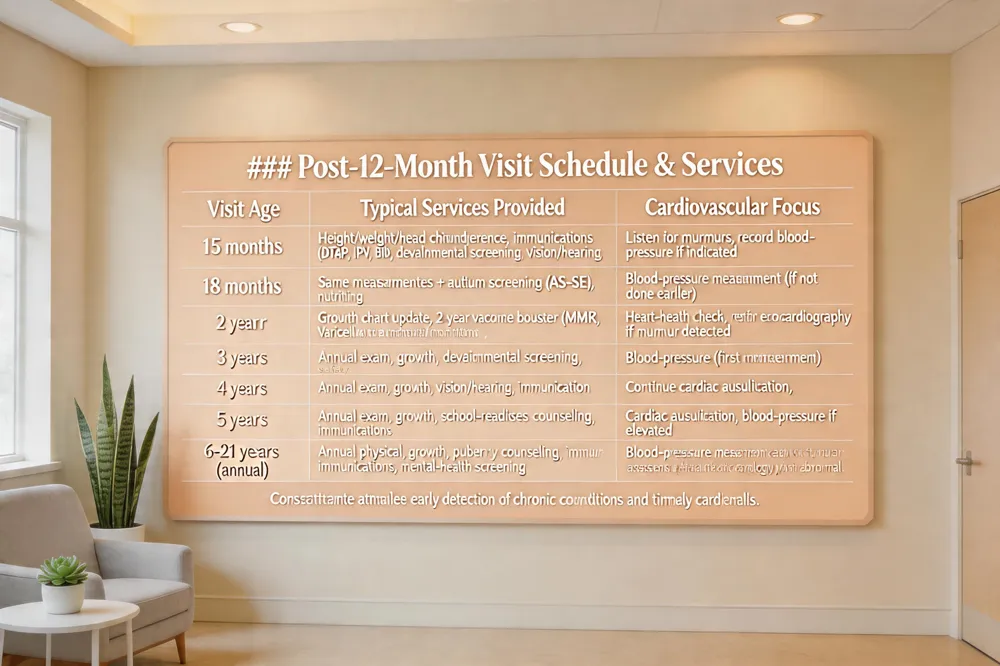 After the 12‑month well‑child visit, the American Academy of Pediatrics (AAP) recommends follow‑up appointments at 15 months and 18 months, then annual visits at ages 2, 3, 4, 5 and onward. Each visit includes a head‑to‑toe physical exam, measurement of height, weight, and head circumference, and an update to the child’s growth chart. Pediatricians review immunization status, providing the 2‑year booster series and any catch‑up vaccines needed. Developmental screenings evaluate language, motor, social and cognitive milestones, while vision and hearing checks help catch sensory issues early. Parents receive anticipatory guidance on nutrition, safe sleep, injury prevention, screen time, and behavior management; they are encouraged to bring a short list of 3‑5 concerns. Federal Way, WA, families can access primary‑care clinics and pediatric cardiology services that incorporate heart‑health checks—listening for murmurs, blood‑pressure measurement, and referral for echocardiography when indicated. Consistently attending these appointments enables early detection of chronic conditions, supports timely referrals, and empowers families to make informed health decisions for their children.
Early Detection: Why Timing Matters
Benefits of Early Detection
| Condition Detected Early | Typical Screening Tool | Potential Benefit of Early Identification |
|---|---|---|
| Hypertension | Blood‑pressure measurement (starting age 3) | Lifestyle modification, pharmacologic therapy before organ damage |
| Dyslipidemia | Lipid panel (if risk factors present) | Dietary counseling, early statin therapy if needed |
| Congenital Heart Disease | Cardiac auscultation, echocardiogram (if murmur) | Early medical management, avoid emergency surgery, plan for interventions |
| Asthma | Symptom questionnaire, spirometry (older children) | Trigger avoidance, inhaled therapy, reduced ER visits |
| Type 1 Diabetes | Random glucose or HbA1c (if symptomatic) | Early insulin therapy, prevent ketoacidosis |
| Developmental Delay | Ages & Stages Questionnaires, formal screening at 9, 18, 30 months | Early intervention services, improved school readiness |
| Autism Spectrum Disorder | M‑CHAT at 18‑24 months | Early behavioral therapy, better long‑term outcomes |
Early identification expands therapeutic windows, reduces invasive procedures, and lowers overall health‑care costs.
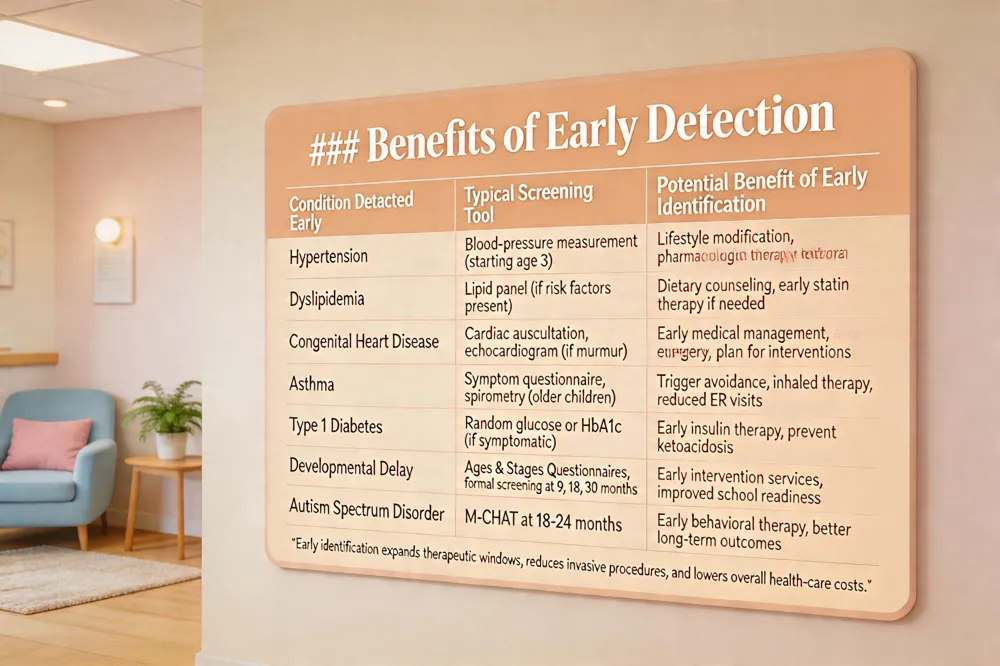 Routine pediatric check‑ups are the cornerstone of catching health problems before they become serious. Early detection expands the range of safe, effective treatments—often allowing simple lifestyle changes or non‑invasive interventions instead of aggressive surgery or long‑term medication. For example, screening at well‑child visits can reveal hidden hypertension, elevated cholesterol, or a subtle heart murmur that points to congenital heart disease; identifying these issues in infancy or early childhood dramatically reduces the need for complex procedures and lowers overall health‑care costs. Detecting asthma, diabetes, or developmental delays early also prevents complications that can impair growth, school performance, and quality of life.
Why is it important to detect problems in the early stages?
Early identification gives clinicians a wider therapeutic window, enabling less invasive care that preserves a child’s development and reduces the emotional and financial burden on families.
Why is it important to recognize symptoms early?
Prompt recognition prevents mild signs from evolving into severe complications, especially for silent cardiac conditions, and helps avoid costly emergency visits while supporting healthier growth.
Why are routine check‑ups important?
Regular visits allow systematic monitoring of growth, development, and chronic risks, provide personalized counseling on nutrition, activity, and mental health, and ultimately reduce long‑term medical expenses by catching issues when they are easiest to treat.
Practical Tools: Checklists, Screening, and Referral Pathways
Provider Checklist & Referral Pathways
Well‑Child Visit Checklist (Provider)
- Verify growth parameters (weight, length/height, head circumference, BMI)
- Record vital signs (including blood‑pressure ≥ 3 years)
- Perform head‑to‑toe physical exam
- Update immunization record
- Conduct developmental screening (Ages & Stages at 9, 18, 30 months; autism at 18‑24 months)
- Perform vision and hearing checks
- Review nutrition, sleep, safety, activity, psychosocial concerns
- Provide anticipatory guidance tailored to age
- Document abnormal findings and arrange referrals/follow‑up
- Schedule next visit
Developmental Monitoring vs. Screening
- Monitoring: Ongoing discussion with parents about milestones at every visit.
- Screening: Formal, validated tools administered at key ages (9, 18, 30 months) to detect delays.
Pediatric Cardiology Referral Options (Federal Way, WA)
| Referral Destination | Services Offered | Contact |
|---|---|---|
| Federal Way Pediatrics – On‑site Cardiology (Dr. Nauman Ahmad) | Echocardiogram, fetal echo, ECG, Holter, BP assessment | In‑clinic |
| n | Seattle Children’s South Clinic (34920 Enchanted Pkwy S) | Comprehensive pediatric cardiology, surgery |
| Seattle Children’s South Sound Cardiology Clinics (Tacoma, Centralia, Olympia, Silverdale) | Outpatient cardiology, follow‑up | 253‑272‑1812 |
| Seattle Children’s Hospital | Advanced surgical/interventional cardiology | 206‑266‑3000 |
| University of Washington Medical Center | Tertiary cardiac care, research programs | 206‑543‑4000 |
| Mary Bridge Children’s Hospital | Pediatric cardiac surgery, transplant | 206‑543‑0123 |
All pathways aim for timely expert evaluation of congenital or acquired heart disease for children in the Federal Way region.
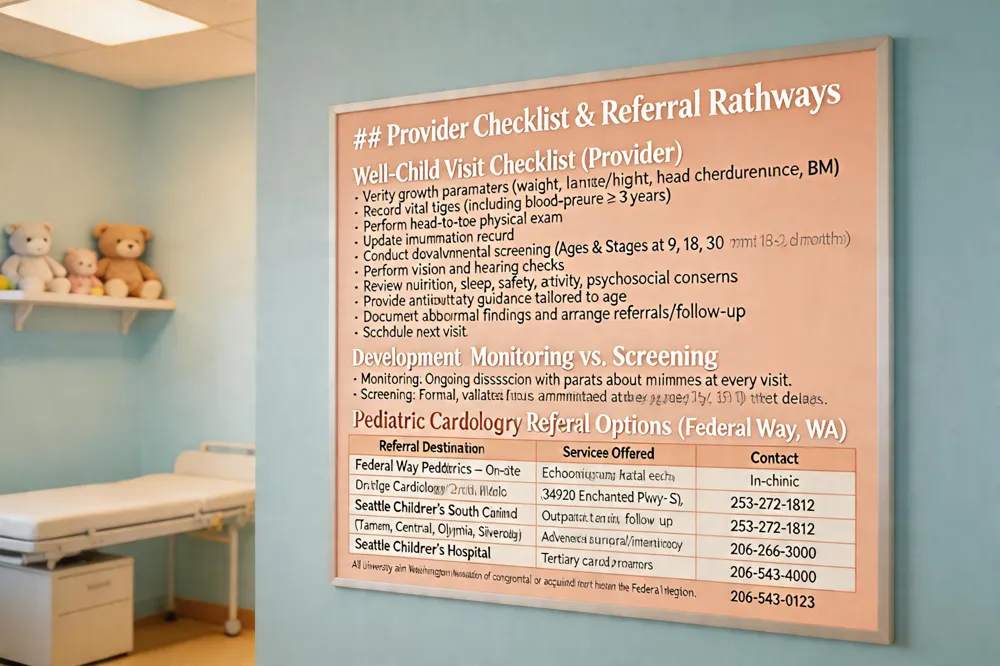 Well‑child visit checklist for providers
A comprehensive well‑child visit starts with a review of growth parameters—weight, length/height, head circumference, and BMI when appropriate—plotted on age‑specific charts. Vital signs, including blood pressure beginning age 3, are recorded, followed by a head‑to‑toe physical exam. Immunization status is updated and age‑appropriate developmental and behavioral screens are performed (e.g., Ages & Stages Questionnaires at 9, 18, 30 months and autism screening at 18 and 24 months). Vision and hearing checks, nutrition, sleep, elimination, safety, and psychosocial concerns are discussed. Anticipatory guidance on nutrition, injury prevention, sleep safety, oral health, and screen‑time is tailored to the child’s developmental stage. Any abnormal findings are documented, referrals or follow‑up testing are arranged, and the next visit is scheduled.
Developmental monitoring vs. screening
Developmental monitoring is an ongoing conversation where parents note milestones in language, movement, cognition, and social behavior at each visit using simple checklists. Developmental screening is a formal, research‑based assessment conducted at key ages—typically 9 months, 18 months, and 30 months—to identify delays early. The AAP also recommends autism‑specific screening at 18 months and 24 months. Missed milestones trigger referrals for early‑intervention services. Parents can use tools like the CDC Milestone Tracker app and bring a list of concerns to every appointment.
Pediatric cardiology services & referral options in Federal Way, WA
Federal Way Pediatrics offers on‑site pediatric cardiology care led by board‑certified Dr. Nauman Ahmad, MD. Services include echocardiograms, fetal echo, ECGs, Holter monitoring, and blood‑pressure assessments. Children with congenital heart disease, cardiomyopathy, pulmonary hypertension, or rhythm disorders receive personalized care plans and can access telehealth visits. For specialized care, primary providers can refer to Seattle Children’s South Clinic (34920 Enchanted Pkwy S) or the Seattle Children’s South Sound Cardiology Clinics in Tacoma, Centralia, Olympia, and Silverdale (phone 253‑272‑1812). Advanced surgical or interventional needs are coordinated with Seattle Children’s Hospital or the University of Washington Medical Center. Mary Bridge Children’s Hospital in Seattle also accepts referrals. All pathways aim to provide timely, expert cardiac evaluation for infants, children, and adolescents in the Federal Way region.
Investing in Preventive Care Today for a Healthier Tomorrow
Early detection through regular well‑child visits saves lives by catching hypertension, diabetes, high cholesterol, and congenital heart defects before symptoms appear. Parents who follow the American Academy of Pediatrics’ Bright Futures schedule benefit from timely immunizations, growth‑monitoring, developmental screening, and preventive cardiology assessments that lower the risk of emergency care and long‑term complications. Staying on schedule—newborn, 1 month, 2 months, 4 months, 6 months, 9 months, 12 months, 15 months, 18 months, 2 years, and then annually—ensures a trusted medical home where providers can tailor advice on nutrition, activity, and safety while tracking blood pressure, lipid levels, and heart murmurs. Families in Federal Way, WA, have convenient access to pediatric cardiology specialists at local clinics and to the Cohen Children’s Preventative Cardiology Program, which offers personalized care plans and community resources. Schedule your next appointment today and give your child the healthiest start possible.