Why Early Detection Matters
ADHD is a neurodevelopmental disorder that begins before age 12 and often shows up in preschoolers as persistent inattention, hyperactivity, and impulsivity. Detecting these patterns early—ideally by age 4‑5—allows families to access evidence‑based interventions before the child enters formal schooling, when academic demands increase. Early identification reduces the risk of academic under‑achievement, social difficulties, and co‑occurring conditions such as anxiety or learning disabilities. Pediatricians are usually the first point of contact; they gather information from parents, teachers, and standardized rating scales to confirm that symptoms cause functional impairment in at least two settings. Families play a critical role by observing daily behaviors, maintaining consistent routines, and collaborating with clinicians and schools to develop a coordinated care plan that may include parent‑training programs, behavioral strategies, and—when needed—medication. Prompt, collaborative action sets the foundation for better long‑term outcomes.
Core Symptoms and Diagnosis Basics
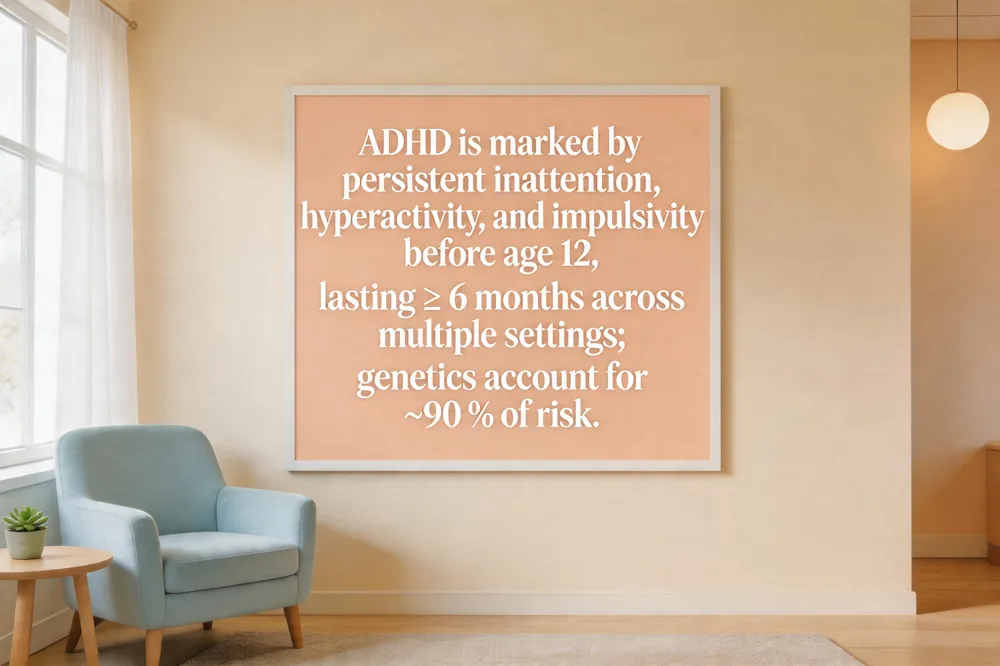 ADHD is a neurodevelopmental disorder marked by persistent inattention, hyperactivity, and impulsivity that must appear before age 12, last at least six months, and be evident in multiple settings (home, school, or other environments). Children with the inattentive type often make careless mistakes, lose items, daydream, and struggle to follow instructions. Hyperactive‑impulsive children fidget, can’t stay seated, run or climb inappropriately, talk excessively, and act without thinking, frequently interrupting others. Boys typically display overt hyperactivity and impulsivity, while girls more often show quieter inattentive symptoms and internalizing issues such as anxiety or low self‑esteem, which can delay recognition. Genetics dominate the disorder’s etiology—studies estimate that roughly 90 % of ADHD risk is inherited, with environmental factors contributing only a modest share. Because ADHD runs in families, a comprehensive evaluation—including parent‑teacher input, standardized rating scales, and medical history—is essential for accurate diagnosis and early, family‑centered intervention.
Early Behavioral Red Flags by Age
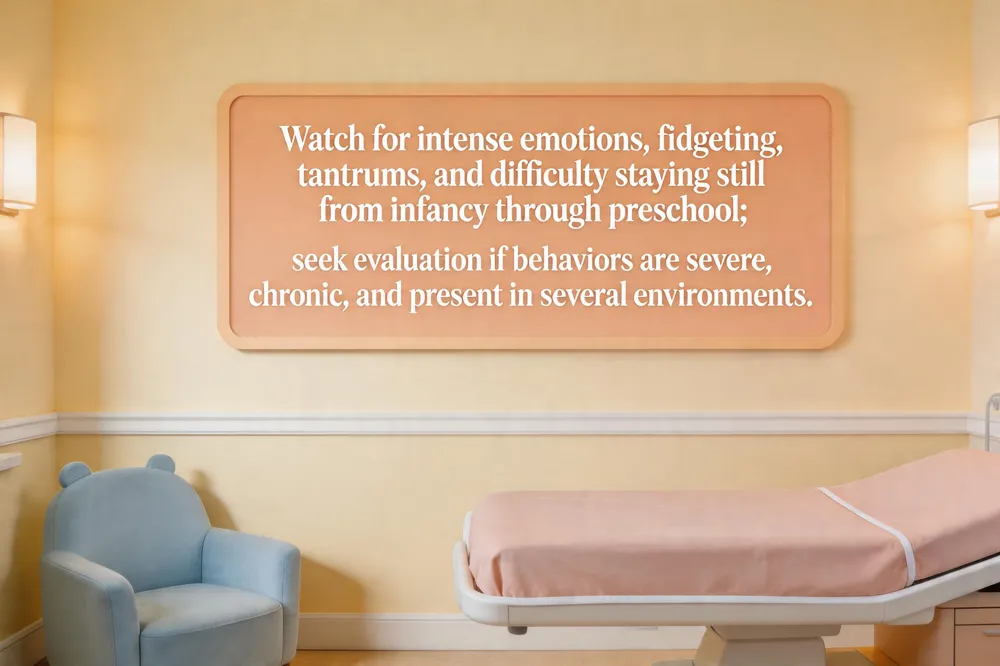 Recognizing ADHD early helps families access timely support.
Infant & Toddler Warning Signs – Even at 12 months, unusually intense, poorly‑regulated emotions, chronic crying, difficulty self‑soothing, restless fidgeting while seated, and sleep‑feeding challenges may signal risk. At age 2, extreme tantrums, inability to calm down, constant climbing, impulsive grabbing, and persistent need for stimulation become more apparent.
Preschool‑Age Patterns – By 3 years, children often show a very short attention span, rapid activity bursts, constant movement, frequent interruptions, and difficulty staying seated for story time or meals. Impulsivity may lead to unsafe actions, and emotional outbursts are harder to soothe.
When to Seek Evaluation – If these behaviors are markedly more severe or frequent than typical development, occur in multiple settings (home, daycare, outings), and interfere with sleep, feeding, or daily routines, parents should discuss concerns with a pediatrician for a comprehensive evaluation.
Q&A
- Early signs of ADHD in 1‑year‑old: intense emotional dysregulation, restless fidgeting, sleep/feeding problems, fearlessness with safety.
- Early signs of ADHD in 2‑year‑old: frequent tantrums, inability to sit still, impulsive grabbing, constant movement.
- Early signs of ADHD in 3‑year‑old: short attention span, constant motion, impulsive interruptions, excessive talking, tantrums that are hard to soothe.
- Quiz for a 3‑year‑old: look for persistent inattention, fidgeting, loss of items, interrupting, and irritability across settings for at least six months.
Checklists, Screening Tools, and Formal Tests
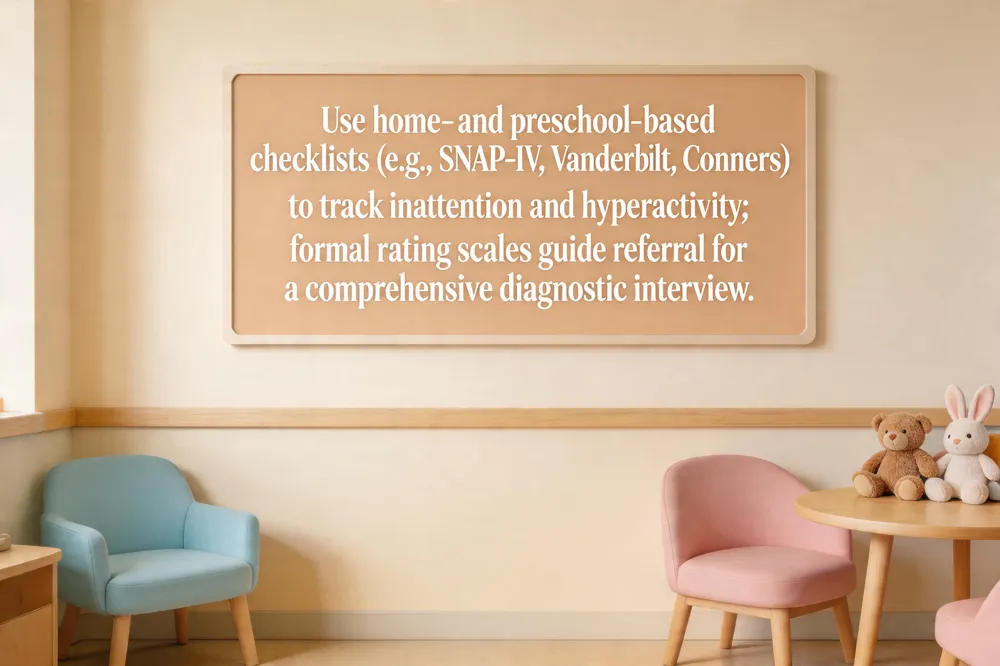 Early identification of ADHD relies on clear, practical checklists that families can use at home and in preschool settings. For a 4‑year‑old, watch for persistent inattention (careless mistakes, short attention span, not listening) and hyperactive‑impulsive signs (constant movement, inability to sit still, grabbing toys, difficulty waiting). These behaviors should appear in at least two settings for six months before a clinician recommends a formal rating scale such as the SNAP‑IV Preschool, Vanderbilt, or Conners Parent‑Teacher questionnaires.
ADHD symptoms in children checklist – Parents can track inattention (forgetfulness, loss of items, avoidance of mental work) and hyperactivity‑impulsivity (fidgeting, excessive talking, interrupting, acting without thinking). Consistent patterns across home and school prompt a pediatric evaluation.
ADHD test – Screening tools gather parent, teacher, and sometimes child reports on symptom frequency and compare them to DSM‑5 criteria. While useful for early detection, a definitive diagnosis requires a comprehensive interview, medical history, and possibly observation. Early referral to a pediatrician or pediatric cardiology‑affiliated developmental specialist enables timely behavioral or medication interventions.
Home‑Based Behavioral Strategies
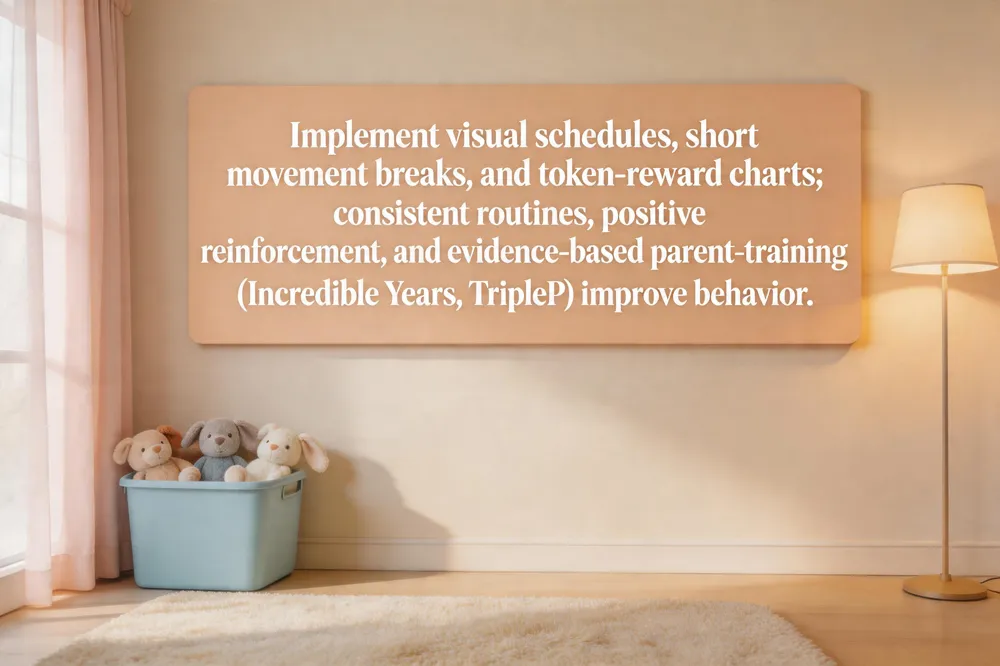 Establishing clear, consistent daily routines and visual schedules helps preschool‑ and school‑aged children with ADHD know what to expect and stay organized. Use picture‑based checklists for morning, bedtime, and homework, and incorporate short movement breaks and daily aerobic activity to improve focus. Positive reinforcement is essential: praise specific desired behaviors immediately and use token‑reward charts that track progress toward small goals. Structured consequences should be predictable and brief.
How to treat ADHD child at home – Begin with a predictable routine, visual supports, balanced meals, limited screen time, and sufficient sleep. Apply positive‑behavior strategies and reward charts, and enroll in evidence‑based parent‑training programs (e.g., Incredible Years, Triple P) that teach effective discipline and communication. Keep regular follow‑up with your pediatrician or child‑psychologist to monitor progress and discuss school accommodations or medication if needed.
Non‑medication treatment for ADHD child – Focus on behavioral interventions, regular physical activity, adequate sleep, and a nutritious diet while minimizing sugar and artificial additives. Collaborate with teachers for classroom supports and use parent‑training programs to reinforce skills at home.
Treatment plan for ADHD child example – Start with parent‑training and a structured routine; add a classroom token system and preferential seating. For children ≥6 years, consider low‑dose stimulant medication with close monitoring; for younger children, prioritize intensive behavior therapy. Review the plan every 4‑6 weeks with the care team to adjust strategies and ensure coordinated support.
Evidence‑Based Treatment Options
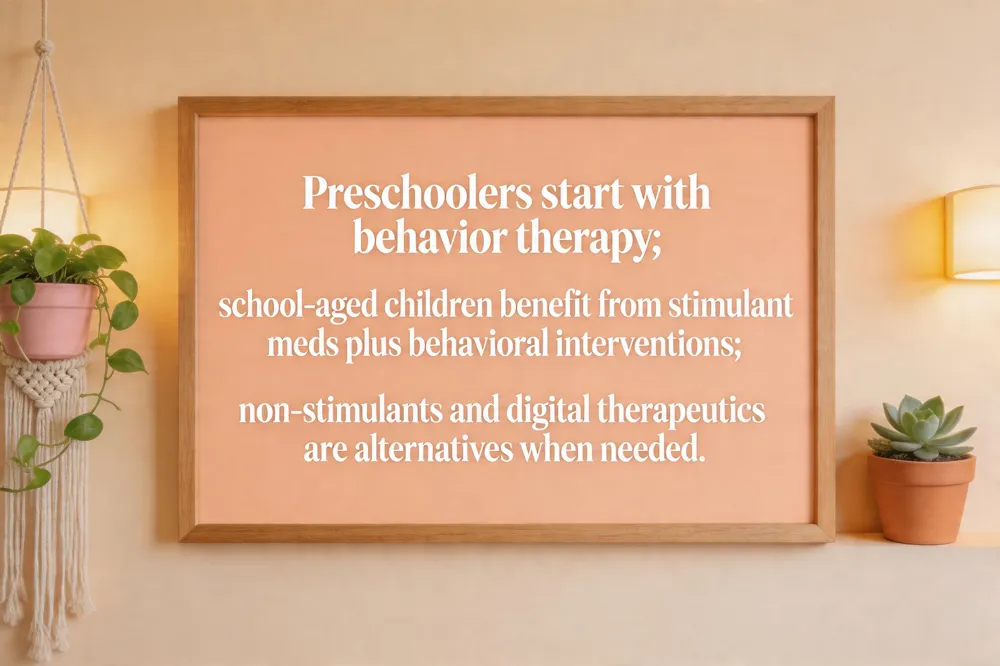 Current pediatric guidelines, such as those from the American Academy of Pediatrics, recommend a multimodal approach to ADHD. For preschool‑aged children (4‑5 years), behavior‑therapy—especially parent‑training programs like Incredible Years or Triple P is the first‑line treatment; medication is reserved for cases with persistent, severe impairment. In school‑aged children (6‑12 years) and adolescents, stimulant medications (methylphenidate or amphetamine formulations) remain the most effective pharmacologic option, delivering the greatest reduction in core symptoms. Non‑stimulants (atomoxetine, guanfacine, clonidine) are used when stimulants are ineffective, poorly tolerated, or contraindicated. Combining medication with evidence‑based behavioral interventions (parent training, classroom accommodations, organizational skills training) yields the strongest outcomes, improving attention, academic readiness, and social functioning. Research consistently shows that integrated therapy outperforms medication or behavior therapy alone, and ongoing studies are evaluating digital therapeutics and novel agents to further personalize care. Regular monitoring of growth, cardiovascular health, and side effects is essential for safe, long‑term management.
Gender‑Specific Considerations & Age‑Targeted Guidance
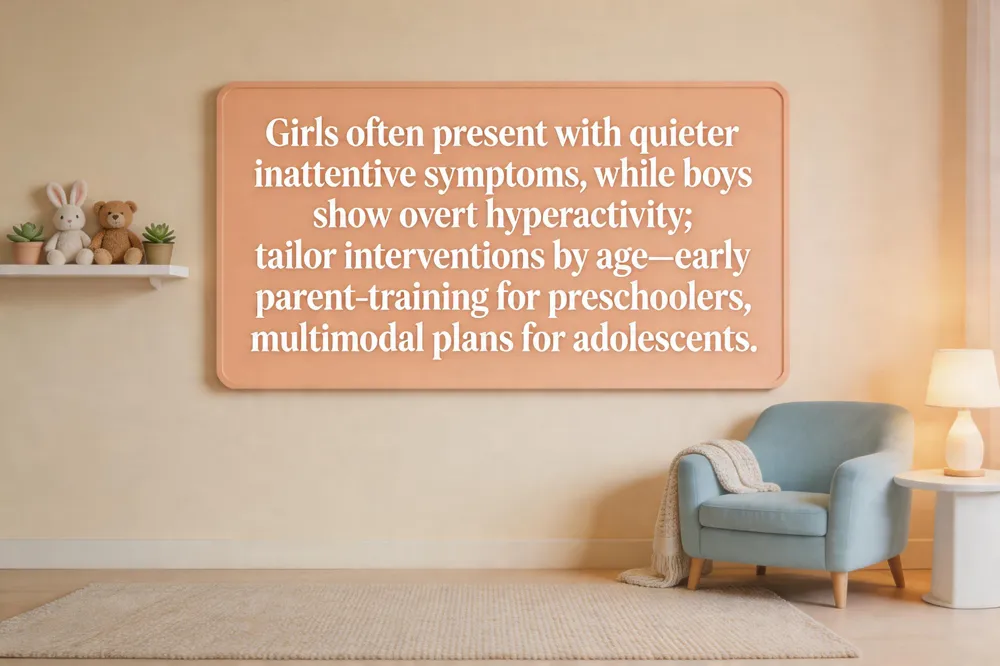 Girls vs. boys presentation – Girls often display quieter inattentive signs (day‑dreaming, losing items, difficulty following simple directions) while boys tend to be more overtly hyperactive (constant fidgeting, running, excessive talking). Both sexes must show symptoms in at least two settings for a diagnosis.
Older preschoolers – By age 5, persistent inattention (careless mistakes, not listening, forgetting chores) and hyperactive‑impulsive behaviors (unable to sit during meals, interrupting, jumping between activities) should be evaluated. Early behavioral parent‑training programs such as Incredible Years or Triple P are first‑line before medication is considered.
Adolescent transition – Teens benefit from a multimodal plan: long‑acting stimulant or non‑stimulant medication, teen‑focused skills training, and parent‑teen coaching for organization and communication. Ongoing monitoring of growth, mood, and cardiovascular health (especially if a stimulant is used) is essential, and coordination with school accommodations (IEP/504) supports academic success.
ADHD in 5‑year‑old girl symptoms – Persistent inattention, frequent day‑dreaming, losing crayons or shoes, difficulty listening, constant fidgeting, inability to sit still during story time, excessive talking, blurting out answers, and interrupting games. Behaviors appear at home and preschool and impair learning and peer interaction.
ADHD symptoms child boy – Hyperactive fidgeting, running/climbing in inappropriate moments, excessive talking, inability to stay seated, careless mistakes, difficulty listening, forgetting items, and trouble completing tasks. Symptoms are evident in multiple settings and interfere with school performance and relationships.
ADHD treatment for teens – Combine medication (stimulant or non‑stimulant medication with behavioral strategies (organization, time‑management, communication skills), regular monitoring, and collaboration among pediatric specialists, families, and school staff.
Helpful Resources and Printable Guides
 PDF explainers for children
A child‑friendly PDF should use simple language and colorful illustrations to show how the brain works differently, leading to inattention, hyperactivity, and impulsivity. Everyday examples—day‑dreaming in class, fidgeting at meals, shouting out answers—help the child recognize patterns. The booklet reassures that ADHD is not caused by parenting, highlights the child’s strengths (the "super‑powers"), and offers practical tips such as timer use, short movement breaks, and asking teachers for help. A brief "What’s good about me?" section boosts confidence.
Parent handouts
Download a comprehensive "ADHD Information for Parents" PDF that explains the disorder, diagnostic process, and treatment options (behavioral therapy, stimulant and non‑stimulant meds). It includes home‑ and school‑based strategies, links to CDC and NIMH resources, and a list of support groups. Our Federal Way pediatric office can provide printed copies and answer questions about integrating ADHD care with overall health, including cardiac screening when stimulants are considered.
Where to find professional help
Start with your child’s pediatrician, who can conduct a screening questionnaire and refer to a child psychologist, developmental pediatrician, or pediatric cardiologist if needed. Parent‑training programs such as Incredible Years or Triple P are available through local community health centers. Contact our office to request the PDFs or schedule a consultation for personalized guidance.
Putting It All Together for Your Child’s Success
Early detection of ADHD saves families months of uncertainty and stress. When a child shows persistent day‑dreaming, difficulty following simple instructions, excessive fidgeting, or impulsive actions before age 5, parents should schedule a comprehensive evaluation with a pediatrician or developmental‑behaviour specialist. The evaluation will include parent and teacher rating scales (e.g., SNAP‑IV, Vanderbilt), a medical history, and, when needed, a brief cardiac screen before any stimulant medication is considered.
Because ADHD is a neurodevelopmental disorder that often co‑occurs with anxiety, learning challenges, or tic disorders, a team‑based approach—pediatrician, child psychologist, school psychologist, and, when appropriate, a pediatric cardiologist—ensures that all aspects of the child’s health are addressed. Parents can help coordinate care by keeping organized records of school reports, medication logs, and appointment summaries. Collaborative planning of daily routines, visual schedules, and positive reinforcement, combined with evidence‑based behavioural parent training, maximises academic readiness, social confidence and and long‑term well‑being.