Understanding ADHD in Children
Attention‑Deficit/Hyperactivity Disorder (ADHD) is one of the most common neurodevelopmental conditions in U.S. children, affecting roughly 9‑11 % of school‑age youth. Symptoms typically emerge between ages three and six, with most diagnoses occurring around seven years old. The disorder presents in three subtypes—predominantly inattentive, predominantly hyperactive‑impulsive, and combined (the most frequent). Boys are diagnosed more often than girls (5.4 % vs. 3.2 %), though girls often display internalized symptoms such as low self‑esteem, inattentiveness, and anxiety, leading to underdiagnosis. ADHD profoundly influences daily life: executive dysfunction hampers organization, time‑management, and emotional regulation, while about 78 % of affected children have at least one co‑occurring mental‑health condition (e.g., anxiety, learning disorders). Consistent routines, clear expectations, and positive reinforcement are crucial for mitigating these challenges. Parents are encouraged to seek comprehensive evaluation from pediatricians or developmental‑behavioral specialists, explore behavioral‑parent training, and consider school‑based accommodations (IEP or 504 plans) to support their child’s academic and social success.
Creating Structure and Routine at Home
 A predictable daily schedule is the backbone of successful ADHD management. Set a consistent wake‑up, meals, homework, and bedtime time each day, and post the routine on a visual calendar that the child can reference. Checklists for chores and school tasks break larger projects into bite‑size steps, reducing executive‑function overload and helping the child stay on track.
Organized workspaces and limited choices further support focus. Designate a clutter‑free area for schoolwork, label bins and supplies, and offer only two or three options for activities or snacks to avoid overstimulation.
Consistent sleep and nutrition habits are equally vital. Aim for 9–11 hours of sleep each night, keep bedtime routines calm, and provide balanced meals rich in protein, complex carbs, and omega‑3s while limiting sugary foods and screen time. Regular outdoor physical activity—30 minutes most days—boosts dopamine and improves attention.
How to deal with a child with ADHD and behavior problems – Use brief, eye‑contacted commands, then praise specific positive actions five times more often than you point out negatives. Enroll in parent‑training behavior therapy and coordinate with your pediatrician about medication when needed.
How to treat ADHD child at home – Combine the routine, visual aids, clear directions, and immediate reinforcement with organized spaces and healthy lifestyle habits; keep open communication with teachers and clinicians.
Strategies for kids with ADHD at home – Provide advance warnings before transitions, use token‑reward systems, schedule short movement breaks, and involve the whole family in consistent expectations.
Parenting a child with ADHD when you have ADHD – Use shared visual schedules, set phone reminders, break tasks into small steps, seek family‑focused ADHD coaching, and prioritize self‑care to model calm, organized behavior for the entire family.
Positive Reinforcement and Discipline Techniques
 What strategies can be used to support a child with ADHD?
Provide brief, clear directions and secure attention with eye contact or a gentle touch before asking the child to repeat the instruction. Keep workspaces uncluttered, seat the child near the front of the room, and use visual cues such as highlighted key points or checklists. Incorporate short “brain‑breaks” (e.g., 5‑minute movement pauses after 30 minutes of work) and allow a non‑disruptive fidget tool. Maintain predictable daily routines with advance warnings before transitions and display rules where the child can see them. Set achievable goals, give frequent specific praise, and involve the child in hands‑on tasks that build confidence.
What strategies can be used to support a child with ADHD?
Provide brief, clear directions and secure attention with eye contact or a gentle touch before asking the child to repeat the instruction. Keep workspaces uncluttered, seat the child near the front of the room, and use visual cues such as highlighted key points or checklists. Incorporate short “brain‑breaks” (e.g., 5‑minute movement pauses after 30 minutes of work) and allow a non‑disruptive fidget tool. Maintain predictable daily routines with advance warnings before transitions and display rules where the child can see them. Set achievable goals, give frequent specific praise, and involve the child in hands‑on tasks that build confidence.
What not to do with a child with ADHD Avoid yelling, long lectures, or shaming language; these trigger emotional outbursts and damage self‑esteem. Do not punish forgetfulness or disorganization as willful misbehavior—these stem from executive‑function deficits. Refrain from demanding perfect eye contact or stillness during discipline, and never use hurtful labels or “but” statements that undermine trust.
How to discipline a child with ADHD Start with empathy, recognizing that impulsivity is often unintentional. Give a brief warning, then a logical, immediate consequence directly linked to the behavior (e.g., loss of screen time to repair a broken item). Pair discipline with frequent, specific praise or small token rewards for effort. Stay calm, be consistent, and adjust strategies as needed, remembering that progress is incremental.
Effective Communication and Instructions
 Children with ADHD thrive when instructions are brief, single‑step, and given after eye contact or a gentle name‑call to secure attention. Pair verbal cues with visual supports—color‑coded checklists, schedules, or graphic organizers—to break tasks into manageable chunks and reduce overwhelm. Calming techniques such as predictable routines, scheduled sensory breaks, and a quiet‑corner fidget tool help lower anxiety and improve focus.
How to calm a child with ADHD in the classroom – Use a predictable routine with short, clearly‑stated instructions and visual schedules. Employ a behavior‑management system (daily report card, token rewards) and allow brief sensory breaks. Provide organized workspaces and checklists that break assignments into steps. Keep open communication with parents and staff to adjust accommodations.
How to help a child with ADHD and anxiety – Establish a stable daily routine and organized environment. Offer frequent specific praise and small rewards. Teach coping skills (deep‑breathing, mindfulness) and use a calm‑down corner. Collaborate with school for accommodations and monitor medication effects.
How to help a child with ADHD in school – Set up clear classroom management (daily report card, reward system). Teach organizational strategies (planners, checklists). Secure a 504 Plan or IEP with preferential seating, extended test time, and movement breaks. Maintain regular communication among parents, teachers, and healthcare providers, and reinforce coping skills at home.
School‑Based Interventions and Teacher Resources
 Effective classroom accommodations for students with ADHD include preferential seating, breaking tasks into smaller, manageable steps, and using timers or visual schedules to signal transitions. Behavior‑management tools such as token‑economy systems, daily report cards, and short movement‑based brain breaks help maintain focus and reinforce positive actions. Teachers can download ready‑to‑use PDFs: the “Classroom Interventions for Attention Deficit/Hyperactivity Disorder” packet from the Training & Technical Assistance Center (https://education.wm.edu/centers/ttac/documents/packets/adhd.pdf) and the Developmental Paediatrics guide (https://developmentalpaediatrics.com.au/wp-content/uploads/2022/03/ADHD-Strategies-for-teachers-and-parents.pdf). Parents also have free resources like Boston Children’s Hospital’s “Practical Tips for Parents of Children with ADHD” and Kaiser Permanente’s “ADHD Parent Survival Guide,” both available on their respective websites. A useful PDF on behavioral therapy, “Behavior Therapy for Children with ADHD – An Overview,” can be accessed via the CDC (http://www.cdc.gov/ncbddd/adhd/behavior-therapy.html). Collaboration between teachers and families—sharing daily logs, discussing accommodations, and aligning reinforcement strategies—ensures consistency across home and school, maximizes academic success, and supports the child’s self‑esteem.
Physical Activity, Sleep, and Lifestyle
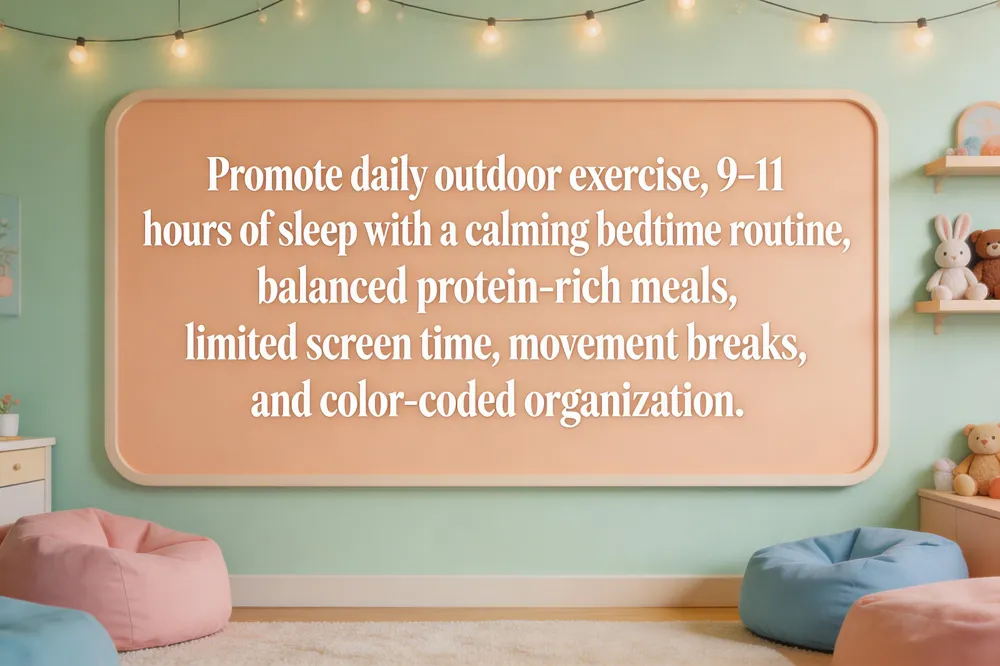 Regular exercise—especially outdoor play in green spaces—boosts dopamine, improves mood, and reduces hyperactivity, making it a cornerstone of ADHD management. Pair daily activity with a consistent bedtime routine: a calming wind‑down, limited screen exposure after 30 minutes before sleep, and a set lights time help the 70 % of children who struggle with insomnia achieve the 9‑11 hours of restorative sleep they need.
Balanced nutrition is equally important. A protein‑rich breakfast, complex‑carb meals, and limited sugary snacks support attention and energy stability. Reducing recreational screen time, particularly in the evening, minimizes overstimulation and improves sleep quality.
In school, short movement breaks or the use of discreet fidget tools reset attention without disrupting peers. A token‑reward system or daily report card provides immediate, specific feedback for staying on task, while breaking assignments into bite‑size steps and using color‑coded folders teach organizational skills.
The “30 % rule” reminds parents that executive‑function skills develop about 30 % later in children with ADHD, so setting realistic expectations and offering age‑appropriate scaffolding—such as simple routines for toddlers and personalized study schedules for teens—helps bridge the developmental gap.
Collaboration with teachers, pediatricians, and mental‑health specialists ensures accommodations like preferential seating, extended test time, and quiet workspaces are in place, allowing the child to thrive without relying on medication.
Medical Management and Professional Support
 Medication options for children with ADHD include stimulant agents (e.g., methylphenidate, amphetamine) that improve attention in 70‑80 % of patients, and non‑stimulants such as atomoxetine or guanfacine for those who cannot tolerate stimulants. Regular monitoring of growth, heart rate, blood pressure, and side‑effects is essential, with follow‑up visits at one month and then every three months during the first year.
A multidisciplinary team—pediatrician, child‑adolescent psychiatrist or neurologist, psychologist, and school staff—coordinates care. Pediatricians often serve as the primary case manager, while psychiatrists handle medication, and psychologists provide behavioral therapy and skill‑building.
Most major insurers (Aetna, Cigna, UnitedHealthcare, Medicaid, etc.) cover ADHD assessments and, when indicated, genetic testing that can guide medication choice. Coverage varies, so verification and pre‑authorization are recommended.
Genetically, about 90 % of the is linked to inherited DNA differences; heritability estimates range from 75‑91 %. This explains the strong family pattern and why parents with ADHD often seek evaluation.
Key Q&A
- What is 90 % of ADHD caused by? Genetic factors.
- What kind of doctor is best for ADHD? A pediatrician trained in ADHD, with referral to a child psychiatrist or neurologist for medication.
- What are the 5 C’s of ADHD parenting? Consistency, Self‑Control, Compassion, Collaboration, Celebration.
- Will insurance pay for ADHD testing? Yes, most major plans cover medically necessary evaluations.
- Who can prescribe ADHD medication in Washington? Licensed MDs, DOs, NPs, and PAs with Washington credentials.
Collaborative Care and Community Resources
 A multidisciplinary team—pediatrician, mental‑health specialist, school psychologist, and special‑education teacher—provides coordinated, individualized care for children with ADHD. In Federal Way, families can access comprehensive services at several clinics. The Sea Mar Community Health Center’s Federal Way Behavioral Health Clinic offers licensed therapists, board‑certified psychiatrists, and nurse practitioners who deliver talk therapy, medication management, play therapy, and family‑involved treatment, with multilingual staff and weekend appointments. A nearby clinic on 6th Avenue South (LightHeart Associates) provides NeuroStar® TMS, telehealth, and evidence‑based ADHD programs, accepting most major insurers. Valley Cities Behavioral Health Care adds peer support, case management, and medication‑assisted therapy.
Federal Way mental health services – See above for clinic locations, services, and hours.
I have no patience for my ADHD child – Recognize frustration as normal, identify triggers, pause for a brief mindfulness breath, use one‑step directions and visual schedules, celebrate small successes, and prioritize your own exercise, sleep, and breaks.
Parenting a child with ADHD when you have ADHD – Build shared visual routines, set timers, break tasks into tiny steps, seek family‑focused coaching, and model self‑care to create a calmer home environment.
Putting It All Together
Integrating home, school, and medical strategies creates a unified support system that maximizes a child’s success. At home, parents can maintain consistent daily routines, visual schedules, and positive‑reinforcement charts that reinforce the same expectations used in the classroom. In school, teachers should implement clear, brief directions, organized breaks, and accommodations such as preferential seating or extended test time, while communicating progress through daily report cards. Medically, regular appointments with a pediatrician, ADHD specialist, or multidisciplinary team—often available at clinics like LightHeart Associates (33455 6th Ave S, WA) or Yellow Brick Clinic—allow medication adjustments, therapy referrals, and monitoring of co‑occurring conditions. Consistency across settings reduces confusion, builds predictability, and strengthens the child’s self‑esteem. Teamwork among parents, teachers, and providers is essential; schedule quarterly check‑ins, share behavior logs, and use resources such as CHADD, the Child Mind Institute, and local support groups. Telehealth options and weekend hours increase accessibility, ensuring continuous, family‑centered care.